Visa Inc. Expands Cryptocurrency Offerings
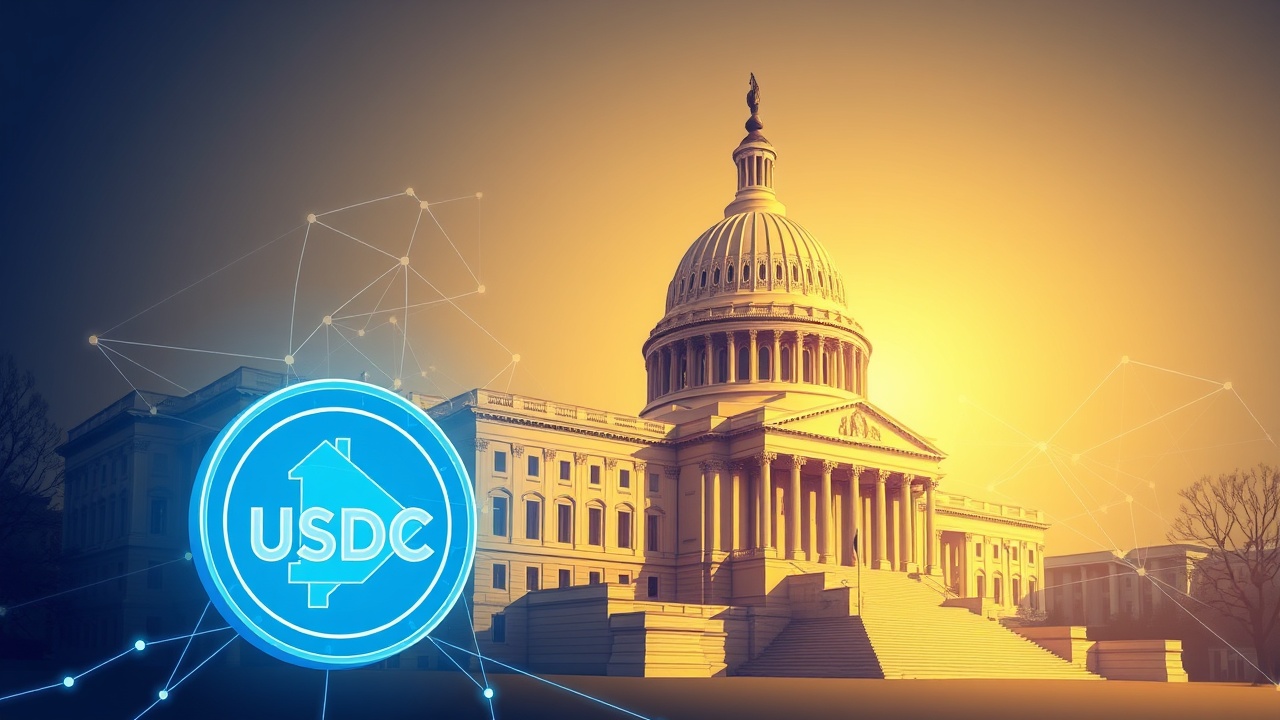
In a significant development for the financial technology landscape, Visa Inc. announced on Tuesday that it will enable stablecoin-based settlement across its payment network in the United States. This move marks an expansion of the company’s cryptocurrency offerings, allowing financial institutions to utilize the USDC stablecoin from Circle Internet Group Inc. for transaction settlements via the Solana blockchain.
Enhancing Fund Transfer Speed
Visa highlighted that this new capability is designed to enhance the speed of fund transfers for U.S. banks and fintech companies, offering round-the-clock availability and robustness during weekends and holidays. Initial institutions participating in this initiative include Cross River Bank and Lead Bank, both of which are currently transacting with Visa in USDC on the Solana blockchain. Moreover, Visa has plans in place to broaden this offering to more U.S. financial entities by 2026.
Partnership with Circle and Blockchain Integration
In tandem with this, Visa is also strengthening its partnership with Circle as a design collaborator on Arc, a new Layer 1 blockchain currently undergoing public testing. This infrastructure aims to facilitate large-scale commercial activities on the blockchain, and Visa intends to incorporate Arc to manage USDC settlements within its network. The company plans to function a validator node once the blockchain is operational, showing a commitment to integrating blockchain technology into its fundamental settlement systems.
Benefits of U.S. Stablecoin Settlements
Visa anticipates that the introduction of U.S. stablecoin settlements will yield more efficient treasury operations and liquidity management for participating banks. The structure is crafted to merge conventional payment frameworks with blockchain technology while ensuring compliance, security, and reliability standards.
“With financial institutions gearing up to incorporate stablecoins into their treasury operations, USDC settlements present banks with a quicker, programmable option that melds seamlessly with their existing systems,”
explained Rubail Birwadker, Visa’s Global Head of Growth Products and Strategic Partnerships.
Global Expansion and Advisory Practice
This U.S. initiative builds upon Visa’s previous stablecoin pilot projects in various global regions, including Latin America, Europe, Asia-Pacific, and Africa, which began in 2021 when the company first commenced settlements in USDC, distinguishing itself as one of the premier payment networks to do so. Circle remarked that the U.S. expansion signifies a pivotal step towards institutional acceptance of stablecoins, while initial banking partners noted advantages such as enhanced liquidity timing and settlement driven by APIs.
Additionally, Visa is broadening its stablecoin endeavors with the recent launch of a Stablecoins Advisory Practice aimed at aiding financial institutions in formulating and executing stablecoin strategies.
Market Growth and Future Outlook
At the Binance Blockchain Week 2025, Binance CEO Richard Teng emphasized the strong growth momentum in the stablecoin arena, pointing out that the total market capitalization for global stablecoins surged by almost 50% this year, accompanied by a comparable increase in the number of wallets holding stablecoins. He provided transaction data to illustrate how stablecoins are solidifying their position within the financial landscape, as daily volumes of stablecoin transactions have surpassed those of Visa’s. Teng attributed this upward trend to clearer regulatory frameworks, particularly in the U.S., as well as innovative initiatives in emerging markets like Bhutan’s national crypto payments infrastructure supported by Binance Pay, showcasing stablecoins as vital components of payment systems rather than just speculative assets.