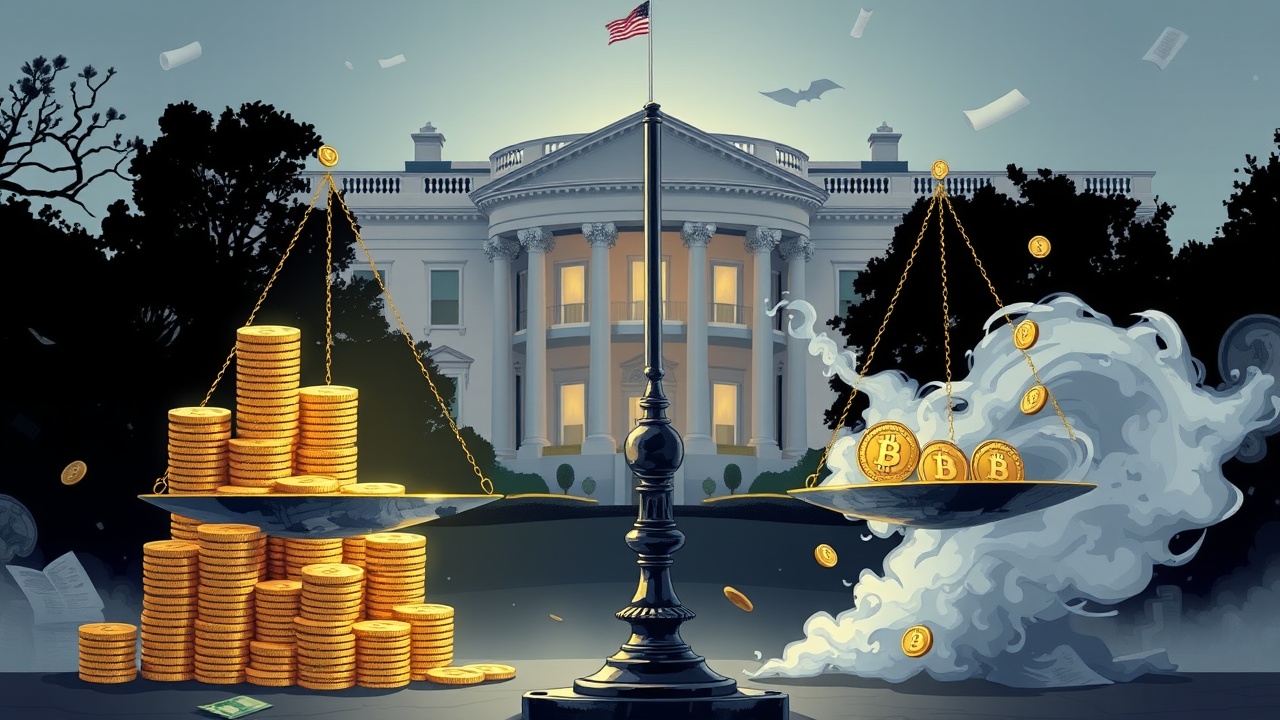
White House Budget Proposal for Cryptocurrency Taxation
In its recent budget proposal for 2026, the White House is taking significant steps to regulate the taxation of cryptocurrencies, particularly addressing the wash sale loophole that has allowed crypto traders to exploit current laws. This loophole permits investors to realize tax losses by selling their crypto assets and then quickly repurchasing them, an action that remains permissible for digital assets but is prohibited for stock investments under existing rules.
Proposed Legislative Changes
The proposed legislation would for the first time apply the wash sale rule to digital currencies, thus aligning them with traditional securities, and establishing the same 30-day repurchase restriction that now applies to stocks. Additionally, the budget introduces a 30% excise tax on the electricity consumed during crypto mining, termed the Digital Asset Mining Energy (DAME) tax. Furthermore, it imposes a Foreign Account Tax Compliance Act (FATCA) reporting requirement for U.S. individuals with over $50,000 in foreign cryptocurrency holdings.
Current Regulations and Tax-Loss Harvesting
Under the current regulations, crypto is categorized as property rather than a security, allowing traders to engage in tax-loss harvesting without repercussions. This occurs when a trader sells a digital asset at a loss for tax benefits, only to buy it back immediately to retain their investment. The proposed changes aim to close this loophole, making it mandatory for crypto transactions to adhere to the same loss claiming restrictions as traditional stocks.
Regulatory Environment and Legislative Dynamics
As the White House champions this revised tax framework, it also supports the CLARITY Act, advocating for a clear regulatory environment for cryptocurrencies—a move that some may perceive as contradictory given the simultaneous push for increased tax scrutiny. This juxtaposition creates challenging dynamics in Congress, especially as legislation becomes increasingly favorable towards crypto, such as the ongoing discussions surrounding the CLARITY Act in the Senate Banking Committee.
SEC and Future Implications
The SEC is also active on the regulatory front, contemplating significant rule amendments impacting Bitcoin and XRP ETF listings. Historically, similar proposals aimed at modifying wash sale rules for cryptocurrencies have been introduced in past administrations, without success in Congress. The current landscape suggests a complex interplay of legislative efforts, as crypto tax reforms could potentially clash with the pro-crypto sentiment building within the legislative system.