Woori Bank Integrates Bitcoin into Traditional Banking
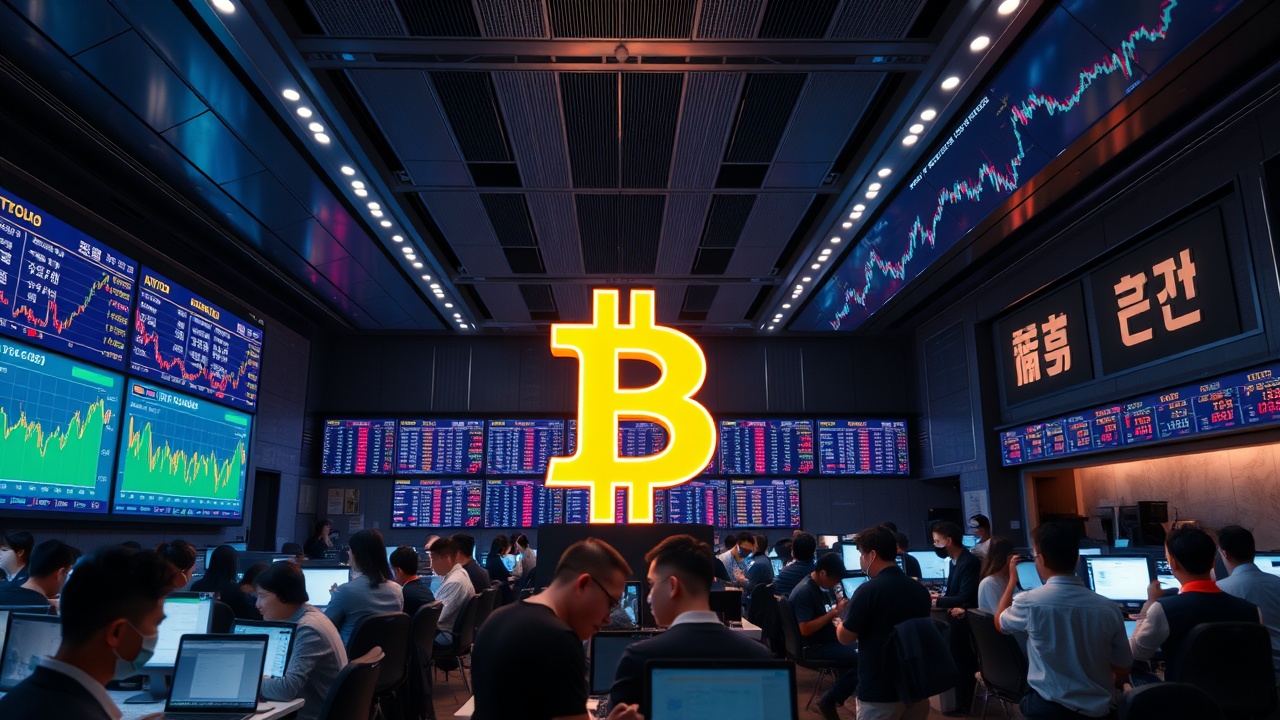
Woori Bank has taken a significant step toward integrating digital currencies into traditional banking by displaying Bitcoin prices in its main trading room located in Seoul. This development represents a pioneering move among South Korean commercial banks, as Bitcoin is now featured alongside vital financial metrics such as the wons-to-dollar exchange rate and stock market indices.
Significance of Digital Assets
A representative from Woori Bank noted that this initiative underscores the increasing significance of digital assets in the global financial landscape, emphasizing how Bitcoin has emerged as a barometer for overall market sentiment. The official articulated that as the influence of digital currencies grows, tracking them becomes essential to gauge market trends effectively.
Broader Trends in South Korean Banking
This initiative aligns with a broader trend among banks in South Korea seeking to enhance their digital asset infrastructure. Recently, Hana Financial Group entered into a partnership with Dunamu, the company behind the Upbit exchange, to utilize blockchain technology in various services like international remittances and financial data management. Although Woori Bank has yet to formalize any alliances with cryptocurrency exchanges, its leadership has expressed a strong intention to venture further into digital asset services.
CEO Jung Jin-wan highlighted the increasing interconnection between payment systems and digital asset ecosystems, suggesting this emerging sector could create new revenue streams for financial institutions.
Regulatory Developments
Regulatory developments are also paving the way for the banking sector’s involvement in cryptocurrencies. The government and the ruling Democratic Party are considering legislative changes aimed at restricting the issuance of won-pegged stablecoins to bank-driven consortia, which would necessitate a majority stake by banks like Woori. If successfully implemented, this framework could position prominent banks as key players in upcoming stablecoin markets.
Investment Trends and Financial Crime Measures
The backdrop of these developments includes recent trends in the investment behavior of South Koreans, who showcased a high-risk appetite during the Chuseok holiday. In a week when domestic markets were closed, investors funneled approximately $1.24 billion into U.S. technology and cryptocurrency assets, propelled by leveraged ETFs and high-growth shares, driven by optimism about U.S. tech resilience and hopes of domestic economic stimulus.
Additionally, South Korea is intensifying its efforts to combat financial crime in the cryptocurrency space. Recently, authorities announced plans to extend the travel rule for cryptocurrency transactions to include lower thresholds, covering amounts under 1 million won (around $680). Previously, users could bypass identity checks by conducting smaller transactions. The Financial Intelligence Unit (FIU) will also gain the authority to preemptively freeze accounts suspected of illegal activities. Legislative amendments are anticipated to be introduced to the National Assembly in early 2026, with efforts to enhance global regulatory collaboration in line with international standards.