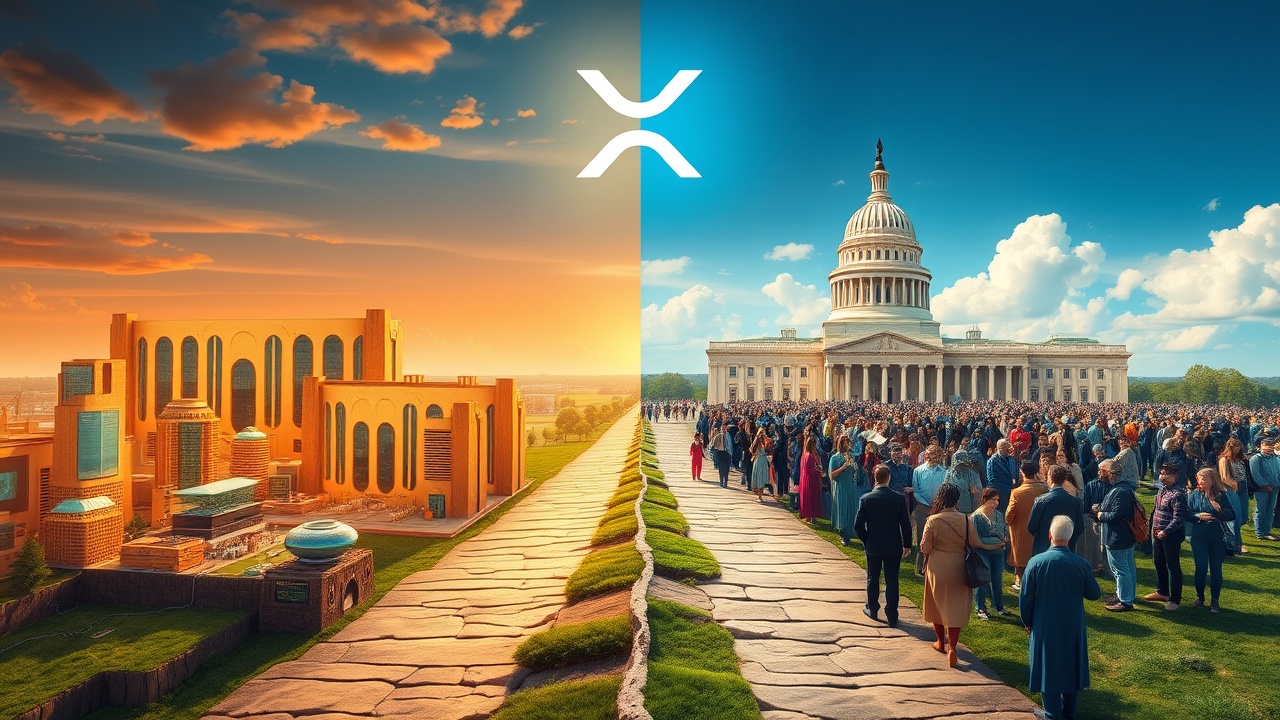
The Evolving Landscape of the XRP Ledger Community
In the ever-evolving landscape of the XRP Ledger community, discussions are intensifying over the factors that will determine the cryptocurrency’s practical utility. A key point of contention is whether this utility will be primarily influenced by upcoming regulatory measures or by advancements in Ripple’s technological framework.
Key Legislative Developments
Recently, within this community, Alex Cobb, a notable member, brought attention to the CLARITY Act, legislation aimed at refining U.S. market structures, and its potential to improve the practical use of XRP.
Operational Benefits of Ripple’s Payment Network
Conversely, another member, known as Krippenreiter, has asserted that Ripple’s existing payment network—including features such as the on-chain liquidity from the XRPL decentralized exchange and the Ripple Prime service for institutional settlements—holds more immediate operational benefits. He pointed out that these features not only support Ripple’s previously stated goals regarding the XRP Ledger’s institutional usage but also promise enhanced transparency and efficiency through on-chain settlement.
Regulatory Dynamics and Compliance Challenges
The discourse naturally included considerations about regulatory dynamics; specifically, the implications of utilizing public decentralized exchanges for liquidity routing and the compliance hurdles this can create for regulated enterprises. In contrast, employing the ledger as a post-trade settlement framework appears to carry less regulatory risk. Legal expert Bill Morgan weighed in, noting that it is crucial for regulated bodies to be able to tap into XRPL liquidity without breaching compliance mandates, suggesting that obstacles such as permissioned environments and decentralized exchange structures might hinder this access.
Proposed Solutions and Future Developments
As solutions, Krippenreiter has advocated for the implementation of credentialing and permissioned systems to facilitate smoother compliance. The community is also anticipating the rollout of the Permissioned Domains amendment, which is currently backed by 88.24% of validators and projected to be activated on February 4. In addition, discussions surrounding Ripple Prime surfaced, with suggestions that the inclusion of privacy-oriented features could enhance its integration with inventory on centralized exchanges.
Balancing Transparency and Confidentiality
J. Ayo Akinyele, Ripple’s engineering lead, emphasized that for institutional adoption to flourish, it is essential to find a balance between transparency and confidentiality to adhere to regulatory standards.
Conclusion: A Focused Community Effort
As these debates unfold, they are further underscored by the launch of Ripple Treasury, a collaborative effort between Ripple and GTreasury aimed at integrating traditional cash management with digital asset operations. Collectively, these discussions signal a concentrated effort within the community to pinpoint how both infrastructural and policy-oriented approaches will ultimately influence the role of XRP in the financial ecosystem.