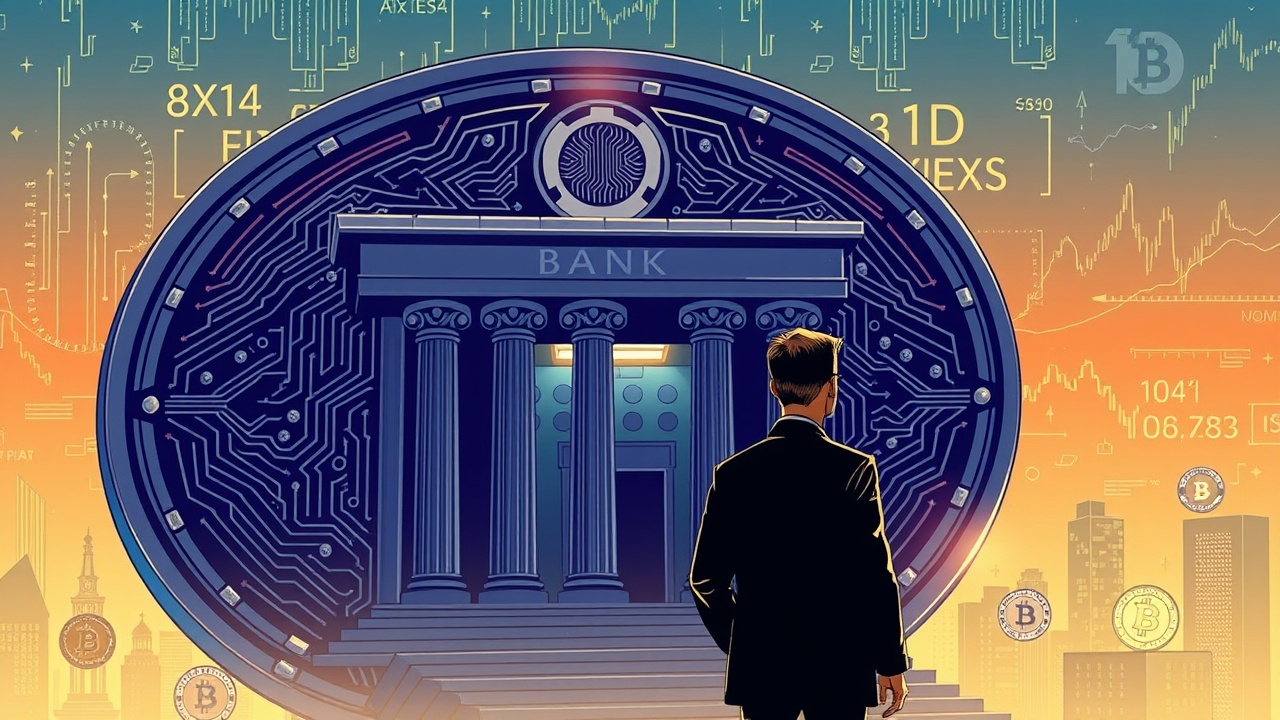
Augustus Receives Conditional Authorization for Augustus Bank, N.A.
Augustus, a financial technology company backed by investor Peter Thiel, has received conditional authorization from the Office of the Comptroller of the Currency (OCC) to create Augustus Bank, N.A., which aims to be a full-service national bank in the United States. In a statement released on Monday, Augustus revealed that the new banking institution will specialize in AI-enhanced payment systems, stablecoin transactions, and programmable clearing services. However, it is important to note that this approval does not mean the bank is operational yet; Augustus must secure full licensing and operational status before introducing US dollar clearing to its services.
Operational Background and Vision
The company operates under regulated subsidiaries in Europe and boasts processing capabilities amounting to billions of dollars for major global financial entities, including cryptocurrency exchange Kraken. Augustus has branded itself as “the first clearing bank for the AI era,” emphasizing a banking framework designed specifically for automated systems and continual operation, along with a settlement system rooted in stablecoins. According to Augustus, existing clearing processes are outdated, relying on systems tailored for human interaction rather than optimized for efficiency.
CEO’s Perspective on Traditional Banking
Ferdinand Dabitz, the CEO of Augustus, highlighted the limitations of traditional banking by stating, “Legacy banks are made of paper, Augustus is made of code,” underscoring the necessity for payment networks that can eliminate delays common in traditional correspondent banking.
Regulatory Landscape and Future Prospects
The conditional approval for Augustus comes at a moment when companies in the digital asset sector are beginning to align more closely with formal banking regulations in the U.S. Notably, in December 2025, the OCC approved five applications for national trust bank charters, which included institutions like First National Digital Currency Bank and Ripple National Trust Bank. Furthermore, advancements in stablecoin transactions have also seen firms like Circle and Finastra integrate USDC into financial platforms to enable cross-border settlement while maintaining fiat instructions.
Additionally, Augustus referred to the GENIUS Act, which aims to facilitate interactions between banks and stablecoins, promoting a new generation of banks that focus on programmable financial products. Since 2010, only a handful of full-service national banking charters have been granted in the U.S., indicating a cautious regulatory environment.
Funding and Next Steps
As Augustus prepares for its next steps, the company will need to navigate regulatory stipulations and demonstrate the viability of its AI-driven banking approach within the U.S. financial infrastructure. They have successfully raised $40 million in funding, secured in part by support from Valar Ventures, Creandum, and various founders from noteworthy companies, including Ramp, Deel, and Circle.