The Bank of Korea’s Stance on Stablecoins
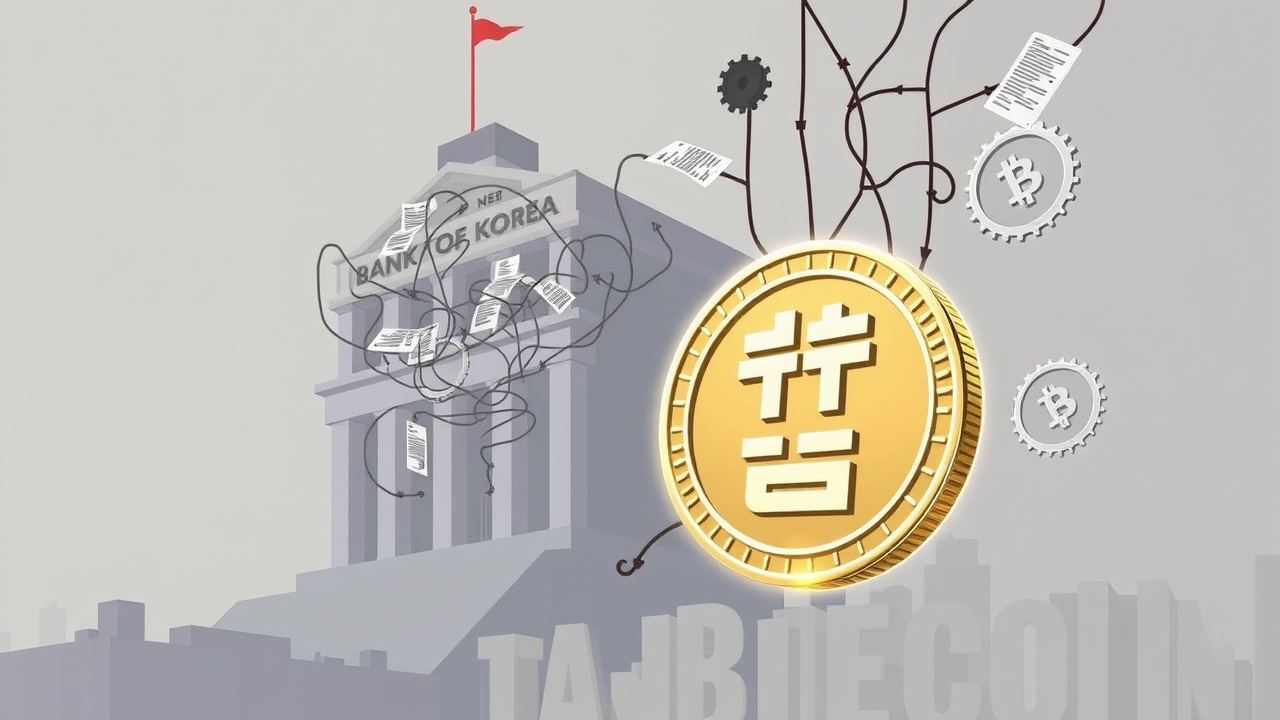
The Bank of Korea (BOK) has reiterated its stance that the issuance of wons-backed stablecoins should predominantly be conducted by bank-led consortiums. This announcement comes as progress on South Korea’s digital asset legislation appears to be stalled. Details were shared in documents submitted to the finance committee of the National Assembly, highlighting that the central bank favors prioritizing banks in the stablecoin issuance process.
Regulatory Recommendations
In these documents, the BOK recommended the establishment of a regulatory body composed of financial regulators and other governmental agencies dedicated to overseeing the burgeoning sector of digital assets. This firm stance is part of a continuity of policy the central bank has maintained amidst ongoing discussions regarding South Korea’s Digital Asset Basic Act.
Enhancing Financial Stability
The BOK believes that allowing banks to play a leading role in the issuance of stablecoins will leverage existing banking regulation to enhance financial stability and protect consumers. In addition to its recommendations for stablecoins, the Bank has plans to broaden the functional applications of deposit tokens later this year. These applications are aimed at everyday use, including government subsidies, electric vehicle charging payments, and other payment services accessible to the public. Deposit tokens are digital representations of commercial bank deposits on the blockchain.
Recent Developments
Earlier this year, in April, BOK Governor Hyun-Song Shin publicly endorsed deposit tokens and Central Bank Digital Currencies (CBDCs), marking his initial address on the topic. That month also saw the South Korean Ministry of Economy and Finance launch a pilot program utilizing tokenized bank deposits for government expenditures, which highlights growing institutional interest in this innovative payment system.
Legislative Challenges
“The debate surrounding stablecoin issuance continues to be a significant hurdle for the legislative process in South Korea.”
Notably, the debate surrounding stablecoin issuance continues to be a significant hurdle for the legislative process in South Korea. The BOK’s strong preference for bank-led issuance has sparked a divide among lawmakers, financial institutions, and segments of the digital asset landscape. There is ongoing contention regarding whether stablecoin issuance should be confined to banks or if non-bank entities should also be permitted under the forthcoming regulations.
Future of Digital Asset Regulation
This issue is part of a broader discussion that includes the future regulation of tokenized real-world assets (RWAs) and their integration into existing financial laws. While the ruling Democratic Party has pushed for these digital assets to be regulated by current financial legislation, major questions about who can act as issuers remain unresolved.
Uncertain Legislative Timeline
As talks progress, the government’s timeline for developing this crucial legislation has become increasingly unclear. Initially, there was a projection of finalizing the Digital Asset Basic Act by the first quarter of 2026. However, various disruptions—including international conflict involving the U.S. and Israel, local election cycles, and structural changes within the National Assembly—have led to delays.
Through its recent submissions, the Bank of Korea has underscored the need for a bank-centric approach to the issuance of stablecoins and thorough regulatory coordination as prerequisites for their broader implementation in South Korea’s financial landscape, while key legislative issues continue to linger unresolved.