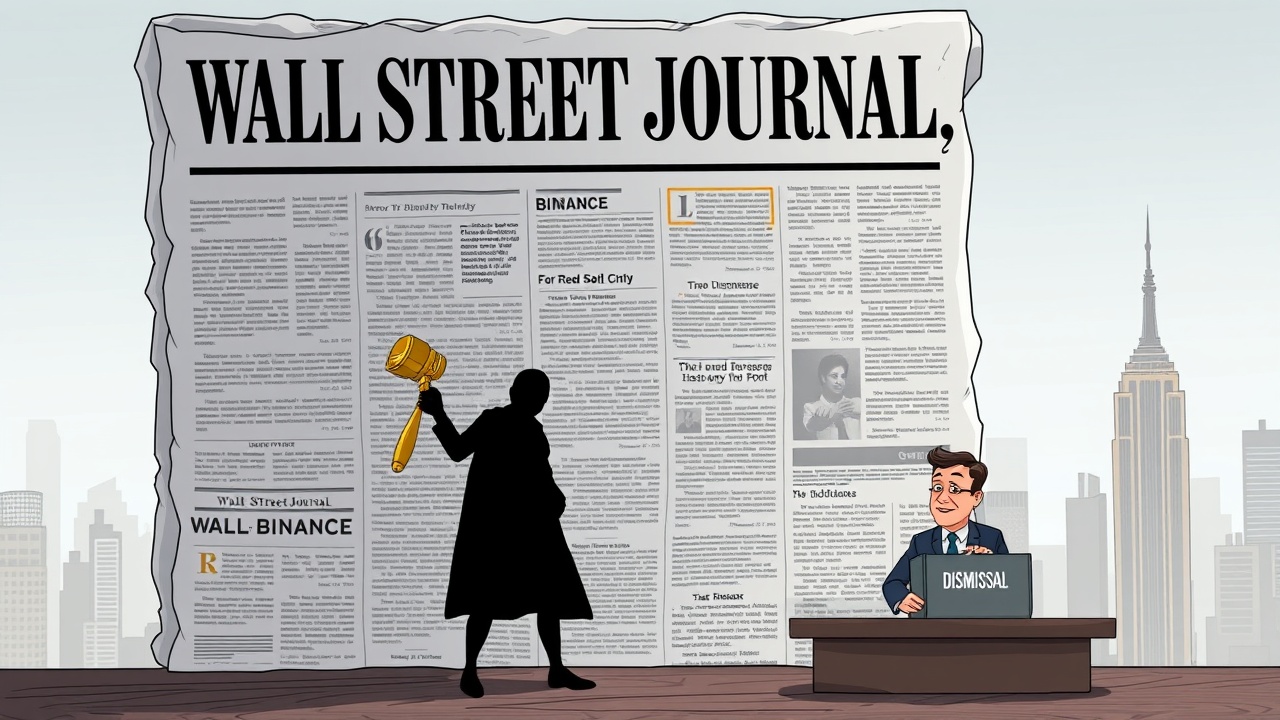
The Wall Street Journal vs. Binance: A Defamation Lawsuit
The Wall Street Journal is seeking to have a defamation lawsuit filed by Binance, the cryptocurrency exchange, thrown out by a federal judge. This legal action follows three articles published by the Journal which alleged that Binance had compromised its internal compliance measures and facilitated over $1 billion in transactions connected to sanctioned Iranian entities.
Legal Proceedings and Arguments
During a recent court hearing, journalist Josh Russell from Courthouse News Service reported that the paper’s lawyers contended that Binance failed to substantiate its claims of libel, namely, that the Journal published information it knew to be false or acted with reckless disregard for the truth—an essential benchmark for proving actual malice in defamation cases.
The heart of the controversy revolves around a Binance investigation into transactions that surfaced through the platform involving organizations linked to Iranian interests. Binance has strongly refuted significant aspects of the Journal’s reports, asserting that the articles presented a misleading narrative that the exchange terminated investigators for their compliance work and curtailed an ongoing inquiry.
U.S. District Judge Paul Engelmayer, after presiding over the discussions, reserved judgment on the Journal’s motion to dismiss the case, indicating he would take the issue under advisement before issuing a decision.
Key Points of Contention
A critical point in the Journal’s argument revolves around Binance’s assertion that the publication exercised prior knowledge of its alleged inaccuracies. The Journal, defending its position, argued that merely receiving denials from Binance regarding the reports does not demonstrate that it was aware of publishing falsehoods. The paper articulated that the core issue in Binance’s complaint relates more to dissatisfaction over the Journal’s portrayal of factual information rather than any alleged false reporting.
Katherine Bolger, the Journal’s attorney, emphasized that the defamation suit arises from Binance’s grievances about the newspaper’s editorial judgments rather than any factual inaccuracies.
Conversely, Binance maintains that the Journal’s reports propagated falsehoods about its compliance protocols and led to defamatory implications about the company’s operations. Christopher Norman Lavigne, representing Binance, clarified that the articles presented a distorted account of the ongoing internal investigation and that the actual facts surrounding the dismissal of the investigators were misrepresented.
Previous Reports and Broader Context
In an earlier report from February, titled “Binance Fired Staff Who Flagged $1 Billion Moving to Sanctioned Iran Entities,” Binance stated that the personnel involved were not let go due to compliance concerns and asserted that its investigative efforts continued post-termination. Furthermore, the exchange claimed that accounts associated with dubious activities were eventually removed from its platform.
Lavigne faced inquiries regarding Binance’s specific claims of defamation concerning 22 statements attributed to the Journal’s articles. During the proceedings, Judge Engelmayer pointed out the existence of similarly themed reports by other esteemed publications like The New York Times and Fortune that also examined the situation involving Binance. Asked about this, Lavigne asserted that the Journal’s coverage exceeded the bounds of the other outlets, indicating a bias in their reporting.
In response, the Journal cited these other reputable sources as evidence reinforcing the accuracy of their own findings. They posited that such corroborative reporting justified their belief in the truthfulness of their content.
Regulatory Scrutiny and Future Implications
The original investigative reports surrounding the allegations against Binance have provoked inquiries in Washington, with questions being raised about possible violations of U.S. sanctions and the termination of staff involved in compliance evaluations.
The situation has escalated following a notable 2023 criminal settlement between Binance and American authorities, where the exchange admitted to lapses in its anti-money laundering measures, resulting in a penalty of approximately $4.3 billion. Changpeng “CZ” Zhao, Binance’s CEO, stepped away from his role after pleading guilty to charges related to ineffective anti-money laundering practices and served a brief prison sentence before being pardoned by Donald Trump in 2025.
Although Engelmayer’s decision is pending, this ongoing defamation dispute underscores critical dynamics between major financial institutions and media outlets amid prevalent scrutiny over compliance and regulatory issues in the rapidly evolving cryptocurrency landscape.