SEC Takes Action Against Fraudulent Investment Schemes
The Securities and Exchange Commission (SEC) has taken action against four entities, accusing them of orchestrating fraudulent schemes that lured unsuspecting investors into fictitious trading programs and AI bot services, amassing over $15.3 million in the process. These charges, announced on September 29, include Cryptoaiml Ltd., Cryptoaiml Capital Foundation, TSAI Pro Ltd., and TSAI Capital Foundation, which the SEC claims were involved in two distinct fraudulent operations, misappropriating funds of approximately $12.5 million and $2.8 million, respectively. The investigations suggest that the perpetrators likely operated from locations outside the United States.
Deceptive Tactics and Investor Trust
According to the SEC’s allegations, both schemes utilized deceptive tactics to gain investors’ trust, specifically by falsely invoking SEC authority. David Woodcock, director of the SEC’s Division of Enforcement, commented on the shared goal of these entities:
“to entice potential investors with the promise of significant returns, falsely assuring them of legitimacy and SEC oversight before ultimately appropriating their funds.”
Details of the Fraudulent Operations
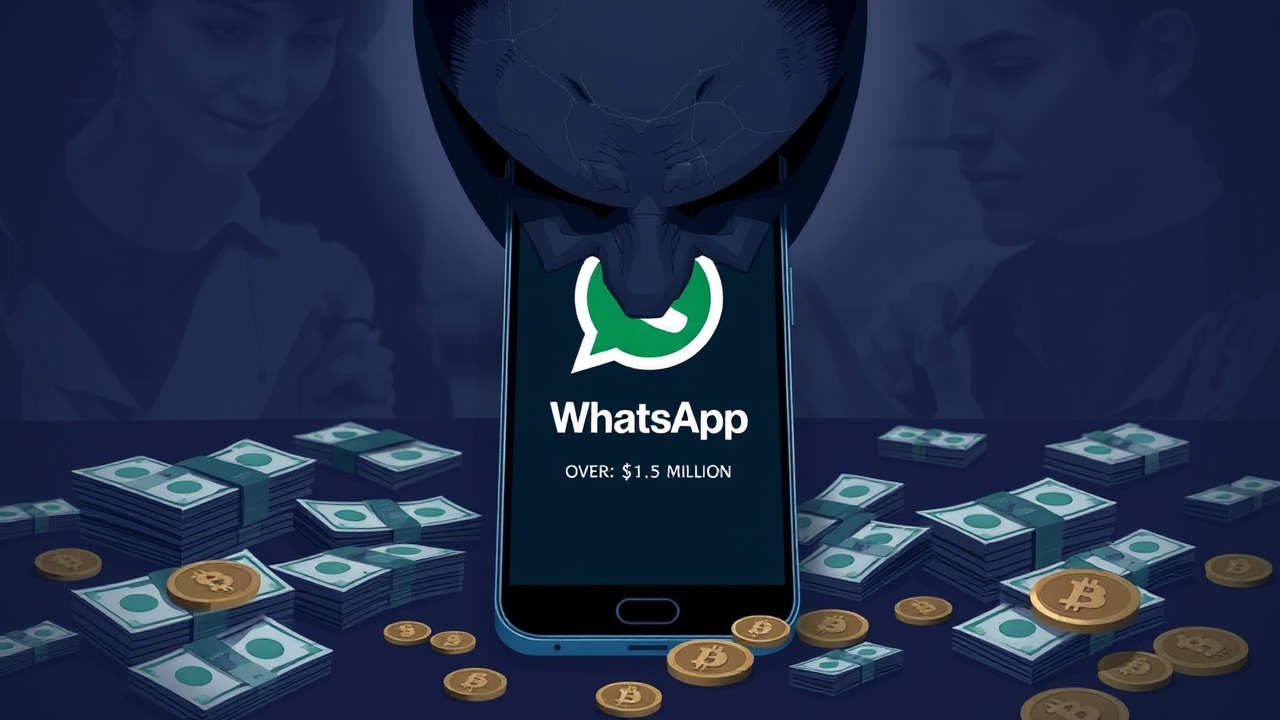
In the case of Cryptoaiml, it reportedly engaged investors through WhatsApp groups where scammers pretended to be seasoned investment professionals. They shared deceptive AI-generated trading signals, initiating their activities around August 2024 until March 2025. Victims were convinced to transfer cryptocurrency assets to a phony trading platform that indicated profits without executing any trades. Those duped even signed contracts purportedly for investment management, which were later proven to be spurious. Claims of account freezes and demands for advance fees emerged whenever investors sought to withdraw their funds, a common hallmark of investment fraud.
On a different front, TSAI Pro and TSAI Capital Foundation are accused of running a similar scheme across WhatsApp, Facebook, and their official website between September 2024 and March 2025. They purportedly offered rental of AI trading bots with assured profits, incentivizing participants to recruit others. However, the SEC maintains that these bots were non-existent, and funds deposited were never used to yield actual returns. This follows a recent SEC case involving a separate alleged AI bot investment fraud that also involved significant financial losses amounting to $12.3 million.
Fraudulent Documentation and SEC Response
The SEC’s investigation revealed that Cryptoaiml had displayed doctored documents, including a fraudulent Form D—an SEC notice relating to securities offerings that in itself does not guarantee SEC approval. TSAI showcased a counterfeit SEC certificate referencing falsified filings, adding to their claims of official endorsement to bolster the credibility of their schemes.
In response to these incidents, the SEC is urging investors to conduct thorough research on anyone proposing or selling investment opportunities. It has published guidance on verifying the authenticity of investment professionals and firms, particularly in light of claims made in group chat formats that suggest regulatory compliance. In March 2025, the North American Securities Administrators Association also raised concerns about crypto investment schemes operating under the guise of educational foundations, utilizing tools like WhatsApp to promote their dubious offers.
Warnings and Future Regulatory Measures
Furthermore, officials in New York have echoed similar warnings, emphasizing the risks of deceptive crypto and AI investment propositions proliferating through digital platforms. Following its investigations, the SEC has officially removed the misleading Forms D filed by both Cryptoaiml Ltd. and TSAI Pro Ltd. from its records, signaling a significant crackdown on such fraudulent activities. Additionally, the SEC has suggested new regulatory exemptions to facilitate certain crypto investment contracts, proposing a framework that could permit offerings of up to $75 million annually.