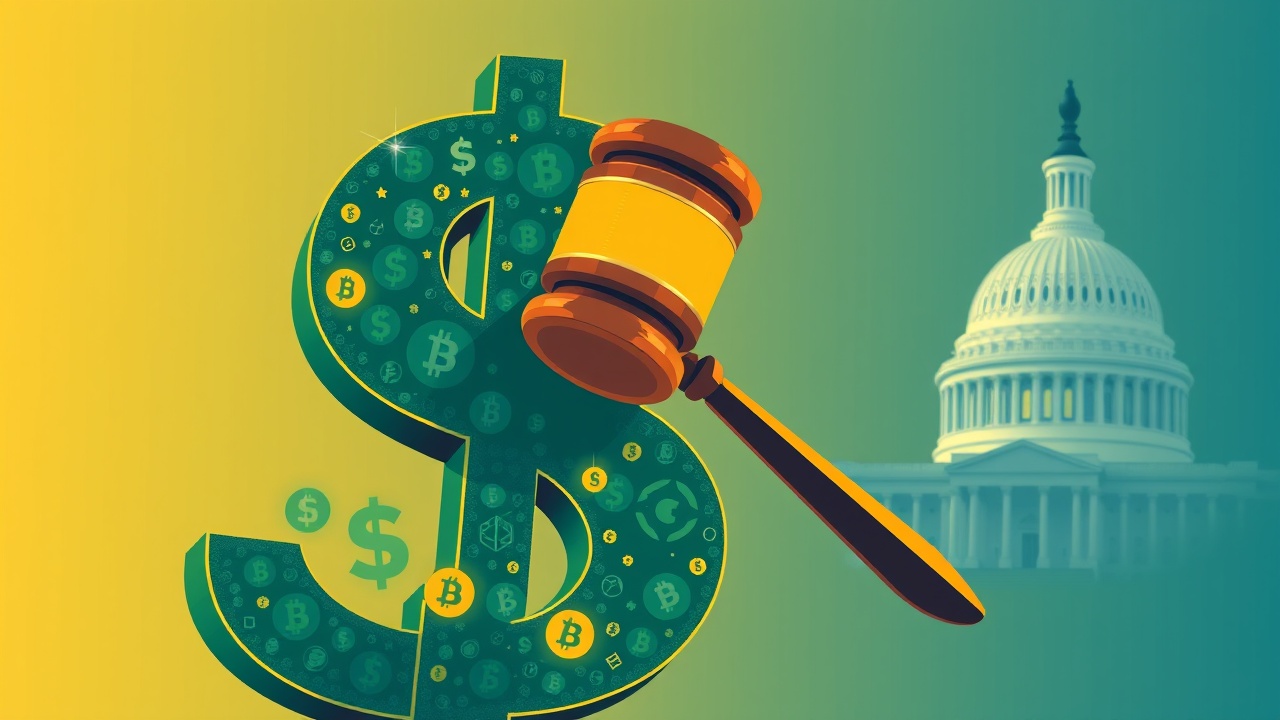
Coinbase’s Lobbying Investments in 2026
In the first quarter of 2026, Coinbase made significant financial investments in its lobbying efforts, disclosing a total of $1.07 million aimed at influencing key legislative actions that directly affect the cryptocurrency market. According to filings under the Lobbying Disclosure Act, the firm’s focus was primarily on the Digital Asset Market Clarity Act, the GENIUS Act concerning stablecoins, and legislative frameworks surrounding the taxation of digital assets.
Legislative Developments
This period marked a crucial moment in U.S. cryptocurrency policy-making, with the passing of the GENIUS Act and a tumultuous journey for the CLARITY Act, which faced both support and opposition from Coinbase. Initially, Coinbase CEO Brian Armstrong publicly voiced objections to the CLARITY Act shortly before a crucial Senate Banking Committee meeting, which ultimately resulted in a postponement of that session. The main contention centered around how the bill proposed to regulate the yields from stablecoins, a point championed by lobbyists from the banking sector.
Lobbying Agenda and Challenges
The lobbying agenda, as outlined in the filing, covers a range of topics including overarching discussions on digital asset taxation, detailed provisions within the CLARITY Act concerning market structure, and the fully enacted GENIUS Act. Such discussions encapsulate the legislative challenges that the cryptocurrency sphere faces as 2026 unfolds. Notably, the CLARITY Act aims to delineate the regulatory responsibilities of the SEC and CFTC concerning digital assets, a decision that holds substantial implications for Coinbase, which is recognized as the largest cryptocurrency exchange and custody provider in the United States.
Financial Performance and Stablecoin Activity
Coinbase’s financial performance has been notably tied to stablecoin activity, with $355 million reported as revenue from stablecoins in the third quarter of 2025 alone, which constitutes about 20% of their overall revenue. This revenue is largely generated through interest from USDC reserves and rewards facilitated for users. How the CLARITY Act delineates acceptable yield strategies for stablecoins is critical for maintaining these revenue streams in their current format.
Innovations and Future Implications
Moreover, the recent launch of Coinbase’s Agentic Market, designed to facilitate transactions for AI agents using USDC on the x402 protocol, adds another layer to the company’s involvement with stablecoins. If the volume of transactions via AI agents increases as anticipated, the regulatory parameters defining the economics behind USDC will become immensely significant for Coinbase’s operations.
Shifts in Lobbying Strategy
By the end of Q1 2026, Coinbase shifted its stance on the CLARITY Act, stating a willingness to collaborate for the bill’s advancement, thus illustrating a marked transformation in its lobbying strategy within a single quarter. The $1.07 million spent reflects a typical operational cost for a firm intricately linked to federal legislative activities, yet distinguishes itself through the active and impactful nature of the bills under discussion.