Colombian President’s Vision for Bitcoin Mining
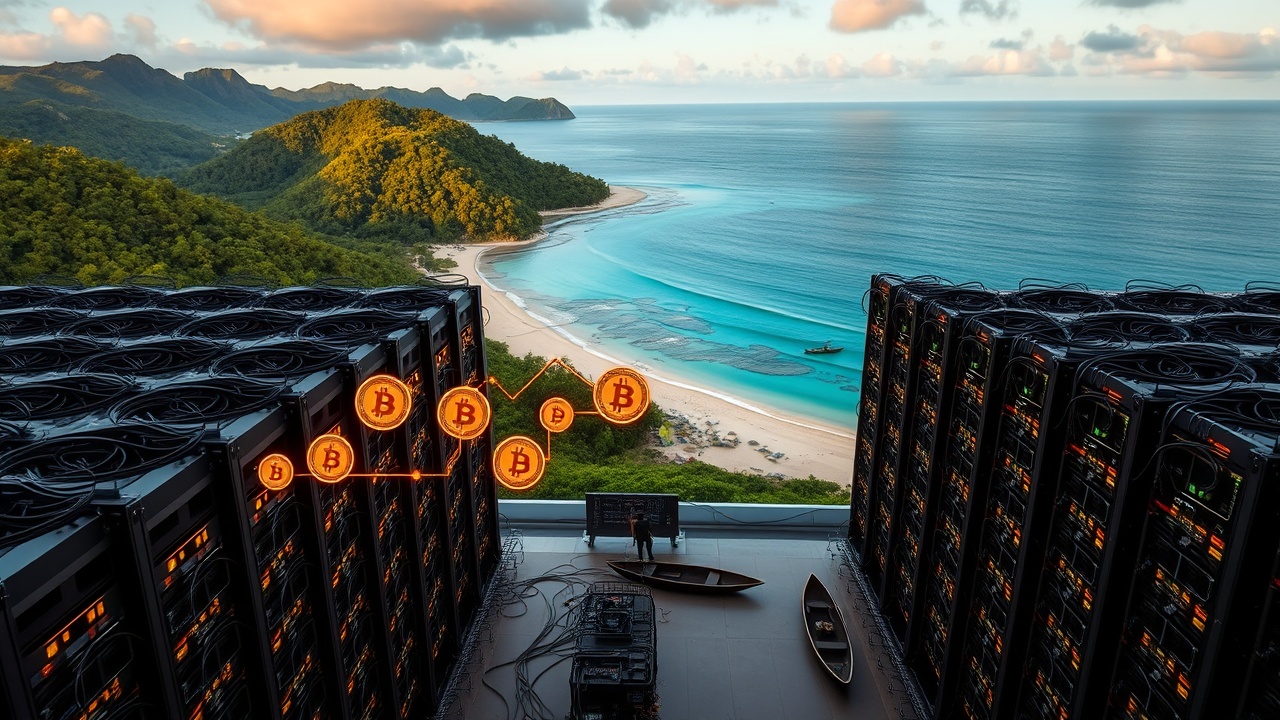
Colombian President Gustavo Petro envisions transforming the country’s Caribbean coastline into a thriving Bitcoin mining center, emphasizing the significance of utilizing clean energy sources and engaging local communities in the endeavor. He specifically highlighted Barranquilla, Santa Marta, and Riohacha as prime locations for this initiative, suggesting that Colombia could learn from neighboring countries like Venezuela and Paraguay, which have successfully attracted Bitcoin miners due to their access to inexpensive energy.
Economic Potential and Community Involvement
In a recent message on X, Petro expressed that the potential for Bitcoin mining could provide a remarkable economic enhancement for the Caribbean region, particularly if it is linked to renewable energy sources. He has extended an invitation to the Wayúu community, an Indigenous group largely residing in La Guajira, to play an integral role in these future projects as potential co-owners. This region is known for its abundant wind and solar energy resources, making it a suitable candidate for such initiatives.
Learning from Paraguay’s Success
The discussion surrounding Petro’s proposal draws attention to Paraguay’s growth in the Bitcoin mining industry, where substantial investments have been fueled by the country’s excess hydroelectric power, notably near the Itaipu dam. Recent news indicated that HIVE Digital acquired Bitfarms’ hydro-powered site in Paraguay for $56 million, which will enhance its mining infrastructure in the country to a total of 300 MW.
Colombia’s Renewable Energy Advantage
This pattern reveals why energy-rich nations are increasingly appealing to Bitcoin mining operations, as these firms prioritize cost-effective and reliable power supplies while host nations aim to monetize untapped electricity resources. Colombia already benefits from a significant renewable energy portfolio, with the World Bank reporting that about 75% of its electricity is generated from clean sources, considerably surpassing the global average.
Challenges Ahead
Petro’s vision could be positioned as a part of a broader strategy toward clean energy initiatives. He has previously cautioned against crypto mining that relies on fossil fuels, which could contribute to climate change aggravation. The Caribbean coast’s wind energy potential plays a crucial role in this vision, as evidenced by Reuters reporting that the state oil company, Ecopetrol, is set to operate the Windpeshi wind power project in La Guajira by 2028.
Political Landscape and Future Prospects
However, Petro’s plan faces a challenging political landscape, with his presidency concluding in August and the upcoming election scheduled for May 31. Due to term limits, he will not seek re-election, meaning the decision to pursue this Bitcoin mining vision will fall to the next administration. So far, leading candidates have not publicly clarified their positions regarding Bitcoin mining or the regulation of digital currencies.