Core Scientific’s Shift to AI
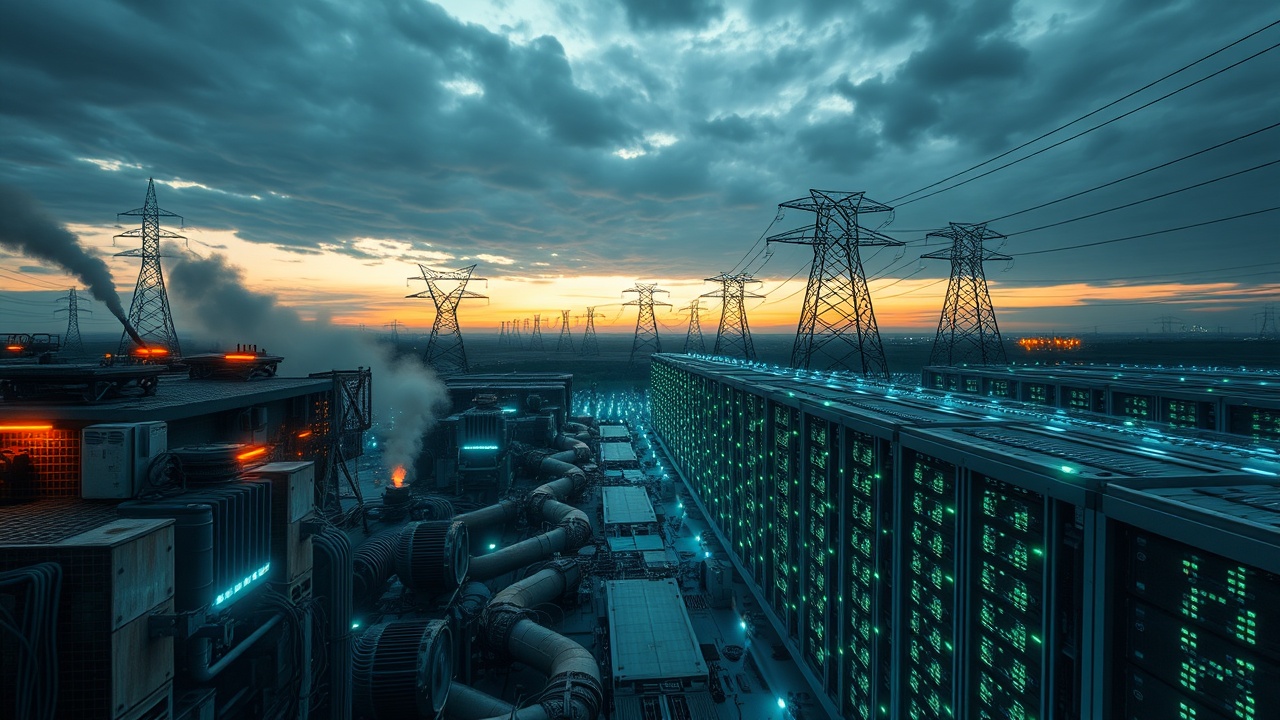
Core Scientific, renowned primarily for its Bitcoin mining operations, is pivoting towards the burgeoning artificial intelligence (AI) sector by transforming its facilities in Pecos, Texas, into a substantial AI data center campus. This ambitious project anticipates generating a substantial 1.5 gigawatts of gross power capacity, with approximately 1 gigawatt set aside for leasing purposes to meet the surging demand for AI computing resources.
Infrastructure Development
The company has plans to repurpose around 300 megawatts of electricity, currently being utilized for Bitcoin mining at the Pecos location, to power operations tailored to AI workloads. Initial groundwork for the first data hall has been completed, and vertical construction is underway, with the first phase expected to come online as soon as 2027. CEO Adam Sullivan emphasized the company’s strategy of utilizing its robust in-house experience to create a distinctive framework for next-generation AI infrastructure development.
Expansion and Funding
In a bid to bolster this project, Core Scientific has procured more than 200 acres adjacent to its existing site, allowing for enhanced expansion potential. Furthermore, the company has successfully arranged an additional 300 megawatts of power through contracts with its utility provider and is also considering a behind-the-meter power solution to bolster its energy supply.
To fund these advancements, Core Scientific recently announced its intention to raise $3.3 billion through senior secured notes maturing in 2031, with plans to allocate these funds towards data center expansions across several states, including Georgia, Texas, North Carolina, and Oklahoma.
Industry Trends
Previously dependent on revenue from digital asset mining, Core Scientific is increasingly pivoting its focus to providing infrastructure services amidst the challenging landscape that mining companies face due to surging energy costs and fluctuating market conditions. Many in the industry, including firms such as MARA Holdings, Hive, Hut 8, TeraWulf, and Iren, are following suit by converting their mining operations into data centers to adapt to the changing environment.
Additionally, the trend of repurposing energy-intensive sites is noticeable in the broader market; for instance, Alcoa is nearing the sale of its inactive Massena East smelter in New York to NYDIG, a Bitcoin mining entity, while TeraWulf has acquired Century Aluminum’s smelter in Hawesville, Kentucky, for $200 million with aspirations to convert it into an AI and high-performance computing hub.