Decentralizing Bitcoin Mining: Small Operators Struggle with Rewards Amid Proposed Marketplace
Bitcoin's smaller miners face challenges in receiving payouts due to outdated systems, prompting calls for middlemen to manage rewards more efficiently.
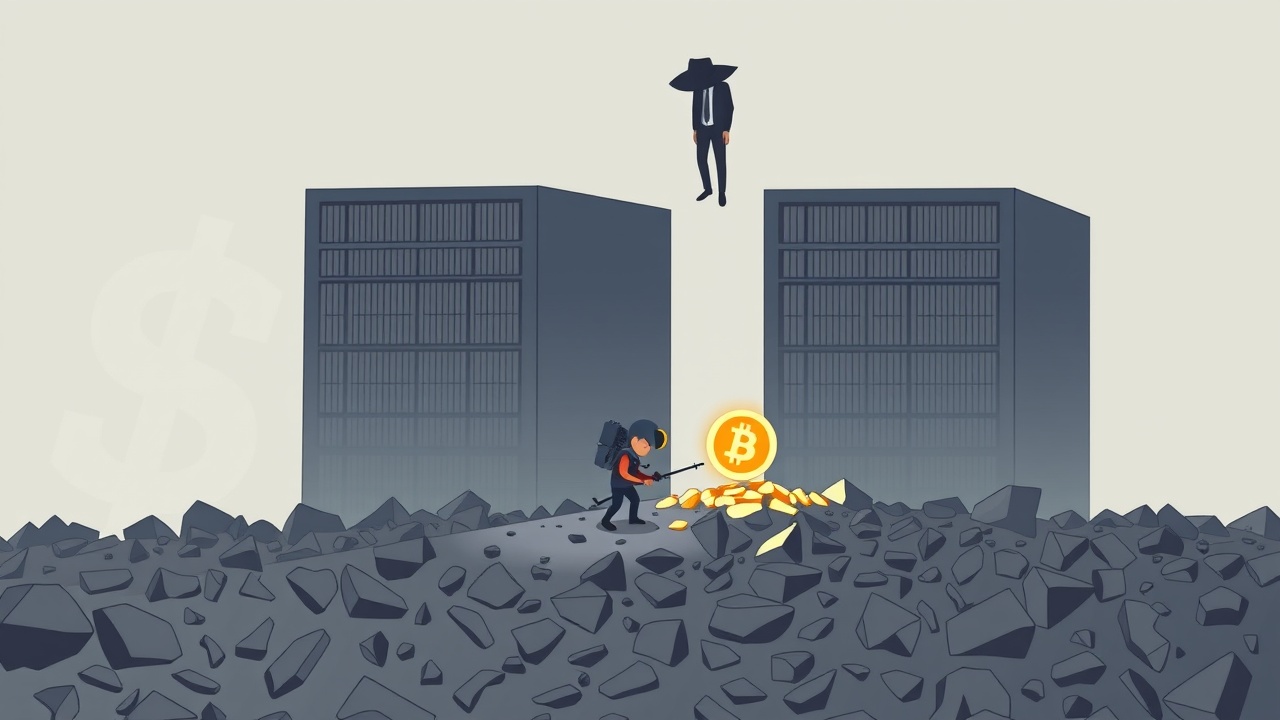
Decentralizing Bitcoin Mining: Challenges and Solutions
The ongoing effort to decentralize Bitcoin mining is hitting a longstanding hurdle, making it increasingly difficult for smaller miners to receive their due rewards. In a recent analysis of 2,545 Bitcoin blocks mined through P2Pool, one of the first decentralized mining networks, researchers uncovered that in July 2014, none of the 15,865 recorded payouts were less than 0.001 BTC. This research, conducted by a former operator of P2Pool and later shared by Bitcoin Optech on November 20, brings to light a challenge that developers continue to grapple with.
P2Pool vs. Conventional Mining Pools
Unlike conventional mining pools, which manage payouts internally, P2Pool disburses rewards directly from Bitcoin's block reward, known as the coinbase. This process demands a distinct transaction output for each miner, which inadvertently magnifies the transaction size and complicates the overall payment structure. Due to limitations posed by mining firmware and fierce competition for block space, the ability for smaller miners to receive direct payments is severely restricted.
Addressing the Limitations
To address this limitation, the initial iteration of P2Pool raised the threshold for miners to earn qualifying shares when payouts dipped below the 0.001 BTC mark. This strategy inadvertently made it tougher for smaller miners to earn qualifying shares, resulting in less reliable payouts.
Introducing P2Poolv2
To enhance accessibility for smaller operators, P2Poolv2 is working on a new model that would enable these miners to sell their shares instead of relying solely on direct block rewards. This revamped system would allow larger miners to continue receiving Bitcoin through traditional coinbase transactions, while smaller ones could sell their shares to potential buyers willing to aggregate them. These buyers would assume the risk and collect Bitcoin rewards if their combined shares meet the criteria for direct payouts.
While this approach could offer smaller miners quicker returns, it also introduces new complexities; they would need to rely on buyers to offer favorable prices for their shares before expiration. Additionally, experts have raised concerns that larger miners might split their computational power among multiple entities in order to secure the limited slots for direct payouts, which could further marginalize smaller miners.
Current Developments
Currently, P2Poolv2 is testing its sharechain and accounting systems on Bitcoin's testnet5, with its marketplace still in development. The success of this initiative hinges on whether a sufficient number of buyers can be attracted to support smaller miners while ensuring that the reward distribution does not become overly concentrated among larger operators.
Also in other languages: РусскийDeutschFrançaisItalianoEspañol