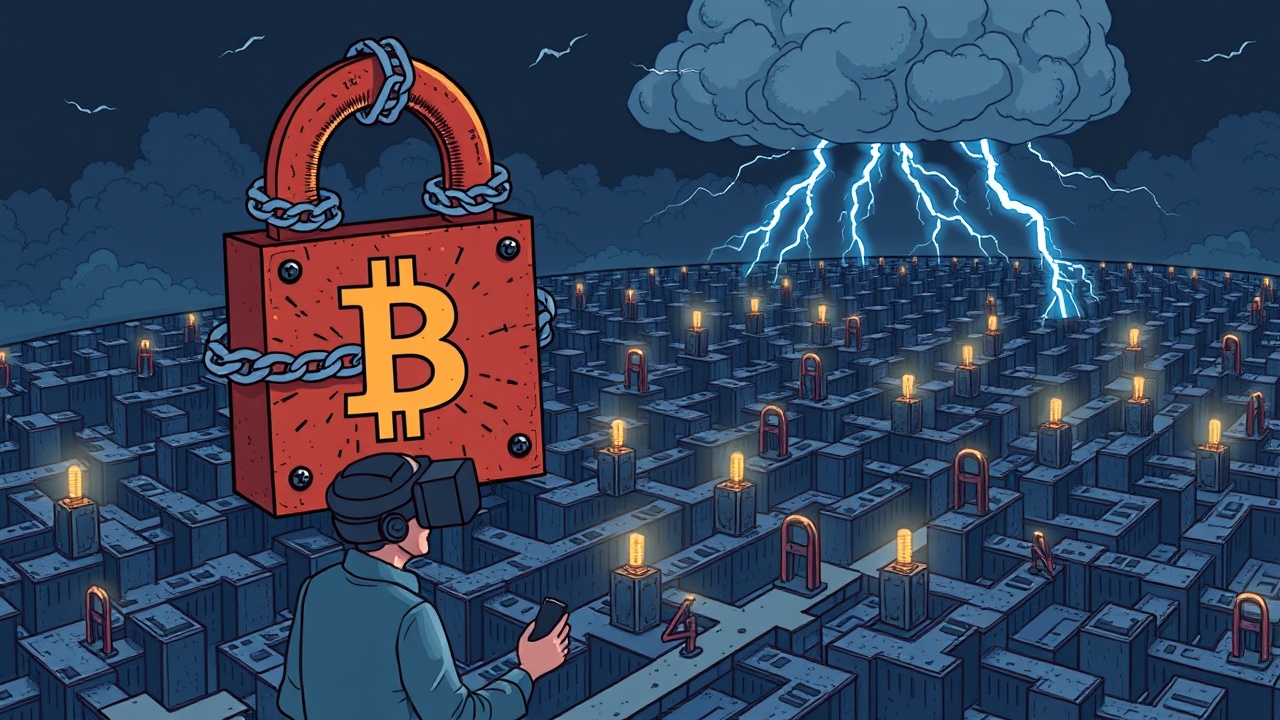
Challenges in Bitcoin Governance Post-Taproot
Since the introduction of the Taproot upgrade in November 2021, Bitcoin has been unable to successfully implement any proposed soft forks, a situation highlighted by Paul Sztorc, the founder of Drivechain and CEO of LayerTwo Labs. This ongoing failure, he asserts, reflects deeper challenges within the network’s ability to reach consensus on upgrades.
Concerns Over BIP-110 Activation
Sztorc, in an interview with crypto.news, expressed concerns following the unsuccessful bid to activate BIP-110, a temporary soft fork aimed at limiting certain types of non-financial data included in Bitcoin transactions. This proposal garnered support from only 51 blocks during a crucial 2,016-block signaling period, achieving a mere 2.53% miner approval. Consequently, on August 8, enforcement of BIP-110 led to a split in the network, resulting in a minor offshoot that managed to produce only two blocks before coming to a halt. Meanwhile, the main Bitcoin chain advanced without interruption.
Highlighting the challenges developers face in securing consensus on modifications to Bitcoin’s rules, Sztorc pointed out that BIP-110’s voluntary activation threshold of 55% was impossible to meet. As of early August, only 28 out of the first 1,108 blocks signaled support for the proposal. By the time the signaling period commenced at block 961,632, it was already mathematically clear that the desired level of support could not be achieved. While BIP-110 nodes rejected blocks lacking approval, miners predominantly continued to build on the non-enforcing Bitcoin chain, leaving the minority branch stalled at block 961,633 as the primary chain progressed 111 blocks ahead.
Ongoing Proposals and Governance Issues
The underlying issue of consensus in Bitcoin governance has become increasingly evident since the successful activation of Taproot, which itself was enabled through a rapid signaling method called the Speedy Trial. Since then, several proposals including OP_CAT—which seeks to restore a function disabled by Satoshi Nakamoto in 2010—have remained inactive despite developer support.
OP_CAT is seen by supporters as a means to enhance script functionalities, enabling two data elements to be combined. However, its acceptance requires not just technical review but also significant alignment among a diverse group of stakeholders, including developers and miners.
Another proposal, BIP-360, aims to introduce a new output type for quantum-resistant signatures yet faces similar challenges with gaining network consensus. Sztorc pointed out that despite increasing discussions around various proposals, none have seen activation, suggesting that Bitcoin’s governance model struggles with achieving the unified agreement needed for any changes to occur.
Drivechains and Miner Participation
Drivechains, intended to allow for optional sidechains to test new protocols without threatening Bitcoin’s core functionality, also encounter significant roadblocks in gaining consensus. Under the BIP-300 proposal, BTC could be transferred between the primary Bitcoin blockchain and various sidechains, each with tailored rules, but this too hinges on widespread approval from the network.
The proposal places an emphasis on miner participation, requiring a voting mechanism for withdrawal requests, which brings to light concerns about potential miner collusion or theft. Sztorc emphasizes the need for a viable economic model to incentivize miners to support these proposed sidechains.
Conclusion: The Future of Bitcoin Governance
The succession of failures in soft fork activations raises concerns, particularly in the U.S. where major mining operations and firms like Foundry USA Pool and Strategy, which owns a significant amount of Bitcoin, could heavily influence governance outcomes. The BIP-110 episode exemplified the complexities involved when American entities engage in governance debates, illustrating how existing power dynamics in mining can complicate the process of reaching consensus on any new proposals.