Introduction
In response to substantial losses experienced in the decentralized finance (DeFi) sector, Flying Tulip has implemented a new mechanism aimed at regulating the speed of withdrawal requests. This decision comes after a series of high-profile hacks in April that resulted in significant financial damage to various platforms.
Circuit Breaker Mechanism
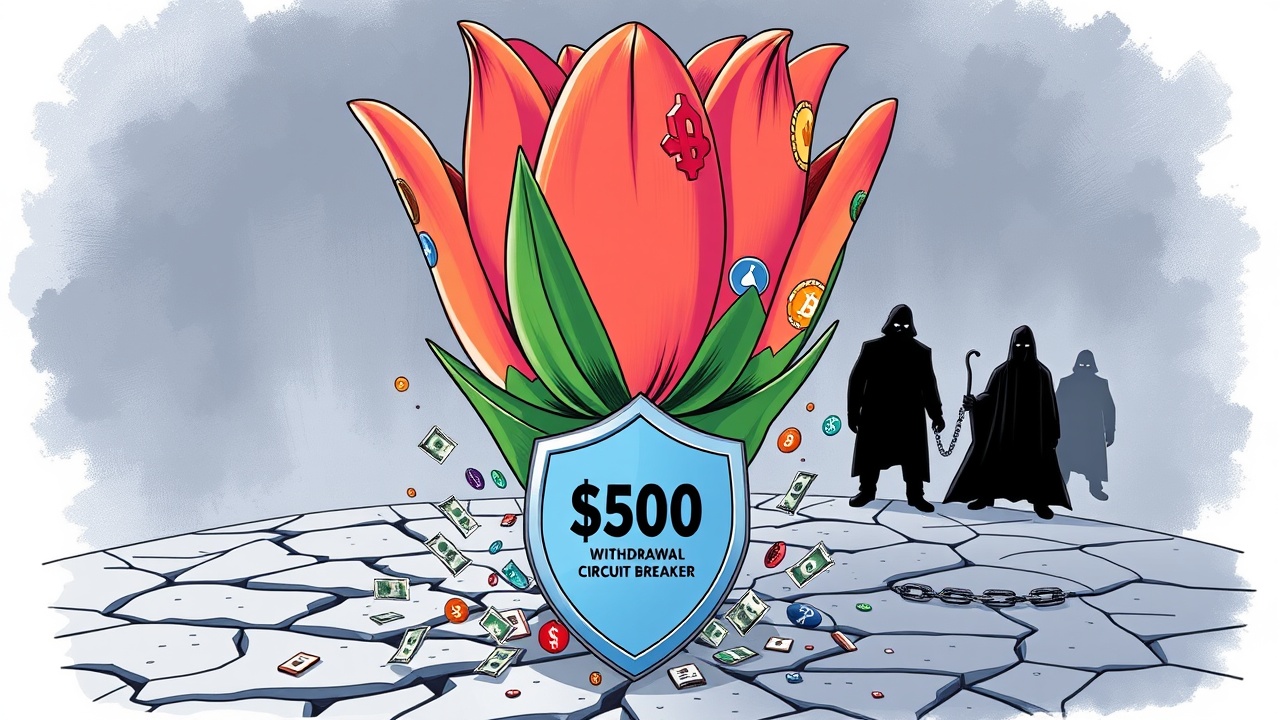
Specifically, the introduced circuit breaker is intended to postpone or manage the outflow of funds when there is an overwhelming rush to withdraw, allowing the Flying Tulip team the necessary time to scrutinize any irregular activity and mitigate potential financial harm.
Operational Variations
The operation of the circuit breaker varies between products. For example, users attempting to withdraw from the Perpetual PUT product may face failed requests, necessitating multiple attempts, whereas in the case of the ftUSD, deposits are queued instead of rejected outright, permitting users to access their funds after a designated waiting period. A real-time status page has also been made available, giving users insight into the circuit breaker’s current functionality.
Robust and Flexible Design
Designed to be robust yet flexible, the feature allows transactions to proceed even if the withdrawal safeguard fails, while still regulating excessive outflows, thus preventing a complete halt of operations. The growing consensus within the industry points towards the necessity of circuit breaker protocols, especially following recent incidents that highlighted vulnerabilities not limited to code flaws, but also to operational lapses.
Industry Vulnerabilities
Areas such as multi-signature arrangements, system configurations, and private key management have been scrutinized as hackers have adeptly circumvented standard smart contract protection measures.
Financial Impact
In these critical early days of April, blockchain security firm CertiK reported that total losses in the DeFi realm exceeded $600 million. Notably, two separate events accounted for the majority of these losses:
The Drift Protocol incident on April 2, which was estimated to have lost around $280 million, and the Kelp liquid restaking platform attack on April 19, resulting in approximately $293 million in losses.
The repercussions from the Kelp breach led to Aave taking preventative measures, including the suspension of rsETH markets across its V3 and V4 protocols.