
Introduction to Bitwater
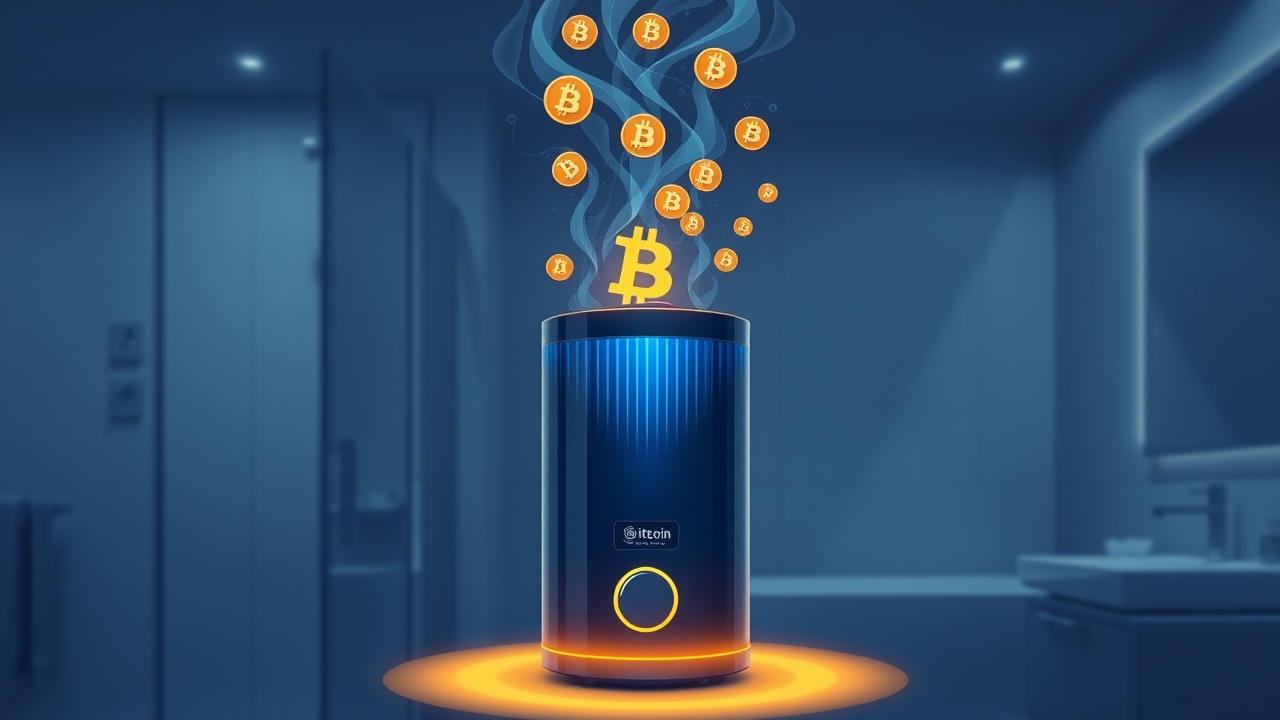
In a groundbreaking development, Heatbit has introduced a novel device called Bitwater that allows ordinary electric water heaters to mine Bitcoin while serving their primary function of heating water. Priced at $899 during its initial preorder period, the technology integrates 20 specialized mining chips into the existing heating element, thereby transforming electricity intended for hot showers into potential cryptocurrency earnings.
Product Launch and Pricing
This unexpected merger of household convenience and digital currency technology was unveiled around October 22, 2026, with the first batch, titled the Genesis batch, being offered for preorder. Future batches are expected to cost more, peaking at $1,299, with the onset of deliveries anticipated in the first quarter of 2027. However, it’s essential to approach this innovative product with caution, as it lacks independent customer validation due to its preorder status. Furthermore, the projected earnings from this setup may vary greatly, influenced by the fluctuating prices of Bitcoin and the ever-changing mining difficulties.
Engineering and Functionality
The engineering behind Heatbit’s product is essential but not overly complex. The device utilizes 20 Bitmain BM1370 application-specific integrated circuits (ASICs) to carry out SHA-256 computations, generating heat that simultaneously warms water. According to Heatbit, the mining operation can potentially reach a capacity of up to 34 terahash per second (TH/s), consuming around 600 watts of electricity. One of the significant advantages is its silent operation, as the water-cooled format eliminates the need for noisy fans typical of conventional mining rigs.
Financial Aspects
Here’s the intriguing financial aspect: since electric water heaters are designed to convert electricity into heat, the Bitwater device aims to monetize this electricity expenditure by generating Bitcoin. Heatbit suggests that homeowners can benefit from a supplemental source of income while performing the routine task of heating water.
Under optimal conditions, mining returns are estimated to be between $1 to $1.25 per day, translating into annual earnings of approximately $365 to $455. However, these figures are contingent on various factors, including Bitcoin’s market price, mining difficulty, and water heater usage. At an initial cost of $899, if the projected earnings materialize, users could see a return on investment in about two to 2.5 years—provided that mining conditions remain stable and installation costs are not factored in.
Installation and Monitoring
Heatbit’s social media presence indicates that the installation of the Bitwater unit into existing water heaters is straightforward, eliminating the need for a complete tank replacement. The device is designed to fit compatible electric storage tanks that hold between 30 and 80 gallons. However, it’s worth noting that the 600-watt output is substantially lower than the conventional 4,500-watt elements commonly used in households, which may slow recovery rates during peak hot-water demand.
For monitoring, users can track temperatures, mining performance, and earnings via a dedicated application. While solo mining is the default setting, it also accommodates various mining pools. Founded in 2020 by Alex Busarov, Heatbit has previously ventured into other innovative products such as mining-operated space heaters and air purifiers, expanding its reach into yet another domain of home appliances with Bitwater.
Conclusion
Despite its promise, the continuity of this product’s profitability is uncertain, hinging heavily on the volatile nature of Bitcoin mining economics—a market that may not only affect earnings but also the overall appeal of the investment. The future effectiveness of this unique integration of energy and cryptocurrency remains to be seen, especially amid shifting market dynamics.