Hong Kong Introduces Legislation to Regulate Cryptocurrency Service Providers
Hong Kong's new crypto licensing bill aims to regulate dealers, advisers, asset managers, and custodians, enhancing investor protection in the digital asset market.
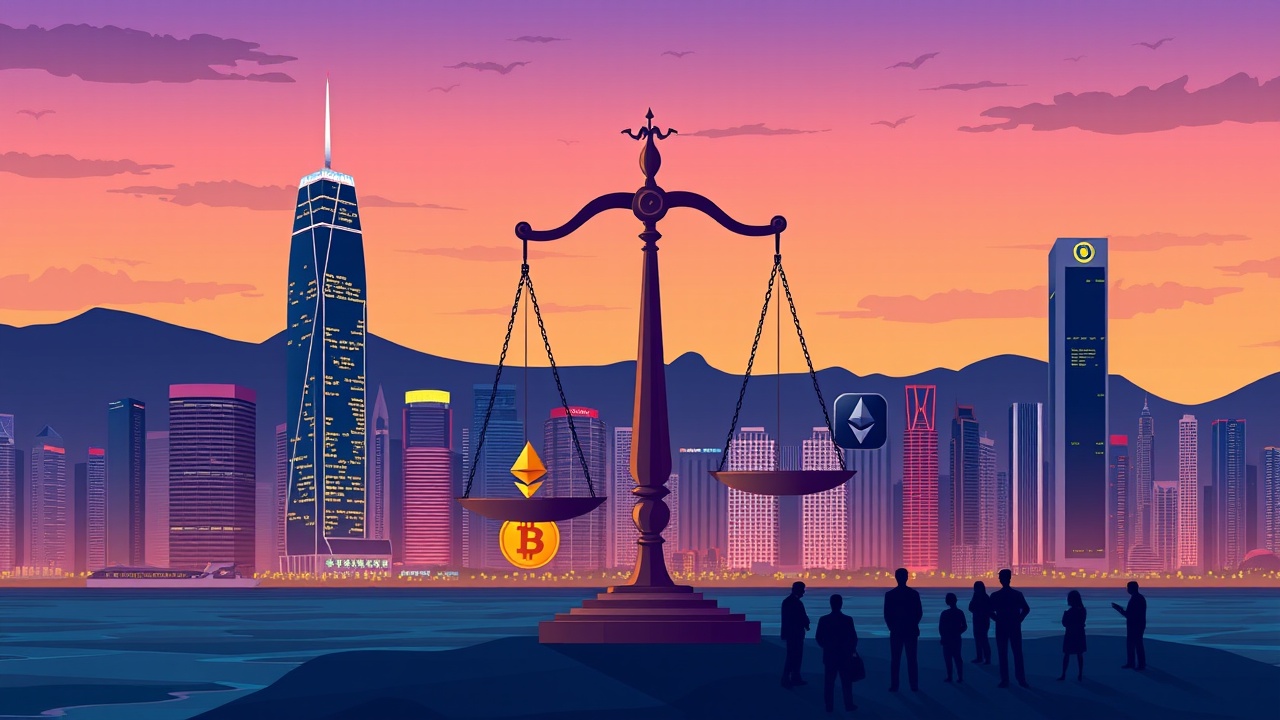
Hong Kong's Virtual Asset Regulatory Update
Hong Kong's government has initiated a significant update to its virtual asset regulatory landscape with the publication of the Virtual Asset Services Legislation (Amendment) Bill 2026. Announced on November 20 and set for its first reading in the Legislative Council on December 2, the bill aims to extend regulations to four new categories of service providers: cryptocurrency dealers, advisors, asset managers, and custodians. This legislative move, which amends the Anti-Money Laundering and Counter-Terrorist Financing Ordinance, requires businesses engaged in virtual asset dealings to secure authorization from the Securities and Futures Commission (SFC).
Licensing and Regulatory Standards
The proposed law mandates that companies offering these services obtain proper licensing while adhering to stipulated regulatory standards. Such businesses must comply with “fit-and-proper” criteria and meet all relevant regulatory obligations. Furthermore, banks and operators of stored value facilities, which are currently regulated by the Hong Kong Monetary Authority, will also be required to register with the SFC to offer virtual asset services.
Consultation and Industry Feedback
This change comes after extensive public consultations led by the Financial Services and the Treasury Bureau and the SFC, which began in June 2025. The government gathered feedback from various stakeholders with 101 submissions regarding cryptocurrency dealings and another 93 on custody services during an August 2025 consultation phase. After original considerations to encompass advisory and management within the same framework as dealing, regulators opted to create distinct licensing categories following industry feedback. A subsequent consultation in December 2025 resulted in 51 submissions, where most respondents expressed support for regulatory measures comparable to those governing conventional securities markets.
Strategic Aspirations and Regulatory Alignment
Chris Hui, Secretary for Financial Services and the Treasury, emphasized that this legislative framework aligns with Hong Kong's strategic aspirations within its First Five-Year Plan and aims to cultivate a competitive digital asset market, guided by the principle of “same activity, same risks, same regulation.” In line with the findings from the consultations published in May, cryptocurrency advisors will need to adhere to regulations akin to Type 4 activities under the Securities and Futures Ordinance, overseeing advisory services for virtual asset transactions.
Scope of Proposed Regulations
The proposed regulations will encompass businesses that offer buying or selling advice on digital assets, including investment research. Notably, services such as copy trading and AI-driven investment recommendations would likely be included under the advisory licensing requirements. However, companies that provide general market information or tools for independent research without specific recommendations would not fall under this regulatory umbrella.
Asset Management and Custodians
For asset managers, the framework aligns with Type 9 regulated activities, covering those with discretionary powers to make investment choices for clients. It's important to note that while a minimum threshold for cryptocurrency exposure to necessitate a management license has not been established, managers dealing with mixed portfolios of cryptocurrencies and traditional securities may be held to both regulatory standards.
A particular focus of the regulatory framework is on custodians responsible for protecting digital assets. The authorities highlighted risks such as cybersecurity breaches and technological failures in their December 2025 consultation outcomes, stressing that businesses utilizing third-party custodians for key storage will not be subject to the new licensing requirements. Furthermore, affiliated entities of licensed cryptocurrency exchanges that provide custody services will also require separate licensing.
Industry Reactions and Future Developments
Julia Leung, the CEO of the SFC, heralded the introduction of the bill as a considerable step towards fortifying Hong Kong’s virtual assets regulatory regime. She noted that comprehensive regulations would bolster investor protection and offer businesses clearer pathways for developing innovative financial products responsibly.
As part of ongoing efforts to assimilate digital assets into the existing financial system, the SFC currently oversees a register of 13 licensed virtual asset trading platforms. Furthermore, in April, HSBC and Anchorpoint Financial became the first entities to receive licenses for stablecoin issuance, following the enactment of the Stablecoins Ordinance in August 2025. Recently, on November 19, HSBC launched an Ethereum-based tokenized fund, enabling customers to make investments through its HKD-backed RedCoin stablecoin.
Data shared by Acting Secretary for Financial Services and the Treasury Joseph Chan indicated that by September’s end, 17 retail investment products linked to tokenized classes were authorized, with approximately HK$10.3 billion assets under management. Additionally, two approved tokenized money market funds commenced 24/7 trading on licensed virtual asset platforms as of October 26.
Also in other languages: РусскийDeutschFrançaisItalianoEspañol