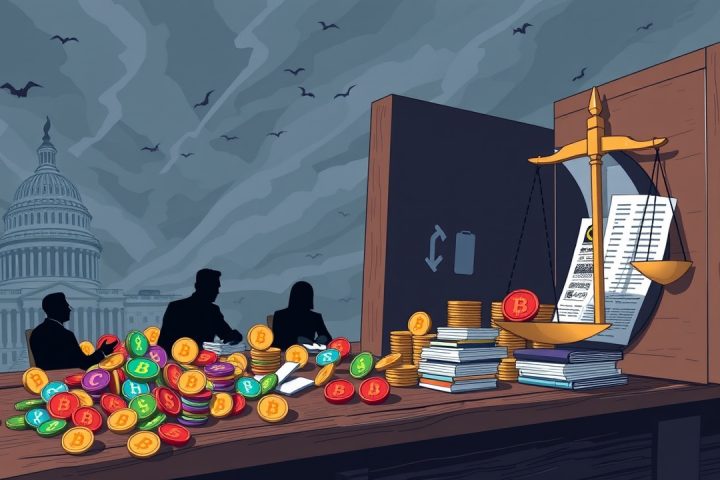
The House of Lords Votes for Digital Assets Strategy
The House of Lords in the United Kingdom has recently dealt a significant blow to the government by voting in favor of an amendment that mandates the Treasury to formulate a national strategy for digital assets. This decision, which passed with a vote count of 194 to 138, occurred on September 9 and intensifies the United Kingdom’s need to refine its approach toward the expanding realms of cryptocurrency, stablecoins, and tokenized financial instruments.
Details of the Amendment
The amendment was championed by Baroness Neville-Rolfe, a Conservative member and former Treasury minister, reflecting a growing parliamentary pressure on the government’s crypto policy. Specifically, the House of Lords demands that the Treasury not only produce and publish a comprehensive digital assets strategy but also consult on it within a year of the legislation being enacted.
This strategy is comprehensive in scope, going beyond just traditional cryptocurrencies to encompass a wide range of digital financial assets, including stablecoins, central bank digital currencies, tokenized securities, as well as the necessary infrastructure for payments and settlement services. Additionally, it instructs the Treasury to analyze access to banking and services, as well as potential competitive risks when these services are withdrawn—criteria that are crucial for various stakeholders ranging from traditional financial institutions to emerging crypto exchanges and tokenization firms.
Context and Implications
Importantly, this legislative push occurs within a context where the UK government has recently endorsed a proposal aimed at empowering the Bank of England to foster innovation in payment systems, further intertwined with digital financial operations. Despite existing frameworks, such as the Financial Conduct Authority’s (FCA) finalized regulations for cryptoassets set to take effect in the coming years, the Lords’ amendment emphasizes a need for a more cohesive national approach that integrates regulation with market competitiveness.
As of now, the Financial Services and Markets Bill, which includes this amendment, is still under deliberation in Parliament, with the third reading in the House of Lords anticipated for September 15, prior to its progression to the Commons. This push for a decisive framework echoes similar developments worldwide, such as the European Union’s Markets in Crypto-Assets (MiCA) regulation set to be fully applicable by the end of 2024 and various measures in the United States aimed at establishing national standards for digital payments and cryptocurrencies.
Conclusion
Thus, the outcome of this vote represents more than just a routine parliamentary decision; it demonstrates a pivotal shift as the UK grapples with how best to harness and regulate the fast-evolving digital asset landscape, signaling to industry players that the government recognizes the imperative to attract and support businesses innovating in this field.