Injective Labs Seeks SEC Approval for On-Chain Order Books in Tokenized Stock Trading
Injective Labs requests the SEC's approval for onchain order books to trade tokenized U.S. stocks, aiming to enhance trading efficiency and regulation.
Injective Labs' Proposal to the SEC
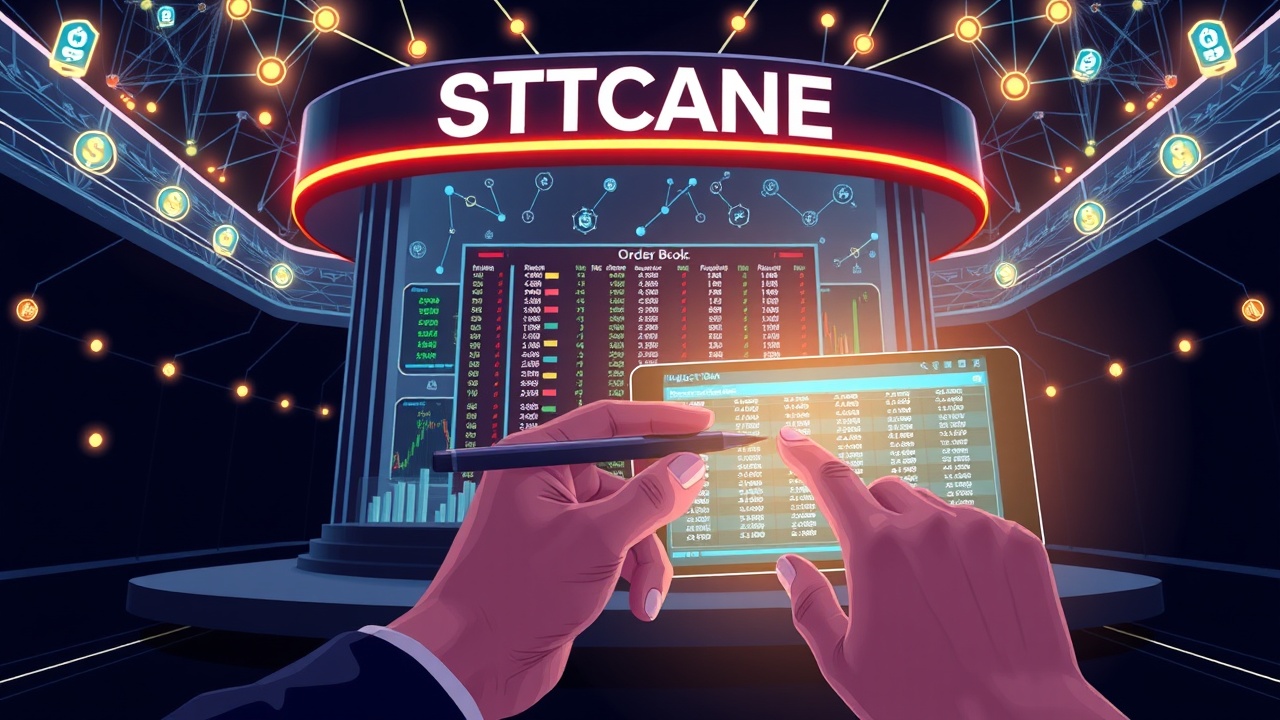
Injective Labs has approached the U.S. Securities and Exchange Commission (SEC) with a request to allow trading of tokenized U.S. stocks through venues that utilize on-chain order books, leveraging the agency's temporary Innovation Exemption. In a detailed comment letter spanning 22 pages, submitted on November 23 and made public on November 26, the company advocates for a broader interpretation of what constitutes a tokenized securities venue. Specifically, they propose that the SEC's definition should encompass order books that permit trading exclusively among approved participants.
Uniform Eligibility Criteria
Injective argues that the eligibility criteria should be uniform, whether the order book operates via smart contracts on a public blockchain or is integrated within the blockchain infrastructure itself. This push aligns with the SEC's exemptive order issued in September, which offers qualifying trading platforms a five-year grace period from being classified as exchanges based on traditional regulatory definitions.
Trading Mechanisms and Advantages
As reported by crypto.news when the exemption was announced, the order applies to trading venues employing automated market makers—software tools that facilitate trade execution and price setting through pooled assets. In contrast, order books aggregate bids and asks from traders, matching them based on favorable pricing.
Injective intends to maintain the current conditions of the exemption, including limitations on trading volumes and access restrictions, while seeking to establish a framework that could be utilized by any qualifying venue. The existing terms for a distinct dealer exemption, which benefits certain firms that provide liquidity to automated market maker pools, are set to remain unchanged.
The firm highlighted the advantages of approved trading participants retaining custody of their assets, conducting trades around the clock, and enjoying transaction settlements in mere seconds—all while ensuring a transparent record of each trade. By integrating order books, Injective asserts that the SEC would receive valuable transactional data, similar to conventional stock exchanges. This would include metrics such as the disparity between the bid and ask prices, the available quantities at each price point, and the overall order fulfillment rates.
Engagement with the SEC
Injective's submission builds upon prior discussions with the SEC’s Crypto Task Force, held on October 14. In their correspondence, Injective expressed that the venue should be defined as the U.S.-based entity or group that organizes the market, dictates trading conditions, and determines user access. The company believes that simply processing orders as blockchain validators would not suffice to qualify as venue operators under their proposed definition.
Market Regulation and Safeguards
To prevent trading outside predetermined limits during regular market hours, Injective plans to enforce price bands reflective of publicly listed shares. If there are disruptions to price feeds, they propose that order execution must be halted until normal data flow is restored. Beyond standard trading hours, each venue would be responsible for implementing and making public their own measures for handling volatility.
Furthermore, Injective aims to ensure that venue operators are vigilant against manipulative practices such as spoofing—where traders create misleading signals about demand or supply by placing and quickly canceling orders. Their proposed matching system would prevent trades from being executed if they are linked to the same trader or to accounts controlled by them.
The firm indicated that their design utilizes batch auctions as a mechanism to neutralize the competitive edge that could otherwise lead to front-running, providing every accepted order from each batch with a uniform clearing price. Venue operators would need to demonstrate that they have a designated individual capable of halting and resuming trading processes before operations commence, with this cap encompassing all possible order entry channels.
Industry Reactions and Future Discussions
In a separate letter dated November 16, Nasdaq expressed concerns that distributing trades across various tokenized venues might dilute liquidity and complicate investors' ability to access unified pricing information. The stock exchange operator has urged the SEC to formalize rules regarding tokenization within the National Market System, giving issuers an opt-in mechanism.
Furthermore, during an event in Brussels on November 26, Nasdaq executive Roland Chai advocated for the exploration of unified issuance regulations for the EU. Carlos Domingo, CEO of Securitize, expressed support for the temporary order in another SEC filing, emphasizing the need for the SEC to monitor pricing discrepancies between tokens and their underlying stocks.
The SEC's Investor Advisory Committee is set to host a public discussion panel focused on the nuances of tokenization on December 3 at 10 a.m. ET, where risks, advantages, and potential revisions to the exemption will be on the agenda. Among the panelists are OKX's deputy general counsel, Andree Goldsmith, Securitize's president, Brett Redfearn, former Commodity Futures Trading Commission chair Timothy Massad, and Amanda Fischer from Better Markets.
Also in other languages: РусскийDeutschFrançaisItalianoEspañol