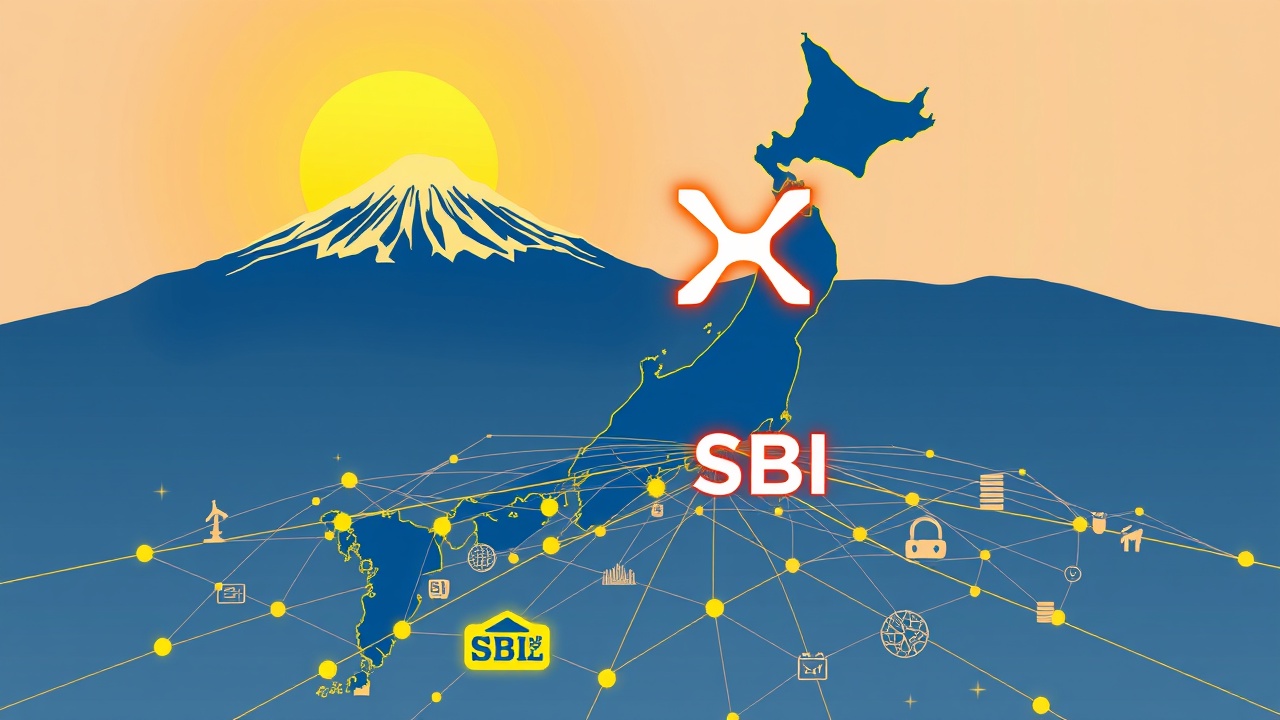
Japan’s Integration of XRP into Financial Infrastructure
As discussions about the price and trends of XRP continue in many corners of the globe, Japan is making strides in making the cryptocurrency an integral part of its financial infrastructure. In a significant move, Japan has introduced regulated prepaid currency on the XRP Ledger, recognized a stablecoin endorsed by Deloitte, and even allowed for tokenized bonds that provide bonuses in XRP. Furthermore, one notable financial institution is distributing dividends to shareholders in XRP, showcasing the actual utility of the token in a regulated environment.
Prepaid Payment Tokens and Regulatory Oversight
In March 2026, a travel firm in Japan started offering prepaid payment tokens to customers, utilizing the XRP Ledger under the guidance of the nation’s Financial Services Agency (FSA). This milestone, which went largely unnoticed outside Japan, represents a long-awaited advance for XRP supporters around the world: it signifies the transaction of legitimate, regulated money on the ledger within the confines of the world’s third-largest economy.
This initiative is spearheaded by SBI Ripple Asia, a subsidiary of the financial conglomerate SBI Holdings, which has spent the better part of a decade integrating Ripple’s technology into Japan’s financial framework. Their efforts include establishing a payment joint venture, distributing RLUSD with verified reserves, and creating tokenized corporate bonds with added XRP incentives for bondholders. Such extensive integration and operational support for XRP is unmatched in other regions and provides a practical insight into what the utility of the token truly can be.
Partnership and Regulatory Framework
The partnership between SBI and Ripple began back in 2016, with SBI Ripple Asia founded to facilitate Ripple’s technology across financial institutions in Japan and Asia. As one of Ripple’s largest shareholders, SBI’s Chief Executive Yoshitaka Kitao has constantly advocated for the token, maintaining his commitment through various market challenges.
The Japanese regulatory framework is highly structured and demanding, reflecting the lessons learned from past incidents like the collapse of Mt. Gox in 2014. Post-crisis measures led to stringent licensing policies for exchanges and payment services that require thorough oversight. Every aspect of SBI’s operations utilizing Ripple’s technology has successfully obtained the necessary licenses under these regulations.
Market Developments and Future Prospects
In contrast to the tumultuous narrative surrounding XRP in other parts of the world, Japan’s approach has been methodical, establishing a foundation for sustained growth despite market fluctuations. XRP’s value in the global market may have waned, but Japan’s initiatives continue to reinforce the practical utility of the token, demonstrating how financial infrastructure can evolve over time to accommodate innovative technologies.
The latest developments in Japan’s prepaid payment system, amounting to a massive 30 trillion yen (approximately $200 billion), showcase a robust market ripe for digitization. With prepaid spending prevalent in transit, retail, and entertainment sectors, the regulatory framework allows for these operations to be executed using digital tokens on the XRP Ledger. The recent launch of prepaid tokens by Tobu Top Tours illustrates the potential for scalable solutions that offer the possibility for broader market participation.
Moreover, the introduction of Ripple’s RLUSD stablecoin into Japan’s regulatory framework marks a significant entry into a tightly controlled market, helping to establish a stronghold that competitors may find challenging to penetrate. This presents a notable advantage, given that market entrants like Tether have struggled to meet Japan’s stringent listing standards.
In addition to these developments, SBI announced the issuance of tokenized corporate bonds that reward investors with XRP bonuses, further embedding the cryptocurrency within mainstream financial products. The integration of XRP into these securities, alongside ongoing partnerships in remittances and consumer reward systems, contributes to a compelling narrative of authentic financial integration.
Conclusion
This deeply ingrained partnership and long-term strategy illustrate not just fintech innovation but also reflect a cultural and regulatory acceptance of cryptocurrencies as viable financial instruments within Japan. However, the scenario remains unique to Japan; the same can’t be said for other regions where XRP’s narrative is often characterized by regulatory challenges and financial speculation.
In summary, Japan serves as a critical benchmark for the successful incorporation of XRP into functional economic components. Its journey raises essential questions about the scalability of similar initiatives in other markets and highlights the potential fragility of XRP’s reliance on a single region and its champions. Current developments suggest a fertile ground for operationalizing cryptocurrency in ways that prioritize regulatory compliance and consumer engagement — a path yet to be fully explored elsewhere.
Disclaimer: This article is intended for informational purposes only and does not constitute investment advice. The digital asset market is volatile and poses risks of total loss. Always conduct thorough research before making investment decisions. Information accurate as of July 6, 2026.