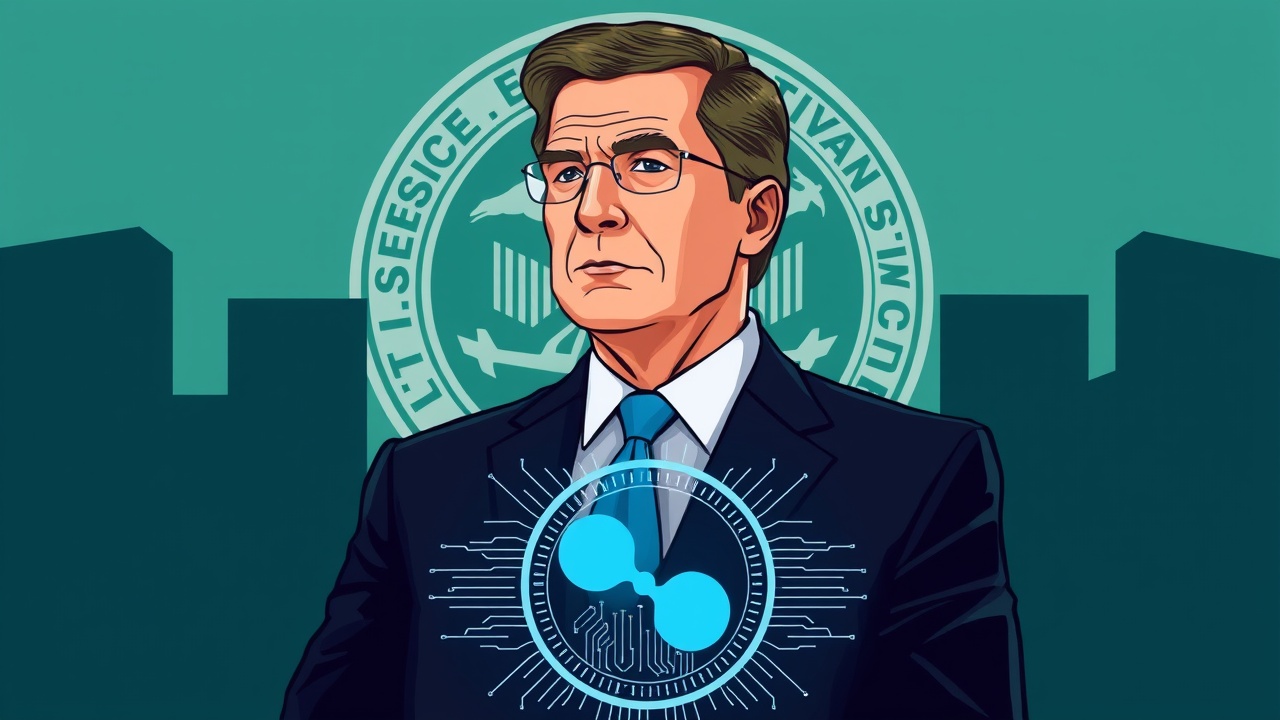
Jay Clayton Sworn in as U.S. Director of National Intelligence
Jay Clayton, who recently took his oath as the new U.S. Director of National Intelligence (DNI), is well-known for his tenure as the chairman of the U.S. Securities and Exchange Commission (SEC). His swearing-in was confirmed on Tuesday by Margo Martin, a Special Assistant at the White House, following a contentious Senate vote that concluded with a slim margin of 51-47 in favor of his confirmation. In this new role, Clayton will oversee the operations of the United States intelligence community, stepping in for his predecessor, former Congresswoman Tulsi Gabbard.
Clayton’s Impact on Cryptocurrency
Clayton’s name remains prominent in the cryptocurrency landscape due to his pivotal decision to initiate a significant lawsuit against Ripple Labs. This lawsuit, which was filed on the final day of his SEC chairmanship on December 22, 2020, also named Ripple’s CEO, Brad Garlinghouse, and Executive Chairman, Chris Larsen. Even though Clayton departed from the SEC shortly after filing the case, the litigation continued under Gary Gensler‘s leadership, leading to a series of legal victories for Ripple that have since prompted the SEC to reevaluate its stance on cryptocurrency regulations.
Evolution of Clayton’s Perspective on Digital Assets
Notably, after his departure from the SEC, Clayton’s perspective on the digital asset space evolved significantly. In March 2021, he joined One River Asset Management‘s advisory council, engaging with its digital asset division focused on Bitcoin and Ethereum. Shortly after, he accepted a position on the advisory board of Fireblocks, a company specializing in crypto infrastructure. During this time, he recognized Fireblocks as a prominent entity in the dynamic field of digital assets and advocated for the necessity of clear regulatory frameworks for digital asset custody, emphasizing the importance of robust security measures for institutional clients.
Future of Cryptocurrency Regulation
In recent statements, Clayton has expressed a favorable view of blockchain technology and highlighted the urgent need for regulatory clarity regarding stablecoins, decentralized finance, and Bitcoin exchange-traded funds (ETFs). Looking ahead, he has suggested that significant cryptocurrency legislation is likely to emerge from the current administration, marking a period of potential regulatory transformation in the industry.