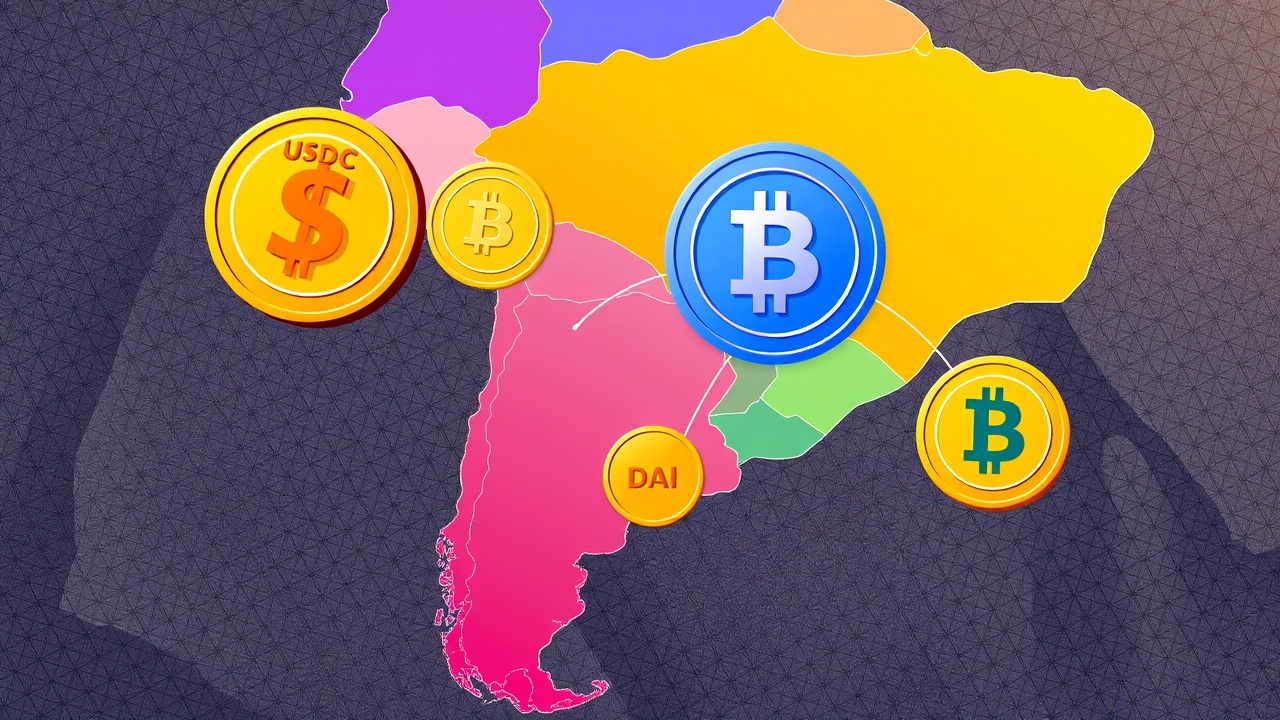
Latin America Leads in Stablecoin Adoption
In a recent report by The Digital Chamber, which was founded in 2014 to promote progress within the digital assets sector, Latin America has emerged as a leader in stablecoin adoption. This trend is expected to accelerate further due to upcoming regulations that aim to incorporate cryptocurrencies into existing financial systems. Currently, the region boasts the highest global rate of stablecoin use, ahead of other geographies.
Regulatory Changes Driving Adoption
Particularly in markets such as Brazil, Bolivia, and Argentina, favorable regulatory changes have spurred a remarkable rise in stablecoin utilization, facilitating institutional transactions. Specific advancements include:
- Brazil’s Virtual Assets Law
- The lifting of an extensive crypto ban in Bolivia
- New exchange registration guidelines in Argentina
Institutional Adoption and Transaction Volumes
The report highlights that approximately 71% of institutions in Latin America are already employing stablecoins for cross-border transactions, positioning this region at the forefront of this financial innovation worldwide. As a direct result of this increased adoption, stablecoin transaction volumes in Latin America are predicted to soar to $324 billion by 2025—a significant 89% year-over-year increase.
Notably, in Brazil and Argentina, stablecoins are tied to 90% and 60% of all cryptocurrency transactions, respectively, illustrating their growing significance in these markets.
Cost Efficiency and Future Prospects
The report noted a staggering 30-fold increase in business-to-business (B2B) stablecoin volumes over the last two years, with cross-border payments being a leading use case. Research from Mizuho has shown that using stablecoin solutions can reduce transaction costs to below 1%, compared to traditional payment intermediaries that typically charge between 5% and 7%.
If stablecoins were utilized for the estimated $142 billion sent from the U.S. to Latin America in 2025, savings could potentially reach up to $8.9 billion.
Expanding Cryptocurrency Adoption
As regulatory climates become more defined and stablecoin usage expands, they are set to play an even greater role in the future of payment systems, savings, and international transfers across Latin America. Additionally, a crypto wallet provider has announced the expansion of its crypto-backed credit card offering, which will soon be accessible to citizens across 13 Latin American nations, further broadening the scope of cryptocurrency adoption in the region.