Overview of the CLARITY Act
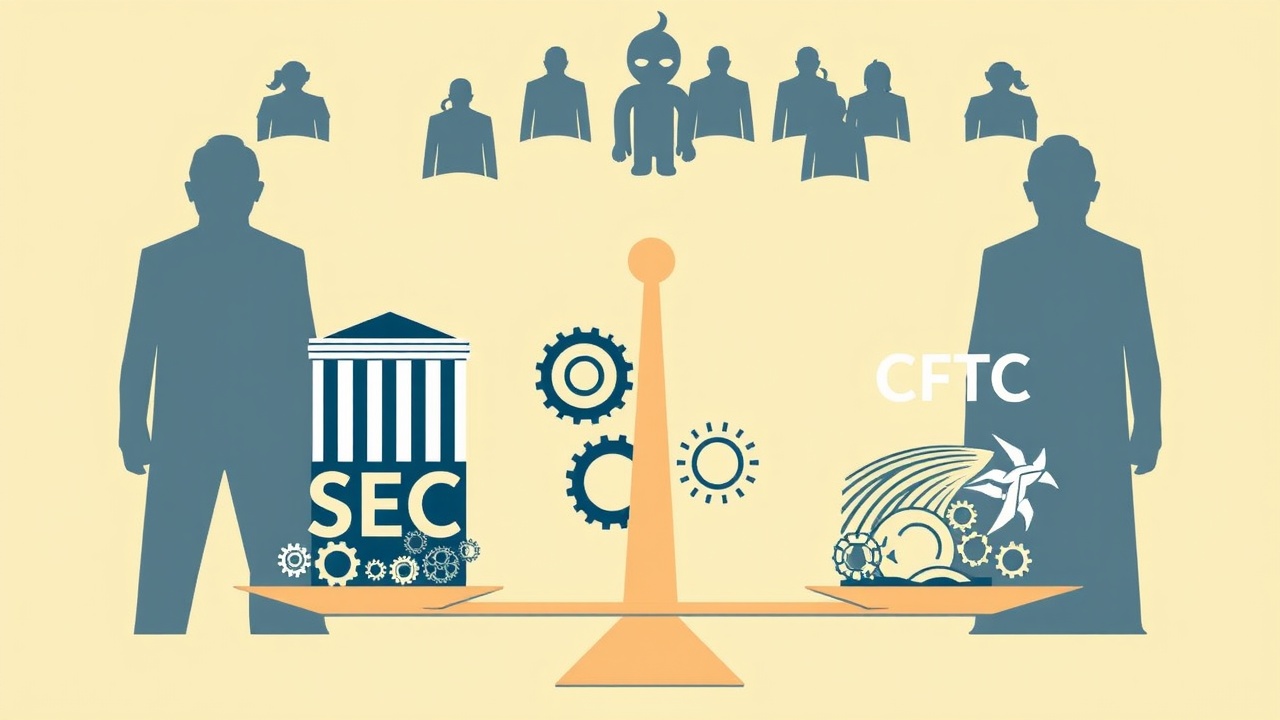
The proposed legislation known as the CLARITY Act aims to create a defined regulatory structure for digital assets, clearly delineating responsibilities between two major financial regulatory bodies—the Commodity Futures Trading Commission (CFTC) and the Securities and Exchange Commission (SEC). This act provides guidelines for registration, oversight, and recordkeeping for digital assets, although it does not offer solutions for reconciling operational activities or updating outdated processes.
Key Features of the Legislation
Introduced on May 29, 2025, by Chairman French Hill under the designation H.R. 3633, this comprehensive bill focuses particularly on establishing a market structure for digital assets. A key feature of the act is Section 401, which grants the CFTC exclusive authority over cash or spot transactions involving digital commodities traded through recognized exchanges, brokers, and dealers that register with the agency. To expedite registration, the CFTC is expected to implement a faster process for these entities.
Meanwhile, the SEC will maintain its regulatory oversight over anti-fraud measures for transactions involving approved payment stablecoins and digital commodities, as long as these transactions occur within SEC-registered entities. An important stipulation in Section 304 is that SEC-registered firms that also function as digital commodity exchanges, brokers, or dealers must have conflict-of-interest policies in place. Additionally, the act mandates a memorandum of understanding between the two agencies to ensure streamlined oversight and effective information sharing.
Operational Challenges and Industry Insights
Despite the extensive regulatory framework outlined in the CLARITY Act, a significant shortcoming pertains to addressing the operational challenges faced by the capital markets, especially within back-office functions. A recent report by AutoRek highlights the continuing pressure on operations due to increasing transaction volumes, the emergence of new asset classes, and issues surrounding data fragmentation. Among the surveyed leaders in operations and technology across the U.S. and the U.K., 85% anticipate strain in scalability as activity levels rise against a backdrop of legacy operating processes.
Moreover, firms involved in digital assets reported that nearly 60% find themselves grappling with more complex operational structures compared to traditional asset classes. The survey findings revealed that 41% of executives noted data integration as their primary operational hurdle. On top of that, organizations often divert a significant portion of their operating budgets—estimated at 15.9%—to manage inefficiencies caused by reliance on manual procedures and outdated spreadsheet systems. Although AI is now utilized by 98% of these firms in some capacity, only 14% have achieved full integration of this technology throughout their operations, indicating a gap between regulatory and operational realities.
Conclusion
The bill does touch on some aspects of operational infrastructure; notably, Section 305 facilitates the use of blockchain records to satisfy existing recordkeeping requirements for brokers, dealers, and investment companies, conditioned upon new SEC rulemaking within 180 days of the act’s passage. Additionally, Section 402 necessitates that futures commission merchants safeguard customer digital assets with proper digital custodians.
In essence, while the CLARITY Act lays the groundwork for the regulation of digital commodities and stipulates frameworks regarding custody, recordkeeping, and the roles of the SEC and CFTC, it falls short of providing comprehensive solutions for the operational difficulties facing many capital markets. Thus, while regulatory clarity is an important step forward, tackling issues related to operational modernization remains a distinct yet necessary undertaking.