
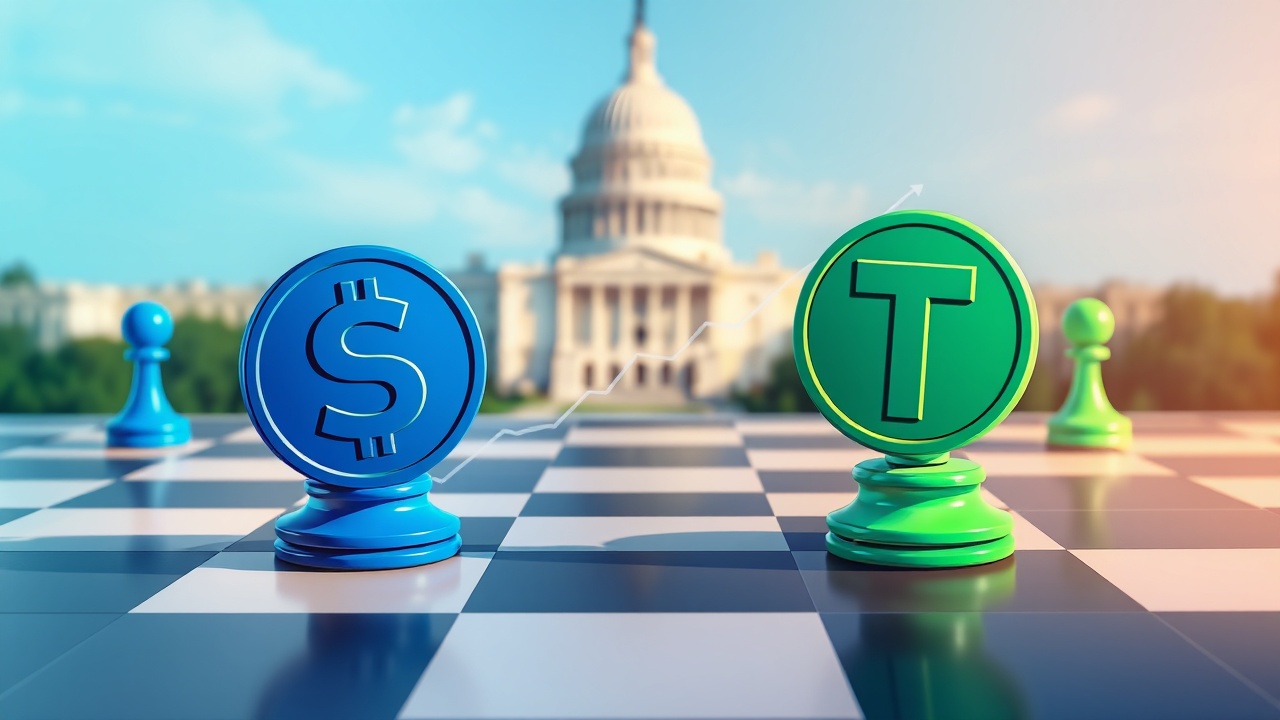
The Evolving Landscape of Stablecoins in the U.S.
The landscape of the stablecoin sector in the United States is shifting as new regulatory measures begin to take effect, particularly affecting major players like Circle’s USDC and Tether’s USDT. On the night preceding this announcement, the UK witnessed the Office of the Comptroller of the Currency (OCC) unveil finalized regulations under the Guiding and Establishing National Innovation for U.S. Stablecoins (GENIUS) Act. Scheduled to be effective January 18, 2027, this regulatory framework is designed to outline strict guidelines concerning reserves, methods of redemption, risk management practices, as well as reporting and oversight protocols.
Market Position and Opportunities
In this evolving scenario, Circle’s USDC appears to be in a favorable position due to its established compliance with U.S. regulations. Meanwhile, Tether faces challenges regarding how its global operations will align with the newly proposed framework. Presently, USDT commands approximately 60.7% of the stablecoin market share, while USDC holds 23.9%. Collectively, these two tokens make up an impressive 84.6% of the market.
These statistics reveal a clear opportunity for Circle to amplify its influence, particularly as institutions begin to seek out regulated infrastructure for digital dollar transactions. However, USDC’s expansion will hinge on its ability to increase adoption, enhance liquidity, and integrate better within the market.
Challenges for Tether
For Tether, it’s crucial to maintain the current strong standing of USDT while adjusting to the demands of a more regulated environment. Its sizable international user base continues to serve as a competitive advantage, even as the company’s path forward remains uncertain amid evolving U.S. rules.
Implications of the GENIUS Act
As part of the broader implications of the GENIUS Act, not only stablecoin issuers but also crypto exchanges, payment services, and financial sectors must evaluate which tokens are compliant and how they can adapt their offerings to meet the new standards. One of the key focuses is on stablecoin rewards. The OCC has established that issuers cannot pay interest or yields directly to holders of payment stablecoins but left the door open for third-party rewards, assessing such arrangements on a case-by-case basis to ensure they comply with the law.
This nuanced regulatory approach could reshape competition among exchanges vying for stablecoin deposits, as platforms may still be able to introduce suitable reward offerings, necessitating careful planning around compliance from issuers and their partners.
Future Considerations
The GENIUS Act also suggests that additional components, including anti-money laundering rules and sanctions compliance, are still on the drawing board. With the effective date coming up in 2027, stakeholders have a window to adapt, although how these regulations will be implemented remains to be seen.
In sum, Circle has the potential to capitalize on its compliance advantages to foster greater institutional adoption of USDC, while Tether must focus on preserving USDT’s leading position amid these changes. The new regulations will likely play a significant role in determining future competitive dynamics in the market for dollar-pegged tokens, especially as issuers gear up for forthcoming regulatory applications, decisions, and the forthcoming implementation period. The developments leading up to January 2027 will clarify the competitive landscape, revealing which stablecoins can effectively cater to American consumers.