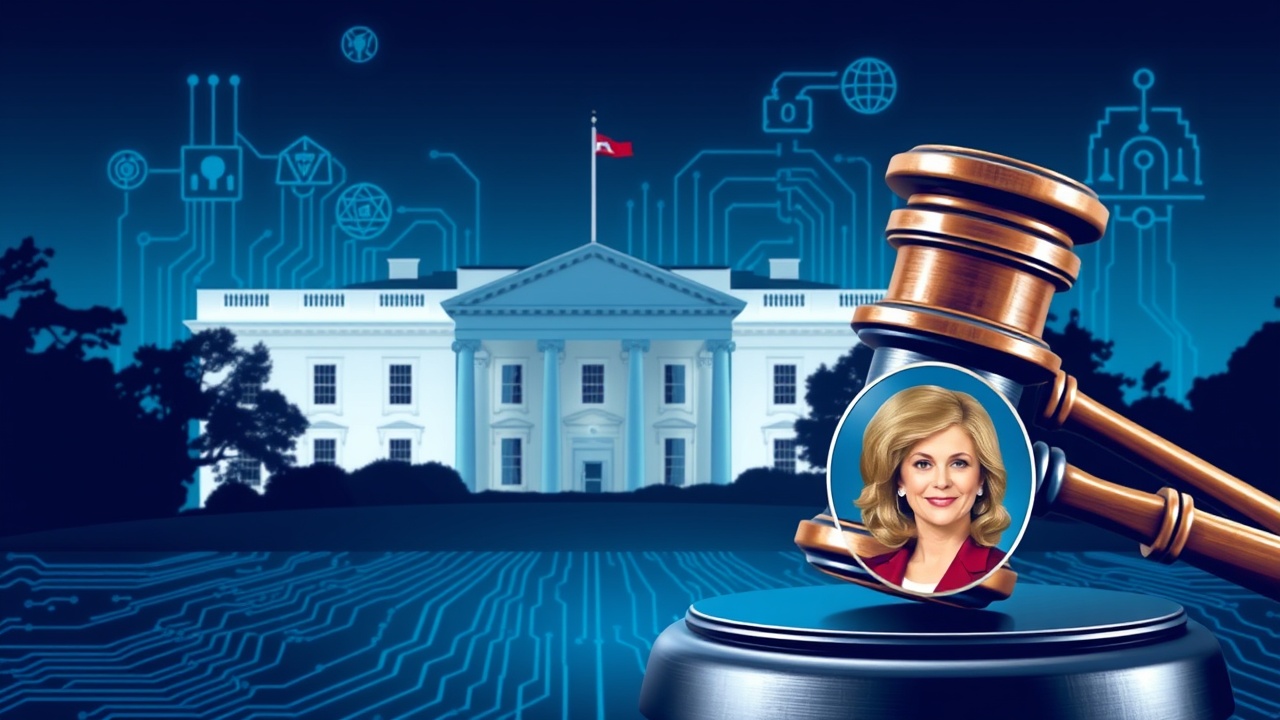
Strategic Appointment to PCAST
In a strategic move to bolster the advisory framework on artificial intelligence, U.S. President Donald Trump has named Pam Bondi, the former Attorney General of Florida, to the Presidential Council of Advisors on Science and Technology (PCAST). This influential committee, focused on guiding the nation’s AI policies, is co-chaired by David Sacks, who previously served Trump as the administration’s lead on AI and cryptocurrency initiatives.
Key Figures in Technology
The announcement came on May 27, as Bondi joins a roster of prominent technology leaders, including Jensen Huang, co-founder of Nvidia, Mark Zuckerberg, CEO of Meta, and Larry Ellison, co-founder of Oracle. This diverse panel not only signifies strong connections to leading figures in the technology sector but also highlights the White House’s intention to tightly align with influential industry players driving significant advancements in AI.
Bondi’s Role and Expertise
Bondi’s role is particularly crucial as she aims to bridge communication between the administration and private sector stakeholders on the council. Her extensive legal background, particularly from her tenure as Florida’s Attorney General prior to her appointment by Trump, equips her with insights into regulatory matters concerning technology, including oversight of digital assets and enforcement against fraud in this domain.
Impact on Legislation and Regulation
The PCAST operates amidst a critical period for U.S. lawmakers, with discussions on stablecoin legislation underway and the CLARITY Act making its way through Congress. The council’s guidance could play a pivotal role in shaping the frameworks that the Securities and Exchange Commission (SEC) and the Commodity Futures Trading Commission (CFTC) adopt regarding AI-enhanced cryptocurrency products and services.
Regulatory Environment and Future Directions
Sacks’ involvement as co-chair is noteworthy given his past advocacy for regulatory policies that favor a light-touch enforcement approach towards digital assets. His influence helped facilitate a regulatory environment where spot bitcoin and ether ETFs have recently been approved, marking a significant shift in the U.S. financial market landscape.
As AI technology increasingly converges with blockchain applications—from AI algorithms for trading to decentralized networks for AI processing—the directions established by PCAST are significant. The appointment of Bondi emphasizes the administration’s ongoing commitment to integrating legal expertise with technical leadership, ensuring that emerging financial technologies are regulated effectively without stifling innovation.
Conclusion
Trump’s sustained focus on AI and crypto as critical components of U.S. economic competitiveness indicates that the administration is likely to continue prioritizing these sectors in its policies. Overall, Bondi’s inclusion in PCAST is seen as a strategic alignment of legal and technical perspectives as the country navigates the complexities presented by rapidly evolving technologies.