Stagnation in Japan's Economy Raises Concerns for Bitcoin Financing Amid Yen Fluctuations
Japan’s economy stalled in Q3, impacting future Bank of Japan rate increases and creating pressure on leveraged Bitcoin positions amid rising yen costs.
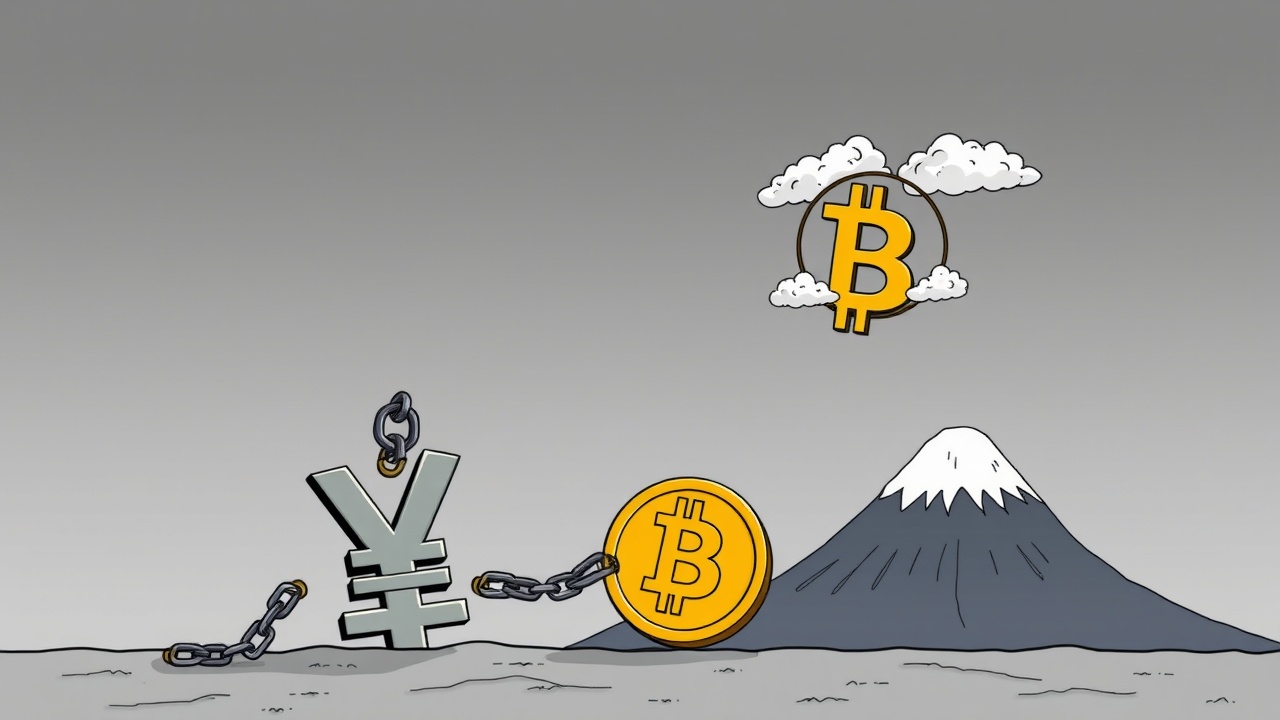
The Current State of the Japanese Economy
The Japanese economy has experienced a stagnation during the third quarter of 2023, prompting a more cautious approach from the Bank of Japan (BOJ) regarding any future interest rate adjustments. Despite this economic slowdown, it doesn't imply that the cost of financing leveraged Bitcoin positions in yen will decrease or that these investments are safeguarded from fluctuations in the value of the yen.
GDP and Consumption Trends
According to the preliminary report released by Japan's Cabinet Office on November 16, the nation’s real GDP saw a slight decline of 0.1% on an annualized basis during July through September, resulting in a quarterly rate nearing 0%. Meanwhile, private consumption has decreased by 0.3% compared to the previous quarter. This annualized figure represents the pace of quarterly growth projected over the span of a year, rather than indicating an annual decrease.
The underlying statistics reveal a mixed scenario: domestic demand contributed positively with a gain of 0.6 percentage points to growth, whereas net exports had an opposite effect, deducting 0.6 points.
Bank of Japan's Interest Rate Policy
As it stands, the BOJ is retaining its overnight interest rate target at around 1.25%, established during an October 30 meeting, which has set the framework for interpreting the recent GDP figures. On November 12, BOJ board member Toichiro Asada highlighted in a speech the lack of robust growth momentum in consumption and made a case for a careful evaluation of any potential rate hikes. His viewpoint aligns with the BOJ's conditional policy stance, which awaits further economic, price, and financial condition developments, particularly in light of inflationary pressures.
Conversely, there are also voices advocating for quicker tightening; Hajime Takata, another BOJ board member, pushed for a more immediate rate increase, proposing a rise to 1.5%, which was ultimately dismissed by the board. The weak consumption data reinforces the call for a cautious approach, yet the looming threat of inflation keeps the discourse on further tightening alive.
Challenges for Bitcoin Traders
Should future rate hikes proceed at a slower pace, existing financing costs will still pose challenges. Asada noted that declines in bank lending rates and yields on corporate bonds have reduced monetary support, although the short-term real rates remain negative, and the financial status of companies appears stable.
In October, the BOJ's average overnight call rate was approximately 1.23%, which serves as a historical market benchmark but does not specifically correlate to Bitcoin funding costs or reflect market values following the GDP report.
For those engaging in leveraged Bitcoin trades funded by the yen, rising borrowing costs can diminish profitability. Additionally, as the yen strengthens, it places further strain on positions that remain exposed to currency risk, while the need for margins may prompt traders to lower their risk exposure.
Market Volatility and Future Outlook
Reflecting on a Bank for International Settlements (BIS) analysis from September 2024, it was noted that a period of unwinding in August led to significant market turbulence, particularly in the crypto sector, showcasing how volatility can emerge from rapid liquidation and margin calls.
However, current BIS statistics do not accurately map yen borrowing directly tied to Bitcoin speculation. As of November 13, the BOJ's foreign exchange report indicated the yen's exchange rate with the dollar at 159.84-159.86, occurring before the GDP data release; thus, it doesn’t provide any insight on currency reactions post-announcement. Presently, traders should heed warning signs such as a strengthening yen, mounting borrowing costs, and increased margin requirements—factors that do not hint at lowered financing through yen for Bitcoin trading or indicate a process of unwinding already in motion.
Also in other languages: РусскийDeutschFrançaisItalianoEspañol