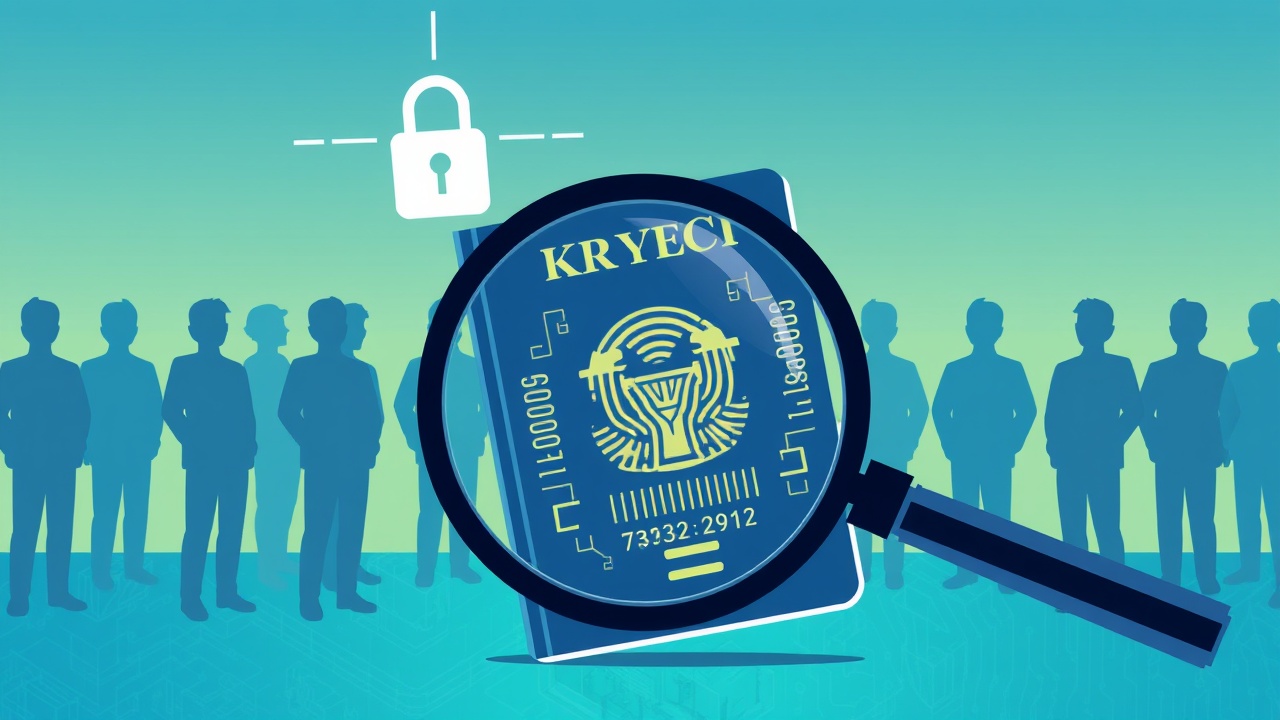
Introduction to Private KYC
StarkWare has rolled out an innovative solution known as Private KYC on Starknet, designed to facilitate compliance with know-your-customer regulations in a privacy-conscious manner. This new demonstration allows users to validate essential details without the need for companies to obtain entire identity documents.
How Private KYC Works
By employing zero-knowledge STARK proofs alongside the privacy capabilities of STRK20, the system can confirm individual attributes such as age and eligibility without exposing sensitive personal information, including passport numbers or residential addresses.
The Starknet team highlighted the inefficiency in current identity verification processes: “Today’s identity checks often require sharing entire documents when only a single piece of information is necessary.”
Private KYC aims to redefine the way verification is conducted, permitting evaluators to ascertain what they need while ensuring that extraneous personal data remains outside corporate databases.
Verification Process
The verification process begins when a user scans their passport using their smartphone. The device’s camera and NFC technology authenticate the document’s validity, confirming it is legitimate and issued by the appropriate authority. Users then have the option to encrypt their identity information into a Starknet wallet, further enhancing security.
Moreover, StarkWare encourages users to store selected identity attributes in a public on-chain registry. This allows verifiers to access zero-knowledge proofs from the registry without being privy to the underlying identity details, thus safeguarding privacy.
Addressing Security Risks
This launch arrives amidst increasing operational costs for companies related to personal data storage. Typically, KYC procedures necessitate the collection of sensitive documents, which, when stored within corporate systems, can pose significant security risks. Data breaches have become extremely prevalent, as reported by the Identity Theft Resource Center, which noted a record 3,322 data compromises in the U.S. in 2025—a staggering 79% increase over five years. Furthermore, IBM reported that the average financial fallout from a data breach worldwide stands at $4.4 million.
Past incidents, like the 2020 breach experienced by Ledger that compromised over a million email accounts and associated personal details, underline the urgent need for more secure methods of identity verification. In light of these risks, StarkWare emphasized that “Private KYC demonstrates that user verification and privacy can coexist without compromise.”
Integration with STRK20
The initiative expands on Starknet’s existing STRK20 privacy infrastructure, which empowers ERC-20 assets to benefit from private transfers and shielded balance capabilities. This system allows users to toggle between public and shielded states while ensuring compliance with network regulations via zero-knowledge proofs.
Earlier this month, Starknet officially integrated STRK20, promising practical and accessible privacy solutions across all assets, seamlessly integrated into decentralized finance. In a previous update from crypto.news, the focus on privacy enhancements has been shared among projects like Sui, with StarkWare clarifying that STRK20 is not a deterministic pathway to legal compliance but rather a framework rooted in risk management.
Self-Custody and User Control
Privately conducted KYC through this new model embraces a self-custody approach, putting users in charge of their encrypted identity data rather than handing over entire documents to various platforms for verification. This distinguishes StarkWare’s method from alternatives such as World ID, which also utilizes zero-knowledge proofs but has garnered scrutiny due to its reliance on biometric data collection through iris-scanning technologies.
Future Considerations
As for the reception of Private KYC, its success will hinge on extensive legal evaluations, robust application support, verifier credibility, and thorough security assessments. For the time being, this demonstration adds a significant layer to StarkWare’s privacy initiatives and positions the critical dialogue about KYC data exposure at the forefront of industry discussions.