Steal My Bitcoin: A Cybersecurity Challenge
In a bizarre twist within the cybersecurity landscape, a website called Steal My Bitcoin is enticing hackers with a sizable bounty of $2,000 in bitcoin, yet surprisingly, no one has succeeded in claiming the prize. This unusual challenge has sparked skepticism about its legitimacy, as some independent analysts speculate that the task might actually be uncrackable, raising questions about whether the game is rigged.
The Challenge
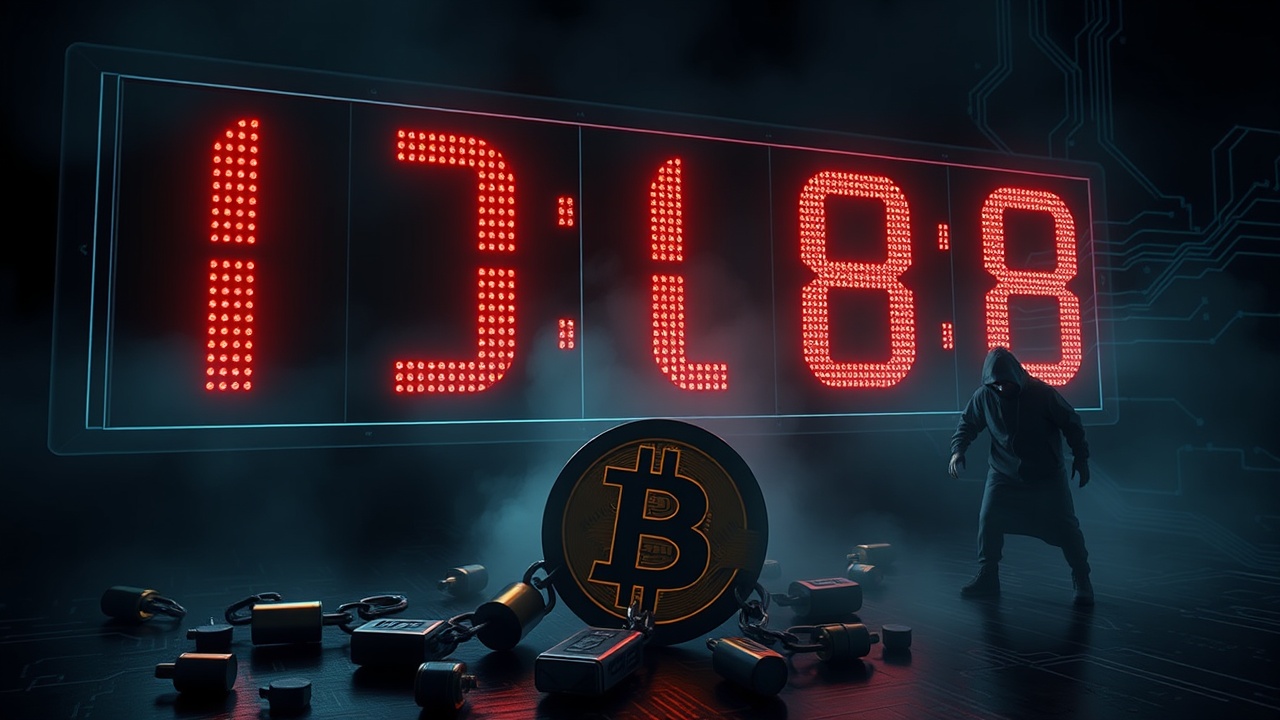
Steal My Bitcoin flips the script on conventional cybersecurity practices by openly inviting hackers to penetrate its defenses and retrieve a hidden bitcoin private key from a vulnerable PHP setup. The task seems deceptively straightforward: exploit a known weak point in the system, access the key, and drain the bitcoin wallet. Initially launched with a $500 reward, the prize has since swelled to approximately 0.025 BTC due to community donations. However, despite being live for over 17 hours as of October 25, 2026, the wallet remains intact and unclaimed.
While hackers are permitted to target only the web application and the PHP container, any attempts to disrupt the foundational infrastructure, overload the server, or conduct outside interference are strictly off-limits. Activity is meticulously recorded, ensuring accountability.
Vulnerabilities and Controversy
The challenge relies on PHP version 8.4.26, known to possess two serious vulnerabilities, referred to collectively as PHP2Shell. These flaws, assigned a serious severity rating of 9.2, were highlighted in a recent patch released on October 21. The vulnerabilities, detailed under CVE-2026-109618 and CVE-2026-109619, relate to memory management oversights that could allow remote code execution. In specific situations, potential attackers might even execute commands without undergoing an authentication process.
However, controversy arose when one individual scrutinized the challenge and began to doubt the existence of an exploitable opening. After examining the HTTP response headers, they identified both nginx and PHP 8.4.26. Further investigation led to confirmations of a PHP 8.2-or-newer fingerprint, comparing the server’s responses with those observed in local testing environments. Initially exploring configurations involving nginx with PHP-FPM or Apache, the analysis unexpectedly suggested that requests might be forwarded to PHP’s own command-line web server.
This revelation implies a critical point: the server may not be executing the vulnerable index.php file, but instead could be serving a static index.html file. If this hypothesis holds true, the vulnerabilities may be unreachable under the challenge’s established conditions, meaning that participants aren’t actually missing exploitation opportunities, but rather striking at an environment where the necessary conditions are absent.
Conclusion
This situation casts doubt on the integrity of the challenge and its purpose. Despite acknowledging the possibility of error in their findings, the analyst opened the floor for corrections, questioning the transparency of the challenge while reinforcing the reality of the identified PHP flaws that still demand attention from administrators.
For now, Steal My Bitcoin remains an enigmatic draw, combining the thrill of a public bitcoin challenge with a growing skepticism regarding the accessibility of its digital prize. Meanwhile, in the broader context of cybersecurity this week, various stories spotlighted trends in market dynamics, advancements in DeFi (Decentralized Finance), institutional staking, venture capital developments, and significant issues surrounding cybersecurity.