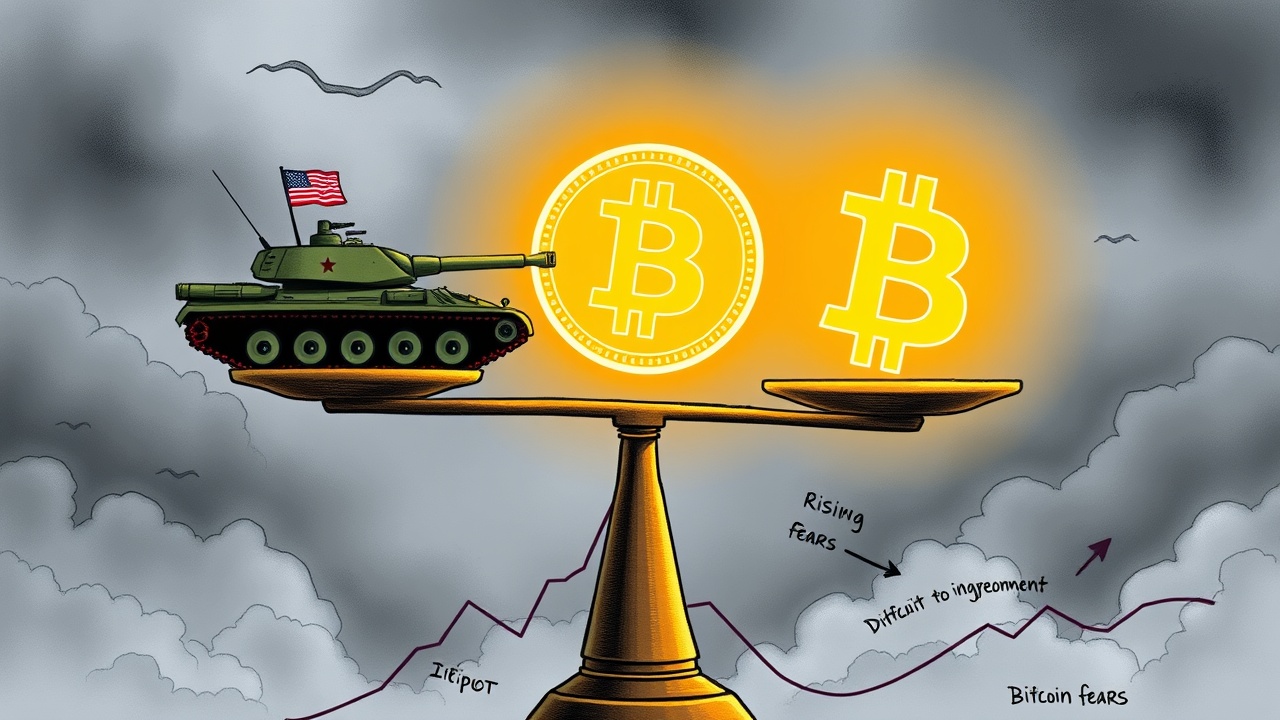
Funding Request from the Department of Defense
The U.S. Department of Defense has communicated to Congress a pressing requirement for $80 billion, aimed at funding the ongoing conflict in Iran along with other non-war related financial commitments. This request was articulated by Deputy Defense Secretary Stephen Feinberg in recent conversations with lawmakers, highlighting that the funds are not exclusively assigned to military operations.
Reduction in Funding Estimates
This financial appeal marks a notable downsizing from an earlier estimate suggesting a need for more than $200 billion, which had faced significant pushback from Congress due to concerns over unrestricted expenditures. Earlier in the year, the Pentagon had projected the costs for the conflict alone to be around $25 billion, a fraction of the latest supplemental funding request.
Concerns Over National Debt
With the nation’s debt soaring beyond $39 trillion—a scenario that has recently seen the national debt surpassing the total economic output for the first time since World War II—there are mounting concerns bolstered by proponents of Bitcoin who regard the cryptocurrency as a safeguard against inflation and monetary erosion. Major financial institutions, including JPMorgan, echo these sentiments, framing Bitcoin as an asset that could counterbalance the potential impact of increased borrowing for wartime and relief efforts.
Advocacy and Warnings
Senator Cynthia Lummis stands among those advocating for Bitcoin’s relevance, continually linking the cryptocurrency’s potential to the country’s fiscal policies. Conversely, economist Peter Schiff has warned of an approaching $50 trillion in national debt within just a few years. This troubling debt trajectory highlights a fundamental economic principle: the more governments incur debt to sustain military actions and aid programs, the greater the likelihood of inflation, subsequently driving investors towards scarce resources like Bitcoin.
Bitcoin’s Market Behavior
Throughout the conflict’s duration, Bitcoin’s trading behavior has sparked ongoing debates regarding its status as a safe-haven asset. Although Bitcoin declined approximately 8.5% at the onset of the Iran conflict, it has since rebounded by nearly 11%, outperforming traditional safe-haven commodities amidst market fluctuations caused by the war. However, some skeptics maintain that Bitcoin still correlates closely with risk assets and question whether it rightfully deserves its safe-haven classification.
Political Implications of the Funding Request
The call for funding arrives at a politically sensitive time, with lawmakers calling for a comprehensive assessment of war expenses just before the November midterms. How Congress decides to handle this $80 billion request—whether by approving, rejecting, or delaying it—will not only influence the deficit outlook but also impact the broader environment within which cryptocurrencies are traded, potentially re-shaping investor perceptions in this volatile economic landscape.