Legal Action Against Cryptocurrency Linked to Illicit Oil Sales
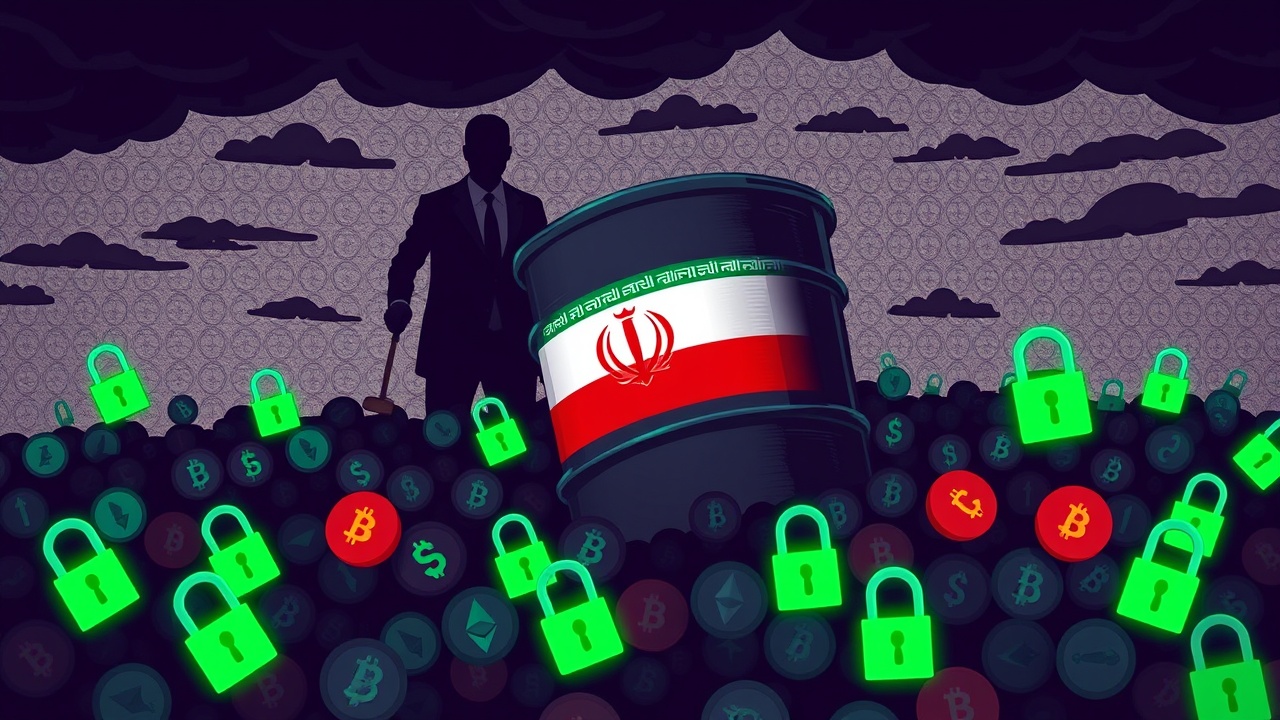
U.S. federal authorities have initiated legal action to confiscate $61.2 million worth of frozen USDT that they claim is connected to illicit oil sales originating from Iran. This civil forfeiture complaint, filed by the U.S. Attorney’s Office for the Southern District of New York on September 14, focuses on cryptocurrency that the prosecution alleges was meant to finance the Iranian government and military operatives, including the Islamic Revolutionary Guard Corps (IRGC). Importantly, this action is directed against the assets themselves, and the Justice Department has emphasized that the claims remain unverified until a court delivers a favorable ruling for the U.S.
Details of the Seized Cryptocurrency
The cryptocurrency, specifically USDT, had already been frozen prior to the filing of this case, which was detailed in court documents. The ten TRON addresses in question contained a total of 61,192,367.59 USDT at the time of the government’s complaint. Notably, two of these addresses were frozen earlier in 2025, on July 26, while eight others were subjected to the same freeze on June 15 of that year.
According to the seizure warrant authorized by U.S. Magistrate Judge Ona T. Wang, the assets are to be handed over to federal custody. The complaint anticipates that the cryptocurrency firm Tether will effectively destroy the USDT linked to the identified wallets and subsequently issue equivalent tokens that will be transferred to the U.S. government, where they will be held in an FBI-operated hardware wallet in the Southern District of New York.
Legal Framework and Allegations
This civil forfeiture process is a two-part legal effort: the current warrant allows investigators to seize and control the assets, while the civil complaint seeks to secure legal ownership of the USDT under federal forfeiture statutes.
Investigators allege that two companies based in Hong Kong, Blessed Trust Limited and Hexa Whale Trading Limited, utilized Binance accounts to facilitate the laundering of proceeds from sanctioned Iranian oil sales. The complaint describes Blessed Trust as masquerading as a wealth management and virtual-asset custodian, while Hexa Whale is characterized as presenting itself as a commodities broker.
Prosecutors assert that at least seven other cryptocurrency addresses—referred to as “Entity A”—were involved in the movement of more than $1.5 billion believed to have derived from Iranian oil sales. Transaction patterns, wallet creation logs, and movements of the cryptocurrency were used to establish connections between these entities. Significant also is the claim that Entity A engaged in transactions with the Iranian exchange Nobitex and other addresses identified as fronts for the IRGC.
Financial Transactions and Regulatory Compliance
Further complicating the situation are allegations involving the U.S. financial framework, where a Hong Kong-based firm, identified as Company-1, reportedly transferred around $37.15 million to Hexa Whale over eleven wire transfers in early 2024. Additionally, approximately $443.49 million is alleged to have flowed from Company-1 to Blessed Trust across 32 distinct transactions between late 2024 and early 2025. It is suggested that transfers associated with Hexa Whale involved U.S.-based correspondent accounts totaling around $22.2 million, alongside another $5.3 million.
Binance has previously denied any wrongdoing associated with the allegations concerning Blessed Trust and Hexa Whale. In March, the exchange described claims related to these entities as unsubstantiated, disseminating what it referred to as false information. Binance further stated its ongoing commitment to regulatory compliance, asserting that it does not permit users based in Iran to access its platform.
Broader Implications and Government Initiatives
The civil complaint follows previous government initiatives aimed at inhibiting Iranian actors’ access to digital assets. Recent actions by the Office of Foreign Assets Control (OFAC) included designating Nobitex and other Iranian exchanges due to their involvement in illicit transactions connected to the IRGC. This legal action aligns with the wider Operation Economic Outcast initiative, aiming to disrupt financial channels and partnerships that facilitate Iran’s oil sales while evading international sanctions.
The forfeiture request seeks to claim assets under laws related to sanctions violations, money laundering, and terrorism. The Department of Justice clarified that this complaint represents allegations directed against specific property, which remain unproven until confirmed by a federal court.
The implications of this legal action underscore the increasing scrutiny over cryptocurrency involving sanctioned states and highlight the interconnectedness of global financial systems and jurisdictions.