The Importance of the XRP Ledger
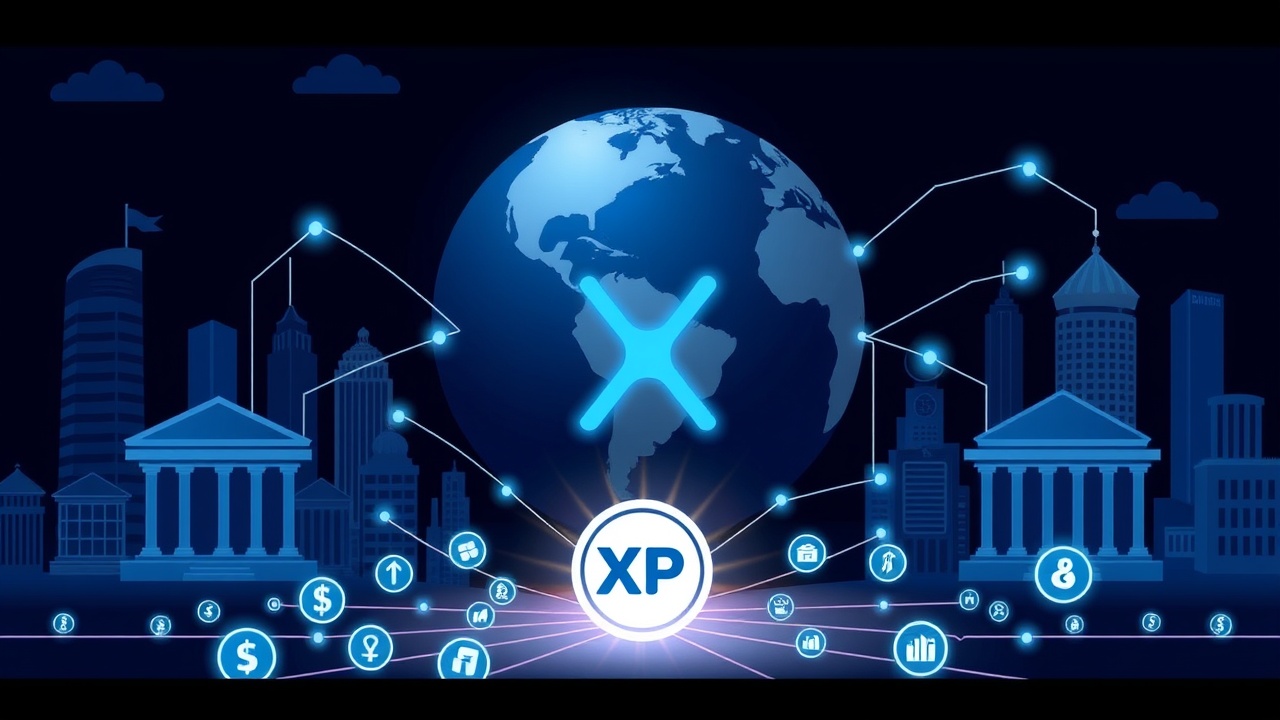
The International Monetary Fund (IMF) has recently underscored the importance of the XRP Ledger, marking it as a significant public blockchain network that financial institutions are adopting for the creation of stablecoins. This acknowledgment comes amid the IMF’s extensive analysis of how banks are embracing blockchain technology to upgrade their payment systems, settlement processes, and asset management practices.
Shift to Permissionless Blockchain Solutions
Highlighting a shift from the traditional use of private ledgers, the report indicates that a number of banks are opting for permissionless blockchain solutions in order to issue regulated stablecoins. This approach not only enhances interoperability but also broadens access to diverse markets. A notable example referenced in the IMF’s findings is French bank Société Générale‘s launch of a euro-based stablecoin, known as EUR CoinVertible (EURCV), which operates on the XRP Ledger along with other prominent networks such as Ethereum, Solana, and Stellar.
Tokenization as a Transformative Trend
The IMF characterizes this move as an exemplary case of how well-established financial entities are leveraging public blockchain technology for the management of regulated digital currencies. The report elaborates on tokenization as a transformative trend in the global financial landscape. By converting physical assets, such as currencies, stocks, and bonds, into tokens on a blockchain, institutions can facilitate smoother ownership transfers, streamline settlement processes, cut operational costs, and enhance transparency, all while reducing dependence on conventional intermediaries.
Potential Impact on Financial Markets
Moreover, the IMF posits that tokenization holds the potential to radically reshape financial markets. It could lead to improved liquidity, diminished settlement risk, and widened access to financial services. These insights resonate with recent observations made by IMF Senior Economist Itai Agur, who indicated that advancements in tokenization and programmable money are the next frontier in financial market evolution. Agur pointed out that the integration of programmable money with tokenized assets can lead to transactions that are faster, less expensive, and more efficient, largely due to the automation provided by smart contracts which lessen the need for intermediaries.
Conclusion
Thus, the IMF’s recognition of the XRP Ledger, alongside contemporaries like Ethereum, Solana, and Stellar, is a clear indication that public blockchain technologies are being increasingly acknowledged as strong candidates for infrastructure catering to regulated financial products. As banks explore the realms of stablecoins and tokenized offerings, the XRP Ledger appears poised to garner significant interest from institutional stakeholders.