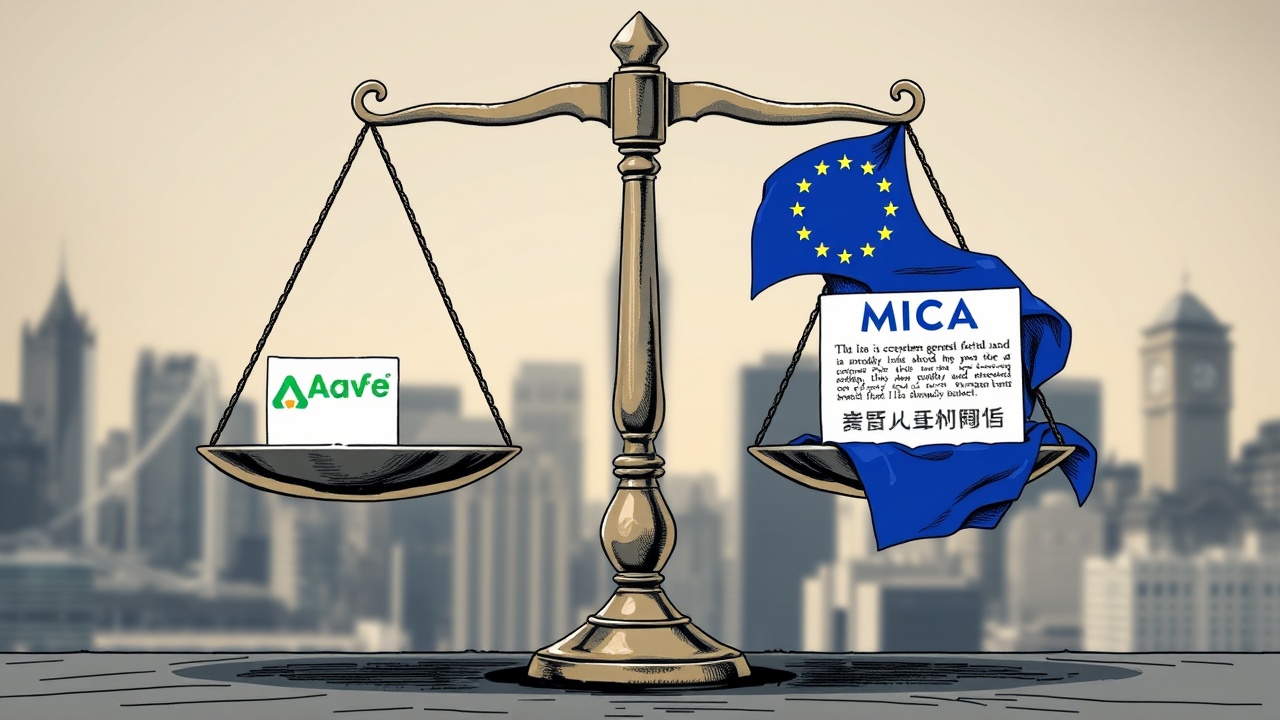
Stani Kulechov’s Concerns on European Regulations
Stani Kulechov, the founder of Aave, has voiced his strong disapproval regarding recent proposals put forth by European regulators which threaten to impose new limitations on stablecoin yields and impose extra controls on decentralized finance (DeFi) accessibility. Kulechov took to social media to express his concerns about looming regulations from the European Central Bank (ECB) and the European Banking Authority (EBA) as part of the European Union’s ongoing evaluation of the Markets in Crypto-Assets regulation (MiCA).
Impact on DeFi Principles
Kulechov cautioned that these regulations risk undermining the very principles of openness that define DeFi, emphasizing that the regulatory landscape must not dictate which protocols are acceptable for European consumers.
“If regulators were to decide which protocols qualify as appropriate for European users, the outcome might starkly contrast with the current model of open DeFi that we see today,” Kulechov stated.
While these proposals have not yet been codified into EU law, they represent significant discussions during a recently concluded consultation by the European Commission on MiCA.
Proposed Regulatory Measures
The EBA’s suggestions aim to explore the potential regulation of crypto firms that facilitate DeFi lending. Proposed measures could include:
- Implementing suitability assessments for participants
- Enforcing leverage restrictions
- Mandating comprehensive disclosures
- Potentially certifying DeFi lending platforms
Moreover, the EBA hinted at possible limitations on lending involving stablecoins that do not conform to MiCA regulations.
Stablecoin Yield Regulations
In parallel, the European System of Central Banks, including the ECB, has advocated for incorporating regulations on stablecoin yields, proposing that these restrictions also encompass indirect returns from activities such as lending and staking. Kulechov argues that such regulations could severely compartmentalize liquidity and create regulated barriers around networks that are meant to be decentralized and open.
Industry Perspectives
Supporting Kulechov’s sentiment, Faustine Fleuret, Global Head of Policy Affairs at Morpho, acknowledged the need for regulatory efforts to focus on identifiable actors rather than imposing restrictions on decentralized protocols. However, Fleuret rejected the idea of extending yield regulations to DeFi or developing a unique MiCA service for DeFi, emphasizing a need for balance in regulation.
Future of DeFi and Regulation
As the landscape of lending, tokenized securities, and stablecoins increasingly transitions onto blockchain platforms, the regulatory discussions surrounding crypto are becoming more critical. Other industry players are also urging revisions. For instance, Circle advocates for a flexible framework for global stablecoin issuance and challenges stringent banking reserve rules. The Hyperliquid Policy Center contended that perpetual futures should remain under the current MiFID II derivatives guidelines instead of introducing a fresh regulatory schema.
In essence, the current debate is not whether Europe will regulate cryptocurrency—MiCA has already established that framework. Rather, the critical issue is whether the forthcoming regulations will allow open DeFi to integrate with regulated finance or restrict European users to a limited selection of sanctioned access points. Kulechov is optimistic about the future of DeFi, firmly stating,
“DeFi will win.”