Boris Johnson Reiterates Bitcoin Concerns at London's Breakpoint Conference
Boris Johnson maintains skepticism towards Bitcoin, questioning its leadership and likening it to a Ponzi scheme at the Solana Breakpoint conference.
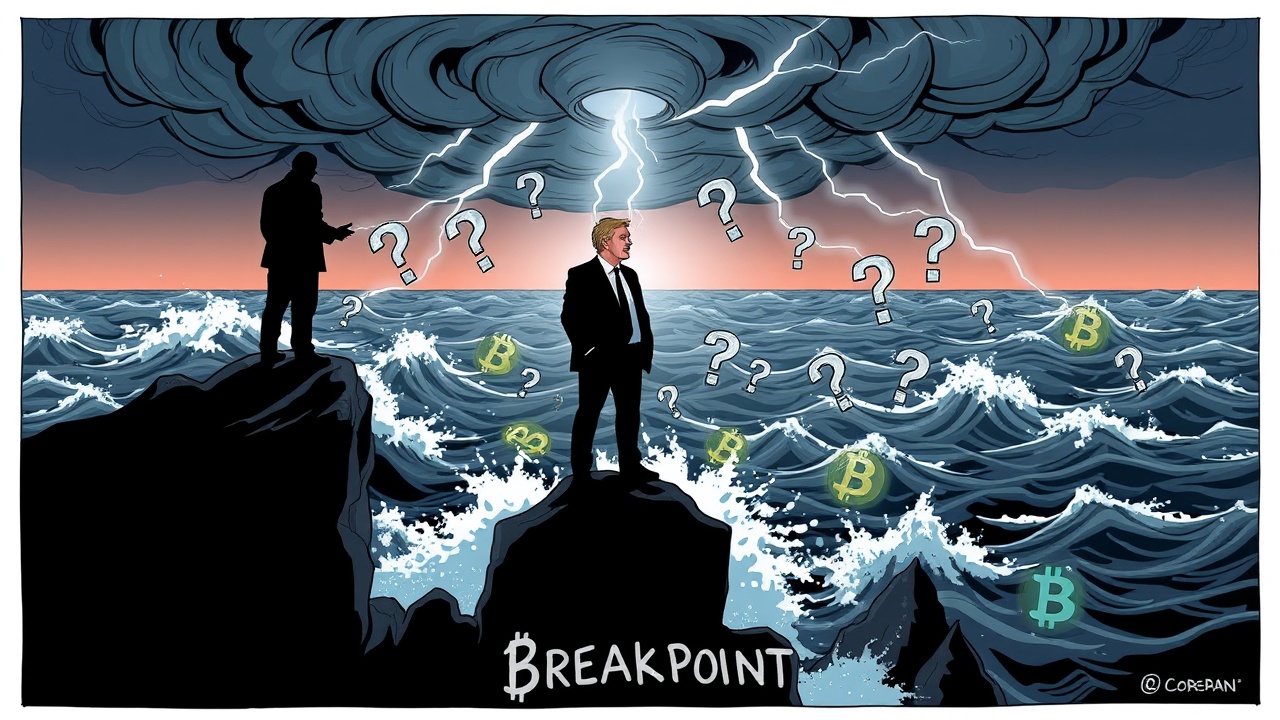
Concerns About Bitcoin at Solana's Breakpoint Conference
At the recent Solana's Breakpoint conference in London, former UK Prime Minister Boris Johnson reinforced his skepticism towards Bitcoin, expressing concerns about the apparent lack of accountability within the crypto space. In a room filled with cryptocurrency developers, Johnson remarked,
"As far as I can see, nobody knows who's in charge, apart from Yakimoto Nakasori, and I don't know where to find him,"demonstrating a mispronunciation of Bitcoin's creator, Satoshi Nakamoto. He highlighted a significant worry:
"If six billion got stolen from some cryptocurrency, I wouldn't know who to apply to or how to get the money back. That's my problem."
Critique of Cryptocurrency and Blockchain Potential
Reflecting on a column he authored for the Daily Mail earlier this year, where he labeled Bitcoin a "giant Ponzi scheme, " Johnson acknowledged the backlash from the cryptocurrency community, notably from Strategy executive chairman Michael Saylor, who defended Bitcoin’s structure as lacking a central issuer or guarantee.
Johnson, admitting his limited knowledge of cryptocurrency investments, described an encounter with a local man in his Oxfordshire village who had invested heavily into Bitcoin, hoping to recover prior losses. This experience intensified his skepticism. He further critiqued the term "crypto," arguing that it implies secrecy, stating,
"I don't think it's a good sell to tell people that this thing is concealed."
However, Johnson distinguished between his reservations about Bitcoin and the potential of blockchain technology.
"Please don't think that my Luddite anxiety about crypto means I wish to impede the development of blockchain, or that London shouldn't lead in such technologies,"he stated, asserting that the UK should position itself at the forefront of blockchain and asset tokenization advancements.
Discussion on Bitcoin's Value and Regulatory Framework
During the discussion, moderator Gareth Jenkinson from The Block contested Johnson's claim that Bitcoin is inherently valuable for illicit activities, emphasizing that blockchains offer more traceability compared to cash. When asked about who guarantees Bitcoin, Jenkinson responded,
"No one has to guarantee it. That's the beauty of the protocol."
Lord Ross Kempsell, a Conservative member of the House of Lords and former aide to Johnson, commented on the growing interest in cryptocurrency within the UK, noting that over 8% of adults now own some form of crypto asset. Despite a drop in this figure from 12% in 2024 to 8% in 2025, he asserted that the market is still vibrant compared to previous years. Kempsell highlighted the impending regulatory framework being developed by the Financial Conduct Authority (FCA) and the Bank of England, aiming to foster safe growth in the crypto sector while mitigating risks.
The Bank of England recently revised its approach to stablecoins, eliminating individual holding caps in favor of a £40 billion issuance limit. Kempsell remarked that the UK’s ability to operate outside the EU's Markets in Crypto-Assets (MiCA) regulation grants it the flexibility to establish its own rules, a significant advantage as the EU plans to update its regulations by 2027 to include foreign stablecoin issuers. As the UK edges toward a regulatory framework, both Johnson's concerns and opportunities for growth in the digital asset market remain at the forefront of discussions.
Also in other languages: РусскийDeutschFrançaisItalianoEspañol