Understanding Perpetual Decentralized Exchanges (perp DEXs)
In the realm of cryptocurrency trading, perpetual decentralized exchanges (perp DEXs) have emerged as a pivotal platform for traders dealing in perpetual futures—financial instruments that allow users to gain exposure to asset prices without ever owning them and importantly, without a predetermined expiration date. However, a critical understanding of perp DEXs reveals that they are not a monolith; they encompass three distinct and fundamentally incompatible designs. These variations become crucial to comprehend, especially in the high-pressure moments when market volatility spikes.
Recent Developments in Regulation
Recently, the Commodity Futures Trading Commission (CFTC) announced the approval of BTCPERP, marking a significant development as the first regulated perpetual futures contract, which signifies a gradual shift in the regulatory landscape governing such instruments. This approval is based on the understanding that futures contracts do not necessarily need a defined delivery date to be valid.
Types of Perp DEX Designs
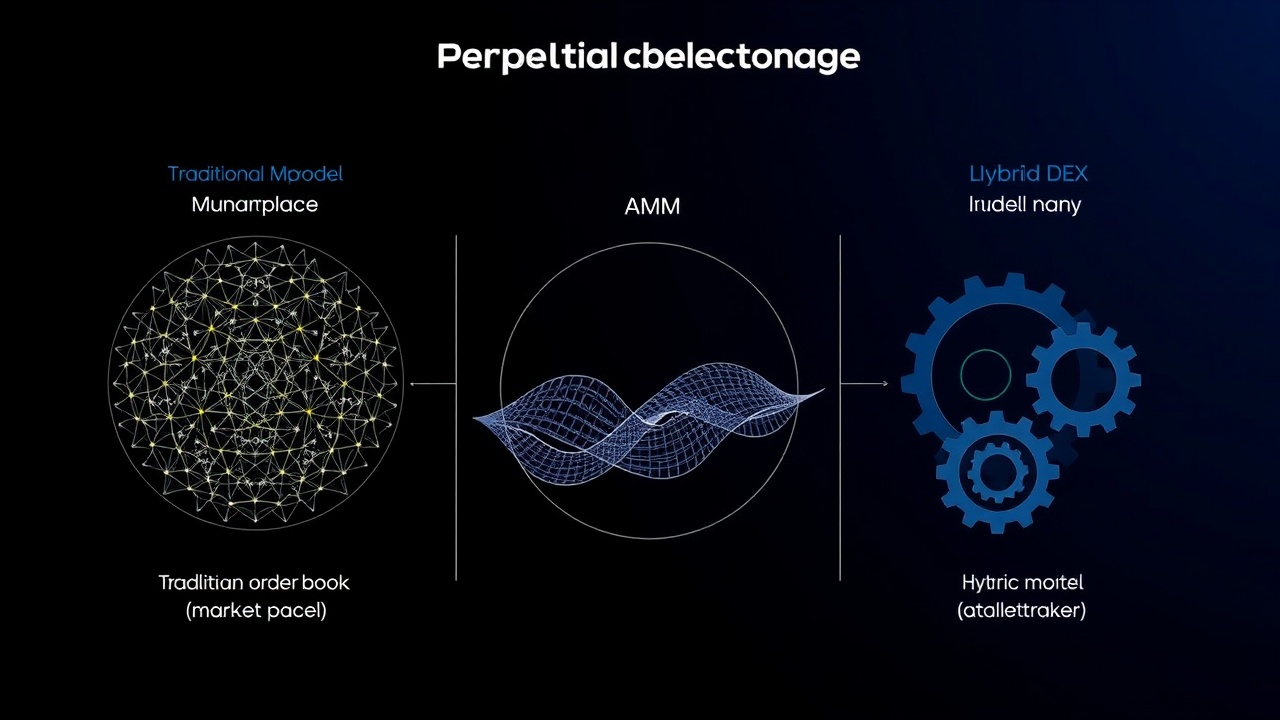
While the combination of perpetual futures and decentralized platforms sounds straightforward, the underlying complexities are often glossed over in many guides. Essentially, a perp DEX allows users to trade perpetual futures directly from their self-custodial wallets, yet the manner of counterparty engagement varies drastically between the three architectural types which are typically categorized under the same name.
1. On-Chain Order Books
In this model, participants list their buy and sell orders in a public ledger, mirroring the traditional exchange structure where orders match directly with those of other traders. The advantage of this model is the continuous price discovery process that occurs through order matching, ensuring tighter spreads and greater market depth. However, its technical complexity makes it demanding to maintain on blockchain systems, which reflects in venues that often invest in bespoke infrastructures.
2. Pooled Liquidity Models
Here, liquidity providers deposit assets into a communal pool, and this pool automatically takes the opposite side of trades at prices determined by external oracles. This eliminates market slippage, providing constant liquidity, but introduces risks, particularly with oracle accuracy, which can be exploited in a manipulation scenario. The design inherently means that when traders frequently win, liquidity providers may lose, illustrating the system’s structural vulnerabilities.
3. Hybrid Architectures
Emerging from the complexities of both prior designs, these platforms utilize order books for matching while simultaneously incorporating protocol-owned liquidity that acts as a backstop during extreme market conditions. This innovative structure grants traders the benefits of an order book environment, bolstered by a safety net for liquidations.
Key Considerations for Traders
Understanding which mechanism underpins the perp DEX is crucial for traders as it influences their risk exposure. The nature of the counterparty, and how liquidations are executed when markets become turbulent, greatly affects the trading experience. In cryptocurrencies, liquidation happens automatically when a user’s collateral fails to meet the maintenance requirement, which is determined not by the most recent trade but by a calculated reference that mitigates manipulation risks.
As traders navigate these spaces, several key considerations emerge as vital to operating successfully within the realm of perpetual futures. First, traders must always assess the type of perp DEX they are engaging with, as each model presents its own unique stress behaviors in volatile markets. Additionally, examining the costs associated with funding rates—recurring payments between longs and shorts—can significantly impact profitability over time, particularly in one-sided markets.
The Future of Perp DEXs and Regulation
Looking forward, regulation remains a hot topic as the landscape for these DEXs continues to evolve concurrently with state and federal oversight in the U.S. The definitions around perpetual futures and their corresponding regulatory needs could create distinct pathways for on-chain offerings as they increasingly overlap with traditional securities and derivatives markets. Understanding these factors will be crucial as traders proceed into an uncertain future marked by both opportunities and risks.