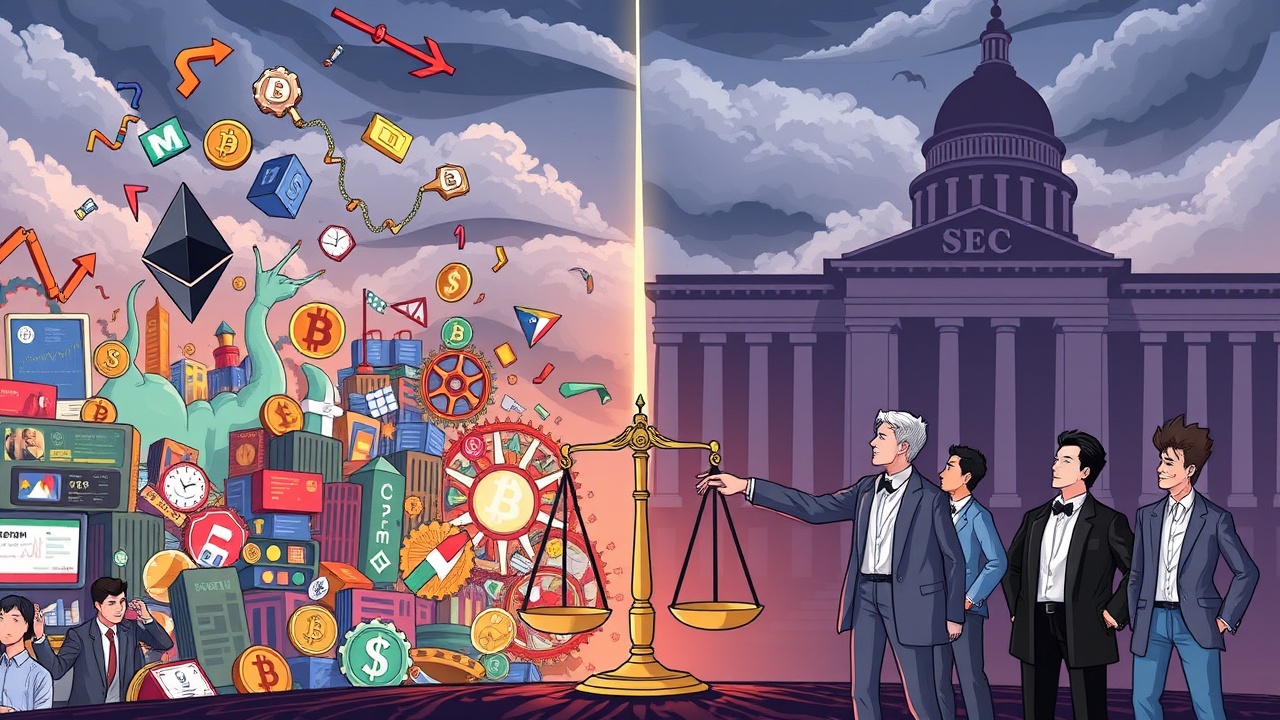
Call for Regulatory Clarity in DeFi
A prominent group of decentralized finance (DeFi) innovators and investors is calling on the U.S. Securities and Exchange Commission (SEC) to formalize its recent guidance regarding “non-custodial user interfaces” into binding regulations. This coalition, which includes influential entities such as the DeFi Education Fund, Aave Labs, Uniswap Labs, and venture capital firm Andreessen Horowitz, believes that solidifying the definitions of what constitutes a “broker” is crucial for preserving the integrity of unregulated infrastructure in the crypto space.
Support for SEC Guidance
In a letter submitted to the SEC this week, the group expressed support for the staff’s statement issued on April 13, which clarified that non-custodial user interfaces that simply convert user commands into blockchain operations do not require broker-dealer registration, as these tools do not operate as intermediaries and allow users full control of their assets. This perspective aligns with SEC Commissioner Hester Peirce’s argument for a more stable regulatory framework that accurately reflects the operational realities of DeFi.
Temporary Guidance and Its Implications
The staff’s April guidance established a temporary five-year no-action framework for “Covered User Interface Providers”, who can operate without the need for broker registration under specific conditions, such as maintaining strict limits on discretion and adhering to objective fee structures without engaging in payment for order flow. However, the coalition cautions that the temporary nature of this guidance, which can be revoked in 2031 without the SEC taking further action, creates uncertainty for businesses that are looking to make long-term investments in infrastructure.
Advocacy for Comprehensive Definitions
In their correspondence, the advocates called for the SEC to initiate an official notice-and-comment rulemaking process to create a comprehensive and technology-neutral definition of brokers. They propose that such a definition should clearly exclude neutral software providers, validators, and other technological infrastructure that lacks custody or active trading involvement. They argue that without established rules, future SEC staff or commissions might reinterpret broker definitions in ways that could stifle innovation and drive important infrastructure overseas.
Legislative Challenges and Future Outlook
The timing of this appeal comes as the industry grapples with legislative challenges—the CLARITY Act, a significant federal bill aimed at delineating the framework for the crypto market, is currently stalled in the Senate Banking Committee, adding pressure on the SEC to provide clarity through rulemaking. Legal analyses by various firms have characterized the April guidance as a potential roadmap for DeFi interface providers; however, they note it does not resolve broader regulatory concerns related to exchange registration or anti-money laundering (AML) rules.
Conclusion
The DeFi Education Fund, in its ongoing “DeFi Debrief”, hailed the SEC’s staff action as an important initial move but insisted on the necessity for definitive action from the Commission itself to establish enduring regulatory certainty. Until Congress enacts changes or the SEC completes its rulemaking, the coalition highlights a critical reality: the future of U.S. DeFi infrastructure rests on the interpretation of a broker definition that dates back almost a century.