Elon Musk's Vision: Are Data Centers in Space the Future of Crypto Mining?
Elon Musk discusses the potential of using data centers in space for Bitcoin mining, highlighting solar energy benefits and cooling challenges.
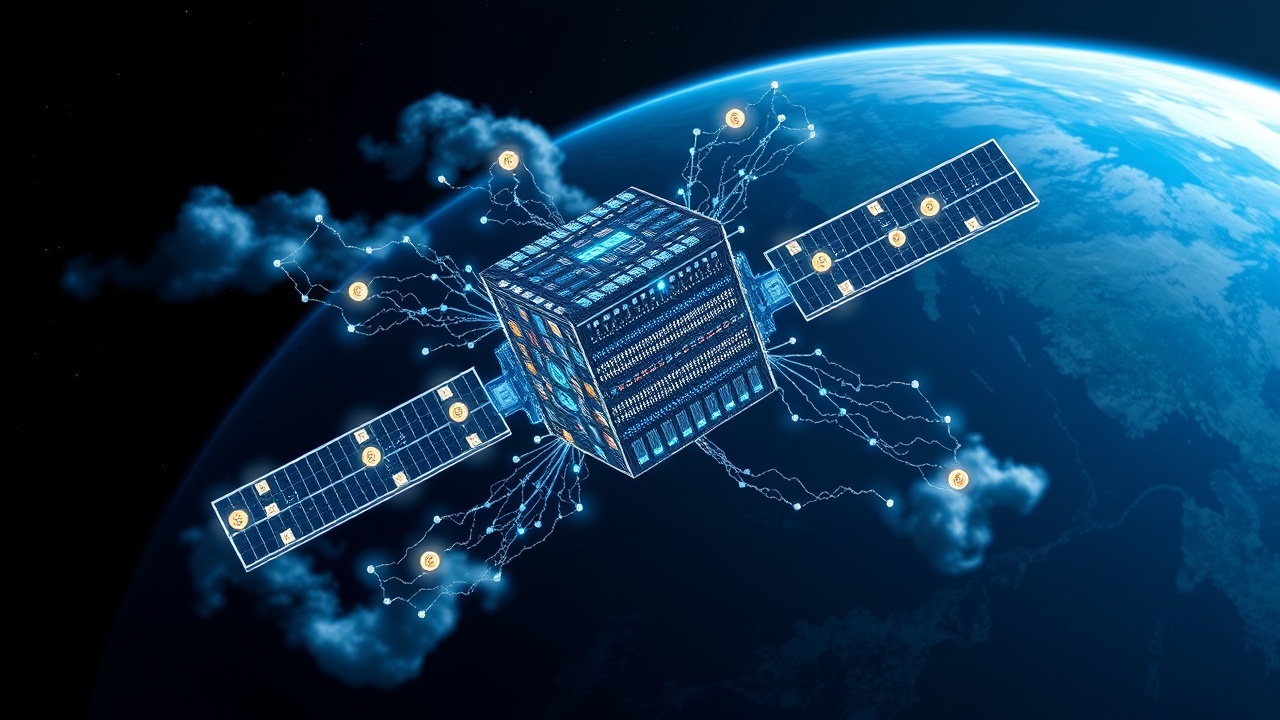
Elon Musk's Vision for Space Data Centers
On November 4, Elon Musk stirred the pot on the social media platform X by sharing an intriguing thought:
"Data centers in space look pretty appealing right now."This statement has sparked discussions not only about data centers but also about their potential application in cryptocurrency mining. The concept raises a tantalizing question: Could Bitcoin mining operations function effectively in space, exclusively powered by solar energy?
Technological Feasibility
Technologically, this idea holds merit; solar panels in orbit could theoretically generate electricity for Bitcoin mining rigs, potentially slashing the ongoing energy costs that are a significant factor in terrestrial mining operations. Unlike Earth-bound mining farms, space stations would harness the continuous energy provided by solar rays, making them much more energy efficient.
Studies suggest that if Bitcoin Application-Specific Integrated Circuit (ASIC) miners were deployed in space, they could operate around the clock with minimal energy expenses. However, launching the necessary equipment into orbit presents a significant economic hurdle as well as logistical challenges.
Economic Challenges
Musk's vision of space stations as the future of data centers encounters a stumbling block with the infamous high cost of space launches, currently estimated at approximately $1,500 per kilogram. This astronomical fee means a mining operation weighing one ton could incur launch expenses of about $1.5 million, not factoring in the costs for solar arrays, cooling mechanisms, and ongoing maintenance.
Cooling and Technical Difficulties
Moreover, while space might seem ideal for cooling mining machines due to its frigid environment, it also presents unique challenges. In the vacuum of space, conventional methods of heat dissipation—like fans and air conditioning—are ineffective. Mining rigs would require sophisticated cooling systems for heat management, potentially involving large radiators designed to emit heat as infrared radiation. According to the Boston Consulting Group, an orbital data center rated at 100 kilowatts would necessitate around 400 square meters of radiator panels to manage the heat effectively.
Beyond the technical difficulties, space also poses risks including radiation exposure and limited maintenance opportunities for hardware malfunctions, further complicating the viability of such operations. The only factors that could improve the financial calculus would involve advances in ASIC technology and a reduction in the costs associated with transporting goods to space.
Connectivity and Future Prospects
Fortunately, the requirements for bandwidth in Bitcoin mining are minimal, alleviating some connectivity concerns in this hypothetical scenario. While the mechanics of mining Bitcoin in a space environment could be feasible, the pressing question remains: is it economically viable? Presently, the answer leans towards 'no,' though advancements such as reusable rockets and lightweight cooling systems might one day tip the scales more favorably. Until then, traditional mining operations in expansive Earth-based facilities appear to be the more practical approach.
Also in other languages: РусскийDeutschFrançaisItalianoEspañol