
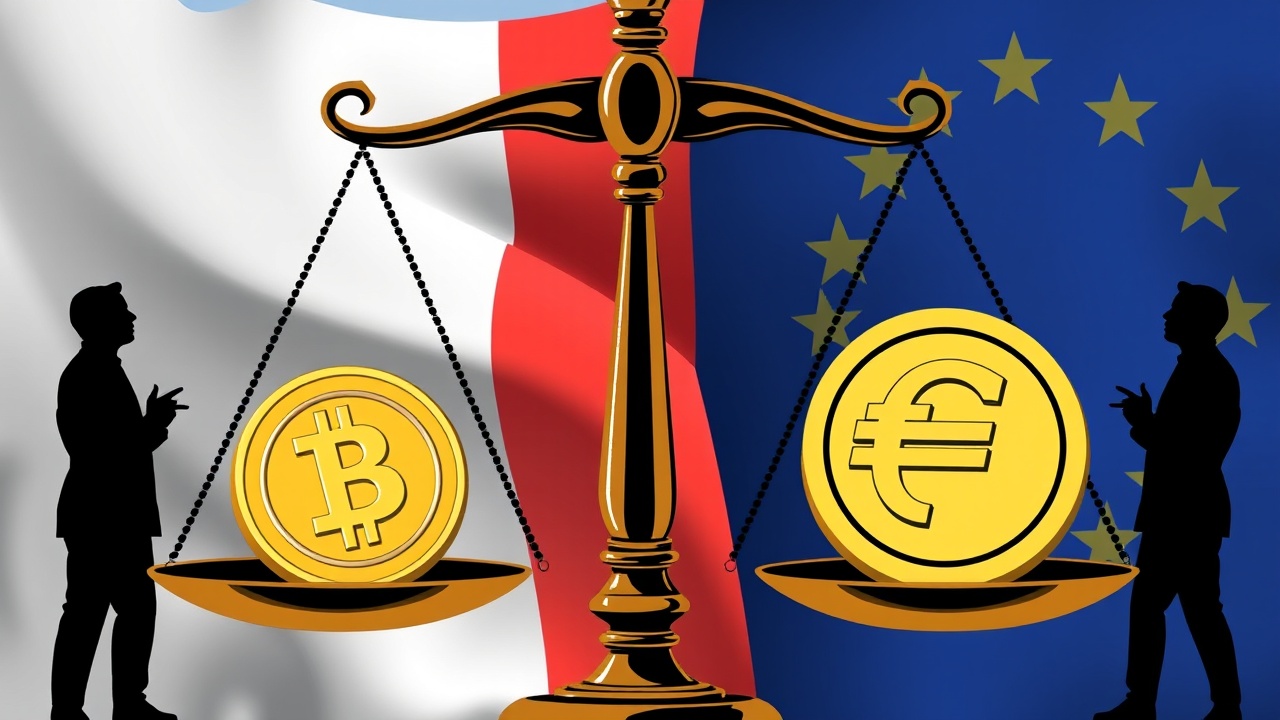
Support for Stablecoin Rewards in the EU
In a surprising turn of events within the European Union’s regulatory landscape, four financial authorities from France have lent their support to the provision of stablecoin rewards, opposing the established position upheld by the European Central Bank (ECB) and other national central banks. These authorities, namely the French Treasury, the Financial Markets Authority (AMF), the Bank of France, and the Prudential Supervisory and Resolution Authority (ACPR), have collectively petitioned the European Commission to amend the Markets in Crypto-Assets Regulation (MiCA) to permit these rewards under specific conditions.
Arguments for a Regulated Approach
The French agencies assert that rather than imposing an outright ban on rewards for stablecoin holders, a regulated approach would be more effective, emphasizing that such rewards are likely to develop in the market irrespective of the regulatory framework. Their proposal acknowledges the regulatory framework in the United States, particularly the GENIUS Act, which disallows interest from being paid by issuers but allows rewards from third parties.
The rationale provided by the French financial authorities is that allowing third-party rewards could decrease the costs associated with holding electronic money tokens (EMTs) and promote the availability of financial services round the clock. They also caution that an excessively stringent regulatory stance within the EU could weaken the competitive edge of euro-based EMTs in the global market.
Conditions for Offering Rewards
Despite their advocacy for managed rewards, the French authorities have established four key conditions that must be met by platforms offering stablecoin rewards:
- Transparency towards holders
- Avoidance of guaranteeing returns
- Refraining from classifying rewards as savings products
- Importance of assessing the effect of such rewards on traditional bank deposits
Current Regulatory Landscape
Currently, MiCA prohibits both issuers of stablecoins, like Circle, which manages USDC, and related cryptocurrency platforms from offering interest on stablecoins simply for holding them. This puts the French stance at odds with that of the ECB and the European System of Central Banks (ESCB), which maintains a strict prohibition on any form of rewards for stablecoin holders, advocating that electronic money should primarily facilitate payments, not be leveraged as a savings tool.
Central Banks and the Stablecoin Sector
Interestingly, the push against stablecoin rewards by central banks coincides with their own ventures into the stablecoin sector. Major banks, including HSBC, are launching their own stablecoins while simultaneously opposing rewards that could divert funds from traditional bank deposits. In Europe, banks are collaborating to create a shared euro stablecoin through the Qivalis consortium.
Public Advocacy and Future Outlook
Moreover, advocacy from a crypto asset group reveals a growing discontent among EU citizens regarding the current restrictions, with over 50,000 individuals purportedly reaching out to the European Commission to lobby for greater leniency in offering rewards through regulated stablecoins. As the debate continues, the European Commission is set to report back to EU lawmakers on MiCA revisions by June 30, 2027, potentially signaling crucial regulatory changes ahead for the industry.