Introduction to Keeper
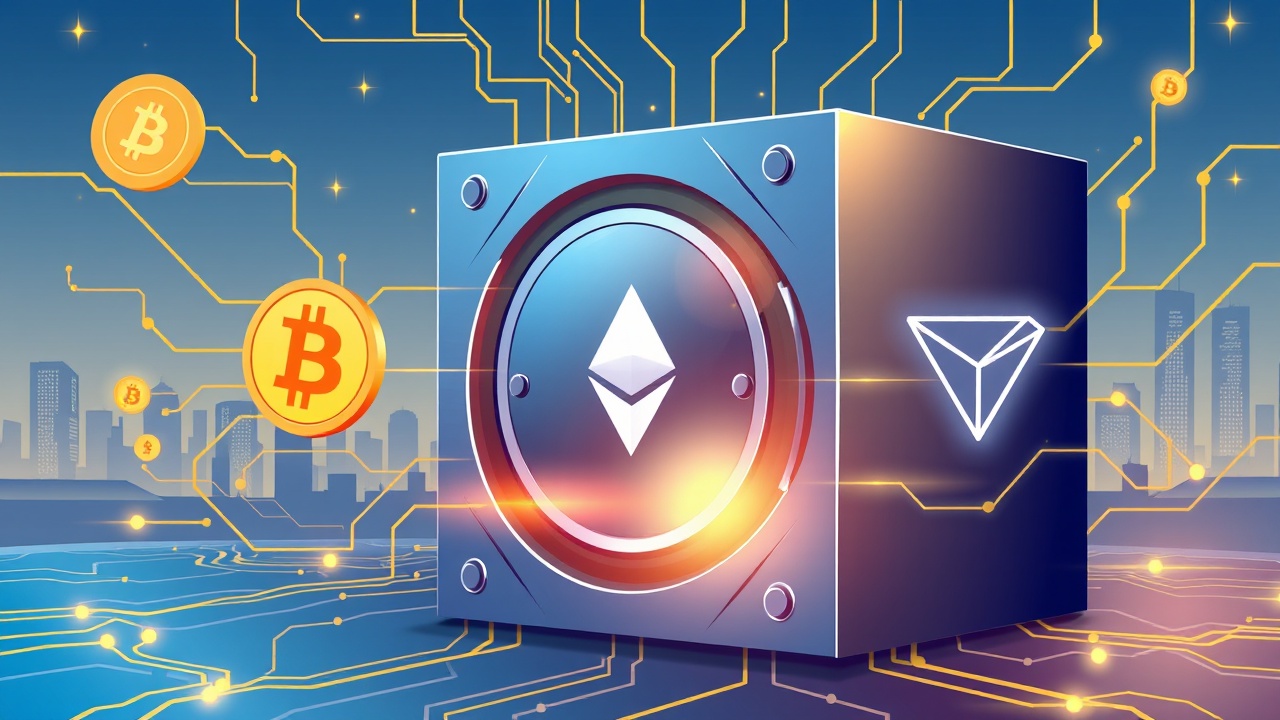
The self-custodial wallet formerly known as Tonkeeper has officially rebranded to Keeper, signaling a significant expansion in its capabilities. As of Tuesday, this wallet is now compatible with six additional blockchains, namely Bitcoin, Ethereum, Tron, BNB Smart Chain, Arbitrum, and Base, in addition to its original support for The Open Network (TON). This transition marks Keeper as a versatile multichain product rather than being confined to just the TON ecosystem.
Leadership Insights
Andrew Rogozov, founder and CEO of the Open Platform, expressed confidence in Keeper’s evolution, stating:
“Tonkeeper earned its place as the home of TON, trusted by millions of people around the world. Keeper is the next chapter: taking the simplicity we’re known for beyond TON and into the broader crypto economy.”
Understanding Self-Custodial Wallets
Unique to self-custodial wallets is their mechanism of enabling users to maintain control over their cryptocurrency assets directly, rather than relying on exchanges or intermediaries. Nikita Monastyrskiy, CMO of Keeper, noted that the rebranding was a direct response to user activity trends that revealed a shift beyond TON. He explained:
“Our users have moved away from a single chain, diversifying their asset holdings across multiple platforms, often managing them through several different applications.”
New Features and Innovations
To address this evolving user landscape, the rebranding to Keeper aims to better reflect the holders’ multichain needs. Emphasizing innovation, Keeper introduced a feature called Battery, which allows users to pay transaction fees without needing the native tokens of each network. Although details on which networks will support this feature at launch remain unclear, the company anticipates broader implementation across all supported platforms within the next year.
Keeper stated:
“Adding new chains was just the first step,”
indicating plans to enhance its multichain functionalities to create a wallet that users incorporate into their daily crypto activities, rather than merely a passive storage solution for their assets.
Market Context and Future Developments
This development follows the earlier rebranding of MyTonWallet to My Wallet in June, after expanding to support eleven networks, and the launch of cross-chain swaps by the TON-based exchange STON.fi in July.
Furthermore, the expansion of Keeper aligns with Telegram’s increasing integration with TON. Starting in January 2025, Telegram adopted TON as the sole blockchain for its crypto-enabled mini apps and assumed a more pronounced role in the governance of the network the following year. The Open Platform, which supports Keeper, successfully raised $28.5 million at a valuation of $1 billion in 2025.
Future developments for Keeper include plans to introduce cross-chain swaps, decentralized finance products, a decentralized app browser, and loyalty programs, although specific timelines for these offerings have not yet been announced.
The broader TON ecosystem continues to innovate, including the recent rollout of lower-barrier staking services through Telegram and the launch of a $500 million tokenized bond fund by Libre and the TON Foundation.
Conclusion
Monastyrskiy emphasized that the multichain trajectory of Keeper is designed to serve existing users by consolidating their diverse assets into one platform while also presenting the wallet’s TON capabilities to a wider audience. He stated:
“We are expanding beyond the TON ecosystem while staying closely connected to it. This way, users finally get one app for everything, while others will discover why we are the leading self-custodial wallet on TON.”