Significant Revelation in Identity Security
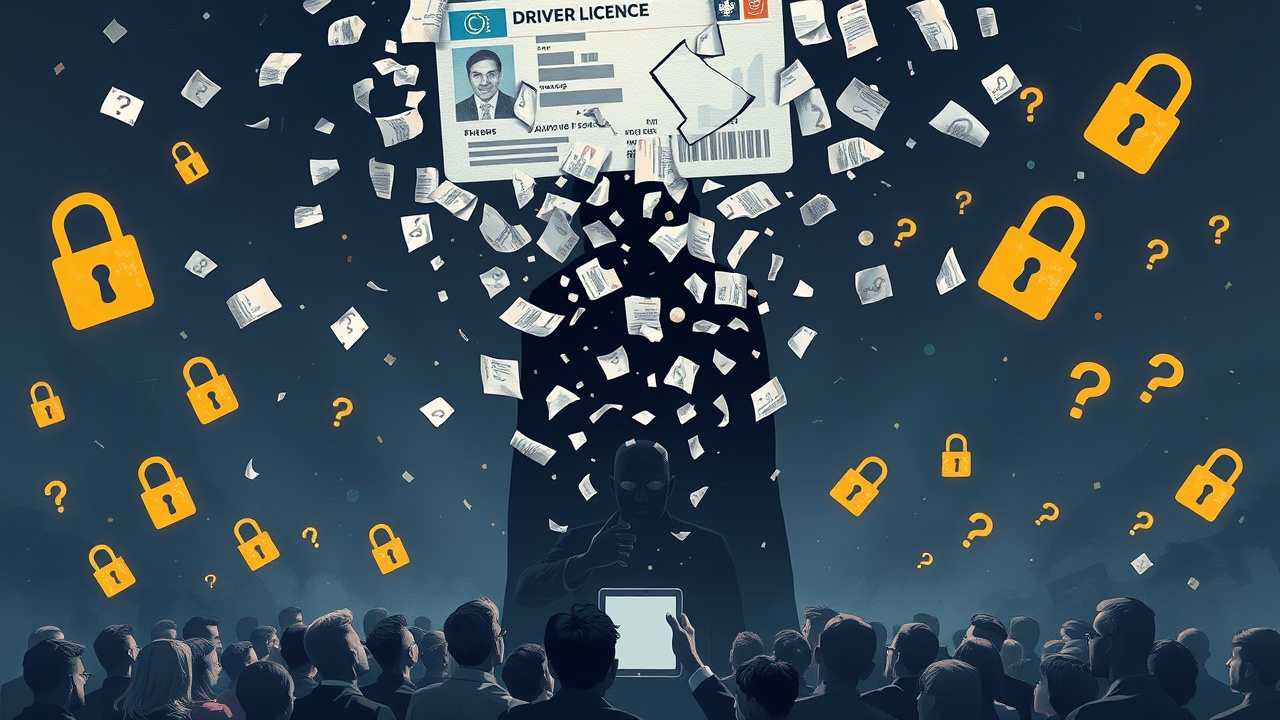
This week, a significant revelation regarding identity security has emerged from the world of cybersecurity, particularly from the efforts of Brian Krebs, a noted journalist and researcher at Krebs on Security. Krebs has uncovered a disturbing dark web service named Nexus, which is reportedly offering unauthorized scans of over 153 million driver’s licenses belonging to residents of both the United States and Canada. This alarming find has ignited widespread debate about Know Your Customer (KYC) regulations and their implications for personal safety.
Discovery of Nexus
On August 31, the investigative efforts of Krebs led him to a new identity theft operation on the dark web, accessing Nexus, which was publicized on a Russian-language forum, Exploit. According to his findings, this illicit marketplace not only features driver’s licenses but also lists millions of additional identity documents for sale, calling into question the adequacy of existing protective measures.
FBI Investigation Initiated
By September 1, Krebs reported that the FBI’s New Orleans field office had initiated an investigation into the origin of these stolen images, which include an astonishing 153,347,439 driver’s licenses from individuals spanning both countries. The sellers claimed they also possessed records of over 10 million identification cards, approximately 3.3 million travel documents and passports, and 579,000 medical cards, with the majority appearing to belong to American citizens. Krebs confirmed the genuine nature of some of these scans by contacting affected individuals, further compounding the gravity of the situation.
Details of the Breach
The discovered documents allegedly include detailed images of the front and back of the licenses, utilizing advanced methods such as infrared and ultraviolet imaging to enhance authenticity. Notably, the sellers made claims that even the driver’s license of U.S. Defense Secretary Pete Hegseth was included in the trove.
Debate on KYC Regulations
Following this discovery, the discourse surrounding KYC regulations intensified on various social media platforms like X (formerly Twitter), Facebook, and Reddit. Prominent voices in the cryptocurrency space, such as Erik Voorhees, founder of Venice.ai and Shapeshift, criticized KYC laws, labeling them as ineffective and detrimental to public safety. Voorhees stated,
“KYC is a bullsh*t scam that endangers millions of innocent people so that regulators can feel as if they’re providing value to the world.”
Another influential crypto account, TFTC, echoed these sentiments, articulating that KYC and Anti-Money Laundering (AML) policies hinder rather than help, as criminals evade compliance while law-abiding citizens are left vulnerable.
“The innocent person gets added to another honeypot,”
TFTC remarked, emphasizing the risks of such regulatory frameworks.
Potential National Security Vulnerabilities
Threat researcher Zach Edwards from Infoblox described the breach as unprecedented, pointing out its potential to create national security vulnerabilities, especially for high-profile individuals whose information has been compromised. Though the FBI has communicated with some cybersecurity experts regarding the matter, it has yet to issue a formal statement or publicly disclose the data source or the full extent of the leak, leaving millions of individuals apprehensive and uncertain about their security. It remains to be seen whether authorities will release a comprehensive list of those impacted.
Related News
In related news, on Thursday, SoFi Technologies and Payward, which oversees Kraken, announced a collaboration aimed at improving digital asset technologies.