
Ripple’s RLUSD Achieves Institutional Recognition
Ripple’s RLUSD has just achieved a significant level of institutional respectability, having been awarded an A2 long-term deposit rating and a P-1 short-term rating from Moody’s. This evaluation applies to RLUSD issued on both the XRP Ledger and Ethereum, offering institutions a fresh benchmark for appraising the dollar-pegged stablecoin.
New Trust Bank and Custodial Services
This comes at a pivotal moment, as Ripple has also received the green light to set up a national trust bank under the oversight of the Office of the Comptroller of the Currency (OCC). This bank will be tasked with managing the reserves of RLUSD and providing custodial services tailored for institutions, with the Bank of New York Mellon serving as the primary custodian of these reserves.
Impact on XRP Value
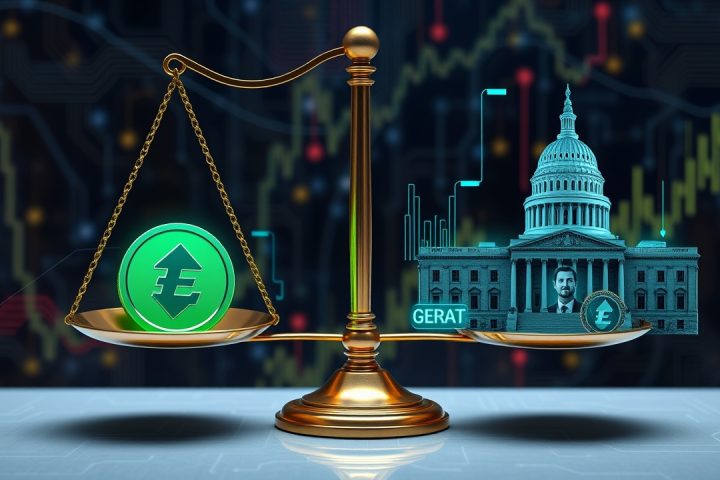
The more pressing question for XRP holders relates to how this development with RLUSD might impact XRP’s value. If RLUSD evolves into a key asset for institutional settlements, could XRP benefit from this expansion? An analysis of Binance’s historical experience with its BUSD and BNB ecosystem offers intriguing insights, despite Ripple’s distinct operational model.
“Moody’s endorsement transforms RLUSD into a formally assessed financial instrument that institutional risk teams can include in their analyses.”
Despite the oversight from Moody’s, RLUSD will be issued by Standard Custody & Trust Company, a subsidiary regulated in New York. The newly approved trust bank’s duties will encompass managing segregated reserves, acting as a collateral trustee, and offering fiduciary custody services for digital assets. Ripple laid out these approved roles on October 26.
Institutional Adoption and XRP Usage
These recent advancements position Ripple to vie for influence in various institutional domains such as payment processing, treasury management, and collateral usage. However, the real benefit to XRP will hinge on what institutions do post-RLUSD adoption.
In every transaction processed on the XRP Ledger, XRP is required to pay network fees, and accounts must hold XRP to comply with the ledger’s reserve policies. An increase in RLUSD transactions might create additional use cases for XRP, though reliance solely on these factors might not sufficiently drive demand.
Cross-Currency Transactions and Market Growth
A more significant opportunity lies in facilitating cross-currency transactions. Institutions could adopt XRP as a bridge asset during currency conversions, bypassing the need to utilize dollar stablecoins or conventional intermediaries for each transaction. Notably, RLUSD allows for direct settlements without requiring an institution to hold XRP for the overall transaction value, and transactions on Ethereum do not necessitate XRP for transaction fees either.
Consequently, the market capitalization of RLUSD could experience considerable growth while not directly translating to increased demand for XRP. The beneficial scenario becomes more compelling if the adoption of stablecoins leads to enhanced liquidity for XRP, increased bridge transactions, and fresh institutional trading activities.
Ripple’s Strategy Compared to Binance
Is Ripple on the verge of developing a strategy similar to Binance’s approach with BUSD and BNB? Binance’s ecosystem has showcased how a stablecoin can underpin a broader crypto initiative. BUSD provided liquidity denominated in dollars, while BNB fulfilled numerous roles across Binance’s exchange and underlying blockchain framework.
Ripple starts from a different angle. While RLUSD offers dollar stability, XRP functions as the native asset of the XRP Ledger and a potential bridge for cross-currency transactions. Should institutional acceptance of RLUSD elevate the demand for XRP liquidity, Ripple could possibly weave a similarly effective value-capture mechanism.
Future Prospects for Ripple and XRP
Visualize RLUSD scaling from a market cap of $2.5 billion to a staggering $25 billion—this tenfold increase could enlarge Ripple’s stablecoin operations significantly. Nevertheless, this wouldn’t guarantee a corresponding surge in XRP’s value. The outcome would depend on transaction volumes, overall network activity, institutional integrations, and how many payments actively utilize XRP.
For Ripple to replicate a beneficial ecosystem strategy, it must enhance XRP’s role within the financial activities surrounding RLUSD. Merely growing the stablecoin’s presence may not replicate the utility or supply mechanisms enjoyed by BNB. As Ripple advances towards establishing a robust regulated dollar-linked business, the key question remains: can XRP genuinely benefit from this growth?