Overview of the Acquisition
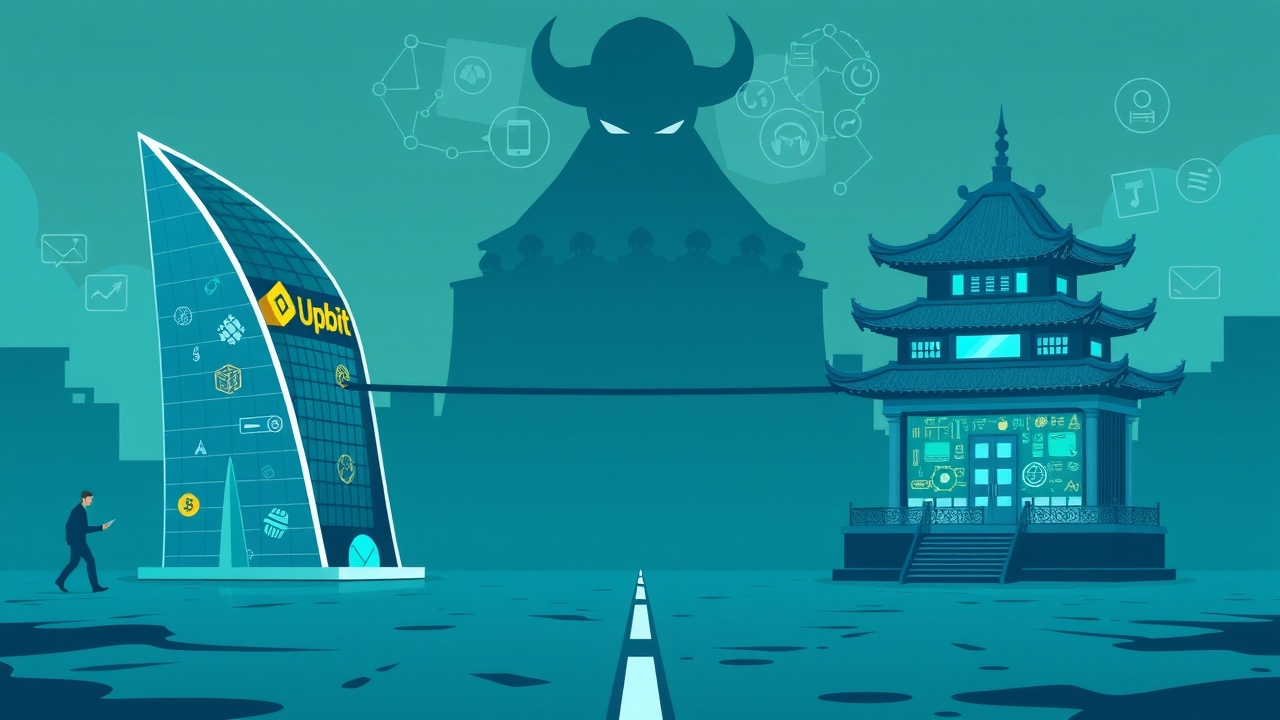
The prospective acquisition of Dunamu, which operates the Upbit cryptocurrency exchange, by Naver Financial has encountered potential hurdles due to South Korea’s evolving regulations concerning ownership in crypto firms. According to a report by the Yonhap News Agency, dated September 15, an analysis conducted by the National Assembly Research Service has highlighted possible conflicts between the proposed ownership limits for major shareholders of virtual asset exchanges and the existing requirements outlined in the Fair Trade Act, which governs subsidiary ownership.
Regulatory Challenges
The Fair Trade Act mandates that holding companies maintain specific ownership stakes—at least 50% for unlisted subsidiaries and 30% for listed ones—to ensure transparency and fair structures within corporate governance. However, the regulation that the National Assembly is considering could establish caps on major shareholders’ stakes in crypto exchanges, potentially contrasting with these holding company requirements. Researchers are contemplating a shareholder limit around 20%, though they have suggested that ownership could rise to 34% in special situations.
Despite the proposed regulation, the South Korean Financial Services Commission has clarified that no definitive cap on major shareholder ownership has yet been established. Amid speculation about a 20% limit, officials emphasized that such a restriction remains under consideration and not finalized.
Compliance Considerations
If Naver Financial becomes classified as a holding company post-acquisition, the simultaneous adherence to both the Fair Trade Act and the newer digital asset ownership guidelines could pose compliance challenges. The National Assembly Research Service indicated that Naver’s situation could become contentious if both ownership minima and caps cannot be concurrently achieved.
Simply put, Naver Financial is not violating current laws as it is not yet designated as a holding company. However, should its structure change post-acquisition, it may be required to navigate the complexities of the Fair Trade Act against any new rules established under the anticipated digital asset regulation.
Transaction Details
As the acquisition structure stands, this transaction is framed as a share swap that would result in Dunamu being fully owned by Naver Financial. The outlined exchange ratio stands at over 2.54 of Naver Financial shares for each Dunamu share. Not only would this transaction consolidate control over Dunamu, but its implications are also triggered by ongoing regulatory discussions and market dynamics. The timeline for the deal has shifted, with a shareholder meeting rescheduled from August to November 19, while the share exchange completion has been pushed back to December 31.
The acquisition procedure is contingent upon regulatory approvals, including significant shareholder structures and obligations related to Dunamu’s ownership. South Korea’s Financial Supervisory Service has previously identified regulatory discrepancies requiring corrections from Dunamu, leading to delays in the acquisition process.
Broader Context
In a broader context, South Korea is currently deliberating over new ownership regulations for crypto exchanges as part of the Digital Asset Basic Act—a secondary regulatory framework targeting the cryptocurrency sector. These ongoing discussions are especially critical for Upbit since Dunamu will continue to operate the exchange once it becomes a Naver subsidiary, complicating ownership dynamics due to evolving legislative parameters.
This pivotal transaction, with its next formal milestone on the horizon, underscores the complexities of merging traditional corporate structures with the nascent landscape of digital assets. The criticality of the upcoming regulatory decisions cannot be overstated as they play a significant role in shaping the future of cryptocurrency governance within South Korea.