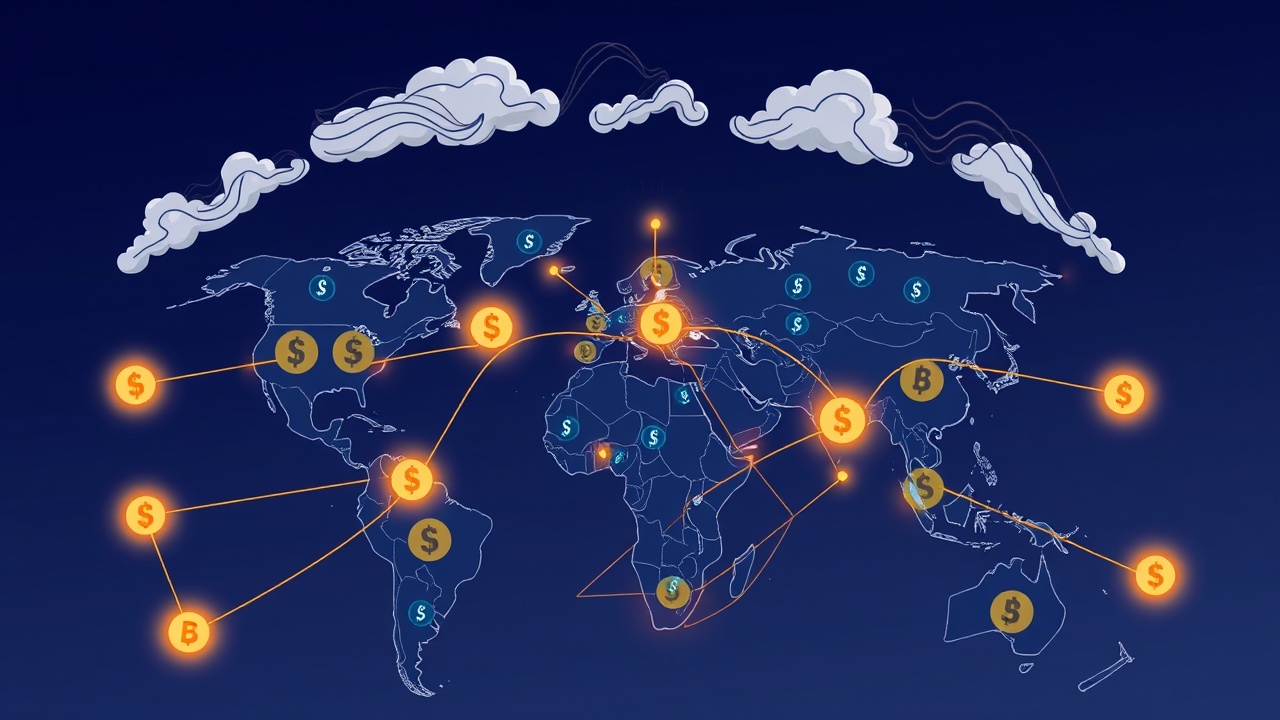
The Challenges of Regulating Dollar-Backed Stablecoins
The challenges of regulating dollar-backed stablecoins have become increasingly evident, particularly in light of recent observations by the Financial Stability Board (FSB). A stablecoin pegged to the U.S. dollar can be traded globally and transacted across various blockchain networks around the clock, which complicates the task of monitoring and managing these digital assets. As highlighted in a report issued on October 12, the FSB notes that the complexities arise because issuers may maintain their reserves in one location while users could be trading the coins in numerous other jurisdictions, making it difficult for any single regulatory body to accurately track obligations and financial flows.
Key Issues Identified by the FSB
This nine-page report delves deeper than a mere cautionary note regarding stablecoin usage; it identifies three main issues related to their operation:
- International Movement: Tokens that can be easily moved internationally may create localized demands for redemption.
- Dispersed Reserves: Linked companies issuing these tokens may have reserve holdings dispersed in various regions.
- Lack of Clarity: The data stored on public blockchains often lacks the clarity to establish a transaction’s geographic origin or its intended use.
Rather than imposing new regulations on issuers, the document serves as a guideline for authorities looking to navigate these challenges.
Current Landscape of Stablecoins
Currently, an estimated $300 billion in stablecoins are in circulation, with an overwhelming majority pegged to the dollar. This means that, theoretically, around $297 billion may be available for redemption at any given time. However, the analysis does not account for the actual accessibility of these funds on any particular day or the geographic location of the holders who may seek cash redemptions.
Global Stablecoins and Regulatory Challenges
The FSB defines global stablecoins based on their ability to operate across international boundaries and their potential impact on the financial system. While the issuer may make promises regarding redemption and reserves within specific legal frameworks, the tokens themselves can be circulated without clear identification of jurisdiction, complicating any potential legal inquiries.
“An issuer could be unaware of the specific locations of its token holders or their redemption requests.”
For instance, an exchange may have basic identification information on users but still lack the ability to track where tokens are sent once withdrawn from its platform. In such cases, while blockchain technology enables quick transactions, it does not inherently provide the necessary oversight to fully understand the implications of those transactions.
Market Dynamics and Redemption Mechanisms
A secondary market exists where traders can take advantage of price discrepancies to buy tokens at a discount and facilitate redemptions, but the success of this mechanism hinges on several factors, including the availability of reserves, the operating hours of banks, and overall trust in the issued tokens. Temporary market discounts do not necessarily indicate insolvency, and the presence of a healthy trading environment can stabilize prices toward the intended peg if conditions permit.
Complex Situations with Affiliated Entities
The FSB pays particular attention to complex situations where multiple affiliated entities issue a single type of stablecoin but manage distinct reserves. In practice, this could simplify international transactions under normal circumstances; however, during financial stress, redemption requests may disproportionately converge on one of the affiliates, leading to potential liquidity shortfalls if reserves are not readily available.
“If two affiliated issuers each release $1 billion worth of stablecoins, but redemption requests specifically target one issuer, that entity could face a shortage while the collective reserve holdings remain adequate at the group level.”
The ability of the issuer to obtain liquidity across borders can depend heavily on legal frameworks, asset liquidity, and effective communication among affiliates.
Conclusion and Future Considerations
The FSB’s note does not assert that there is an immediate crisis in the stablecoin sector but instead strives to encourage vigilance in monitoring the interconnectedness of these financial instruments. By analyzing reserve liquidations, withdrawal trends, and shifts in banking reliance, the FSB aims to foresee potential instabilities in a system that is still largely developing.
Additionally, the intricate dynamics of how stablecoins are utilized in various markets reinforce these concerns. Currently, they primarily facilitate trading and liquidity access within crypto ecosystems while certain emerging economies employ them as a form of value storage. The report emphasizes the crucial need to monitor these use cases and their impacts on broader financial systems, particularly in how issues like liquidity shortages could ripple through banking institutions or disrupt payment networks.
Overall, the FSB’s observations underline the necessity for improved data collection and sharing among regulatory bodies, boosted by enhanced transparency in issuer communications. While acknowledging the progress made thus far, the report signifies an ongoing endeavor to build a more cohesive understanding of stablecoin dynamics amidst looming regulatory ambiguities across nations. The document was prepared ahead of an upcoming G20 meeting, which could dictate future policy directions. Despite its non-binding nature, the FSB’s insights are vital for shaping future discussions around the governance of global stablecoins.