Patrick Witt’s Leave of Absence
In a significant move for the administration’s cryptocurrency efforts, Patrick Witt, the White House’s crypto advisor, is set to take an extended leave of absence at the end of July to attend mandatory military legal training with the Georgia Army National Guard. Witt, who serves as the executive director for the President’s Council of Advisors on Digital Assets, is expected to wrap up his duties in the White House by July 24, before starting his training on July 27. This program will prepare him to take on the role of a Judge Advocate General (JAG) officer.
Impact on Legislative Efforts
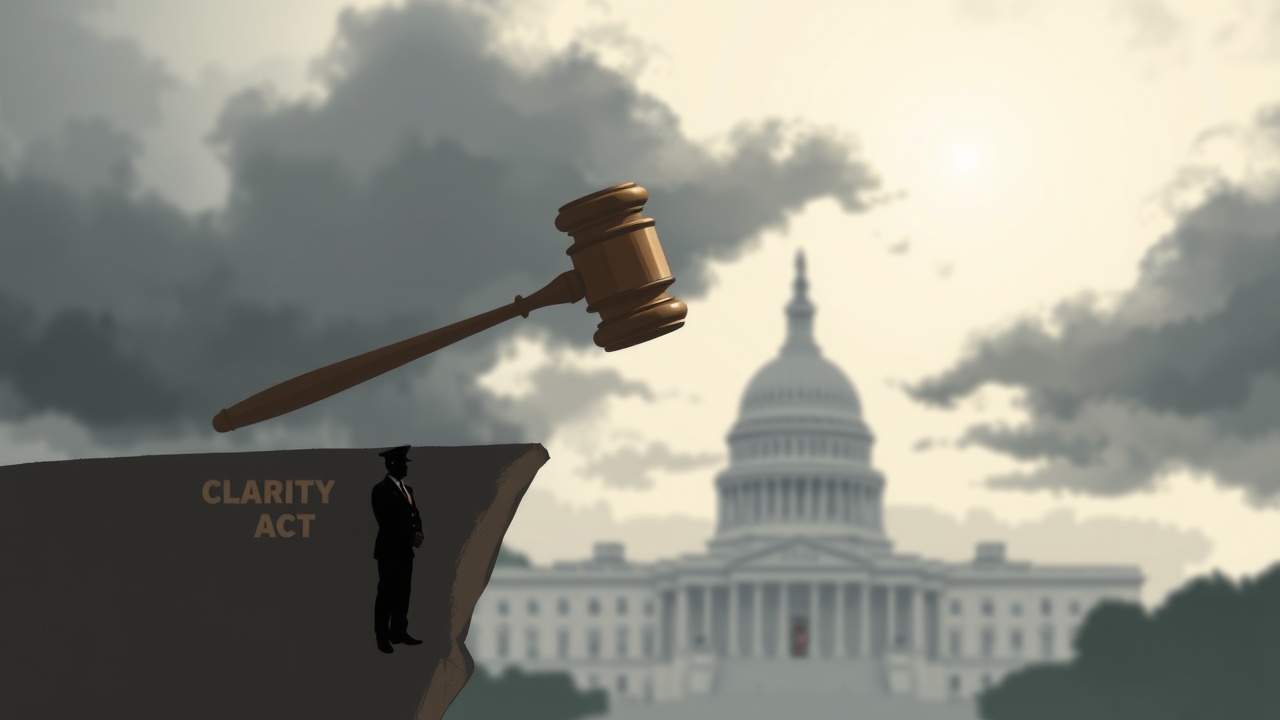
His leave comes during a pivotal period when Senate negotiators are eager to push forward the CLARITY Act, which aims to establish federal regulations for digital asset markets. This effort is particularly pressing as the Senate plans to recess for summer on August 7, with a scheduled work period concluding on September 11, 2026. Supporters of the legislation are vying for significant progress before this deadline due to the anticipated difficulties of midterm campaigning.
Witt has been instrumental in discussions regarding essential aspects of the legislation, including stablecoin rewards and protections for decentralized software developers. His absence raises questions about the ongoing negotiations, particularly as he had previously postponed his military training from April to maintain focus on these discussions.
Transition of Responsibilities
During Witt’s leave, Harry Jung, the deputy director, will assume his primary responsibilities. Jung, who has closely collaborated with Witt in negotiations and has participated in multiple discussions, is expected to provide continuity during this transition.
Despite his commitment to military training, reports suggest that Witt intends to stay engaged with legislative matters as much as possible. However, it is uncertain whether he will return to his full-time role post-training. His temporary departure could have repercussions on various crypto initiatives, including the Strategic Bitcoin Reserve and proposed changes to crypto taxation.
The CLARITY Act
The CLARITY Act, a critically anticipated piece of legislation, seeks to delineate authority between the Securities and Exchange Commission and the Commodity Futures Trading Commission. It aims to establish comprehensive guidelines for exchanges, customer assets, and crypto intermediaries, a goal that has garnered support from various law enforcement agencies, albeit with ongoing discussions about developer protections and enforcement powers.
Key figures, including President Donald Trump and Senator Cynthia Lummis, have advocated for the swift passage of the bill, emphasizing the urgency as the recess approaches. With Witt’s transition, the administration hopes to maintain a steady approach, even as it grapples with last-minute negotiations ahead of the summer break.
As Witt pointedly remarked in a recent post, this week is “critical” for advancing the legislation, underscoring the lost time and the pressing need to act on the CLARITY Act.