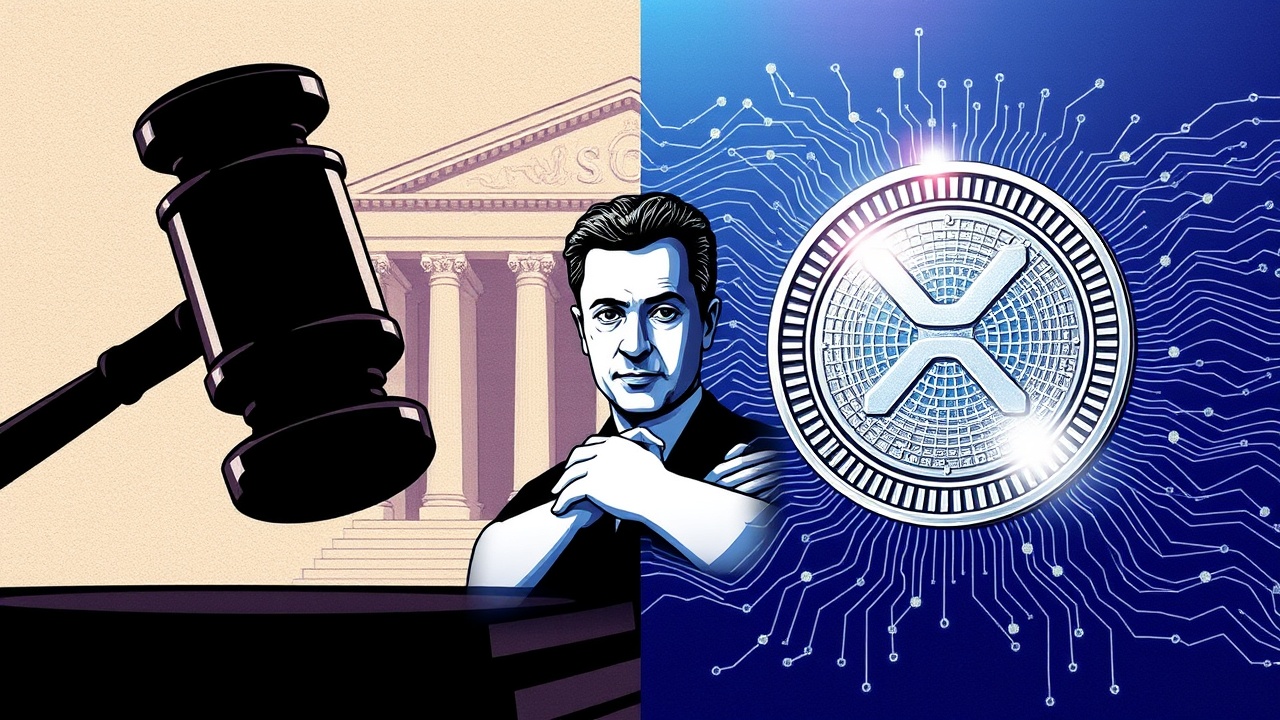
David Schwartz’s Dispute with SEC Assertions
David Schwartz, the former Chief Technology Officer at Ripple, has openly disputed assertions suggesting that the U.S. Securities and Exchange Commission (SEC) focused exclusively on Ripple’s sales of the cryptocurrency XRP. During a conversation spurred by comments from former SEC attorney Marc Fagel, Schwartz emphasized that the SEC’s official complaint, along with its public declarations, consistently categorized XRP itself as a security. This perspective gained traction particularly after the court dismissed parts of the SEC’s broader claims regarding XRP.
Discussion on SEC’s Claims
In a discussion hosted on X (formerly Twitter) on July 14, Fagel asserted that for the SEC to substantiate its claim of a Section 5 violation, it was imperative to demonstrate that Ripple conducted sales of XRP as unregistered securities. Furthermore, he clarified that the commission did not need to scrutinize every potential secondary-market transaction linked to Ripple’s case. Schwartz concurred that the sales conducted by Ripple were important but firmly rejected the notion that they represented the sole argument from the regulatory agency. He remarked that the SEC’s complaint repeatedly identified XRP as the security in question, labeling a simplified retelling of the events as an attempt to distort historical facts.
He cautioned against overshadowing the core of the SEC’s claims, their public statements, and the court’s findings, arguing this misrepresentation does not accurately reflect the comprehensive narrative.
SEC’s Initial Complaint and Court Ruling
The SEC’s initial complaint, filed in December 2020, accused Ripple and its executives of selling over 14.6 billion XRP units, which were classified as a “digital asset security.” This alleged sale purportedly generated more than $1.38 billion without proper registration or exemptions. The SEC’s focus in their announcements was notably on Ripple’s purported unregistered offerings as well as the personal sales made by its executives. Fagel later admitted that the SEC’s communication on the matter lacked clarity and that it seemed to evolve throughout the case, with the ultimate legal question revolving around Ripple’s specific transactions involving XRP.
In her ruling issued in July 2023, Judge Analisa Torres differentiated between XRP itself and the contracts or schemes used in its sale. She concluded that while XRP, as a digital asset, did not in itself constitute a contract or scheme that passed the Howey test for securities, the court identified a substantial portion—approximately $728.9 million in direct institutional sales—as unregistered investment contracts. Conversely, sales executed via programmatic exchanges were not classified as securities because purchasers were unaware of whether Ripple or another party was the seller.
Conclusion of Civil Litigation
In a significant development, both the SEC and Ripple opted to withdraw their appeals in August 2025, thereby concluding the civil litigation, which resulted in a ruling that included a penalty of $125.04 million and imposed a permanent injunction on future unregistered institutional sales.
July 13 marked the third anniversary of the pivotal 2023 ruling, which protected Ripple’s programmatic sale activities while still categorizing its institutional sales under securities regulation.
Reports indicated that Ripple had contemplated shutting down in light of the SEC’s complaint but ultimately opted to defend itself, incurring legal fees estimated around $150 million. Schwartz underscored that the court’s dismissal of the SEC’s more expansive claims was a defining factor in Ripple’s legal triumph. The ongoing discourse between Schwartz and Fagel signifies a persistent contention regarding the legal framework governing the SEC’s operations, their public pronouncements, and the repercussions of the consequential ruling, with these distinctions continuing to influence the narrative surrounding XRP’s legal journey.