Ripple Supports UK Initiative for Tokenized Financial Markets
Ripple has shown its support for a new initiative in the UK aimed at transitioning wholesale financial markets towards a tokenized system. This strategy is spearheaded by Chris Woolard, the Wholesale Digital Markets Champion appointed by HM Treasury in April. Ripple emphasized that on-chain financial transactions, such as funds, bonds, and repo deals, are no longer just theoretical and are capable of offering significantly faster and more cost-effective processes compared to traditional methods.
Economic Impact and Market Predictions
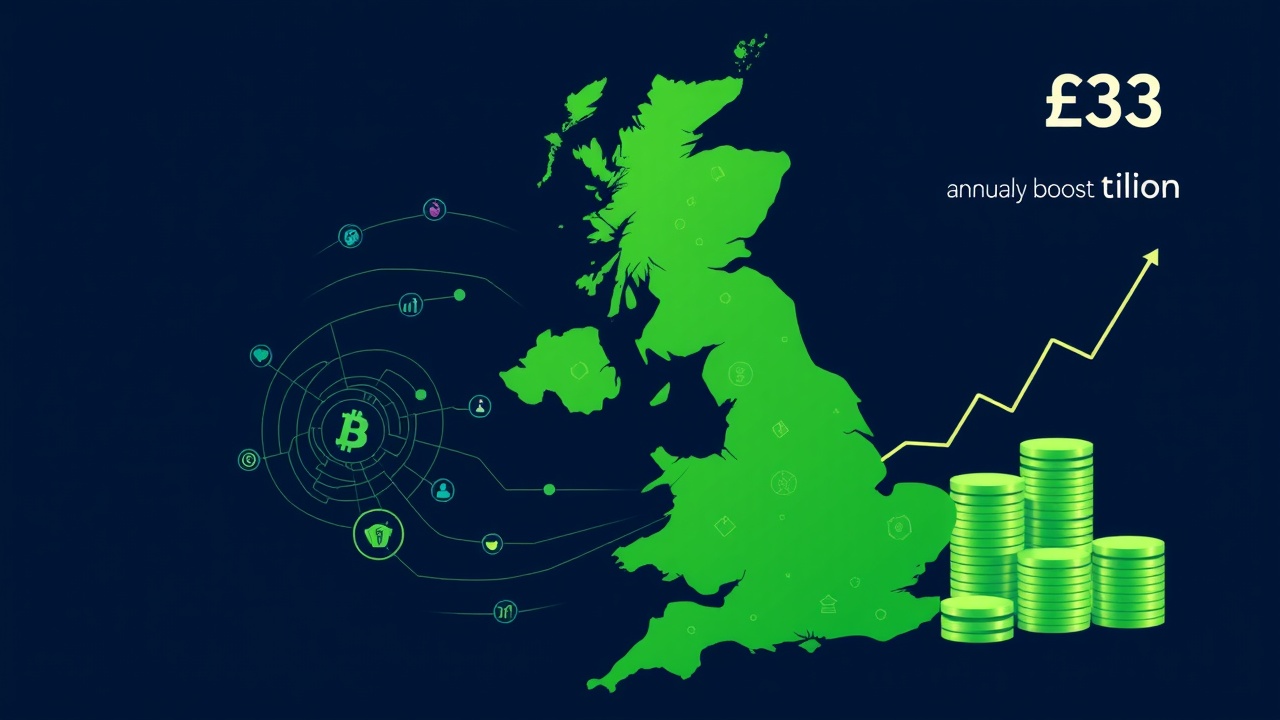
The proposed strategy positions the UK’s substantial capital markets as central, predicting that broader tokenization could contribute as much as £33 billion to the annual economic output and generate approximately £14 billion in tax revenue by 2035. However, these estimates are contingent upon factors such as regulatory frameworks, market adoption, and the UK’s ability to capture a sizeable portion of a global tokenized asset market which is projected to reach $88 trillion by 2035.
Taskforce Composition and Focus Areas
The taskforce driving this initiative consists of 54 companies spanning banking, asset management, market infrastructure, and digital assets. It is organized into nine action groups focusing on various aspects, including collateral management, legal standards, market access, and settlement processes. Its inaugural focus will be on tokenized repo, wherein securities are utilized as collateral for short-term borrowing needs. The taskforce aims to conduct a live, complete end-to-end repo transaction by the spring of 2027.
Advancements in Digital Gilt and Regulatory Clarity
The initiative also seeks advancements on DIGIT, the UK government’s suggested digital gilt, with aspirations for the government to issue its first digital gilt by early 2027, supporting future issuances. Additionally, the report urges regulatory authorities to clarify whether tokenized government bonds can be eligible as collateral, facilitating the incorporation of digital securities within current wholesale financial frameworks instead of confining them to isolated pilot programs.
Regulatory Testing and Future Phases
The UK has already begun regulated testing of tokenized securities with the Financial Conduct Authority and the Bank of England collaborating with 16 firms in the Digital Securities Sandbox. This initiative encompasses live issuances and settlements for tokenized bonds, equities, and fund units. Regulators are also gathering market input on various aspects such as settlement assets, tokenized collateral, and the integration of blockchain networks with existing financial infrastructures.
The regulators have indicated that the next phase should transition activities from experimental pilots to fully operational systems. Nevertheless, clarity is needed regarding rules on custody, capital treatment, legal ownership, and settlement funding. While tokenization offers the potential to minimize manual processing and reduce settlement delays, it does not eliminate underlying risks such as credit, operational, or counterparty risks. The taskforce must demonstrate that these new mechanisms uphold the high standards mandated in regulated wholesale markets.
Ripple’s Role and Industry Feedback
Ripple’s endorsement is consistent with its broader objectives in payments, stablecoins, custody, and tokenized assets. The company advocates for the UK’s strong market infrastructure and regulatory credibility as factors that could establish it as a leader in tokenized wholesale finance. It’s important to note, however, that Ripple does not control the overarching program; this authority resides with HM Treasury, regulators, and the wider taskforce who will define the rules and technical specifications.
As reported earlier by crypto.news, there has been a rise in tokenized real-world assets with banks and asset managers increasingly shifting financial instruments like government debt and repo transactions to blockchain systems. The new UK plan outlines a one-year timeline focused on live use cases, moving beyond broad policy objectives. Its success will hinge on the outcomes of the repo trial, the expansion of secondary markets, and the alignment of digital assets with both central bank and commercial bank money. The taskforce has committed to providing annual updates and has invited feedback from the industry until September 4 regarding priorities and timelines.