Shifting Banking Preferences Among European Investors
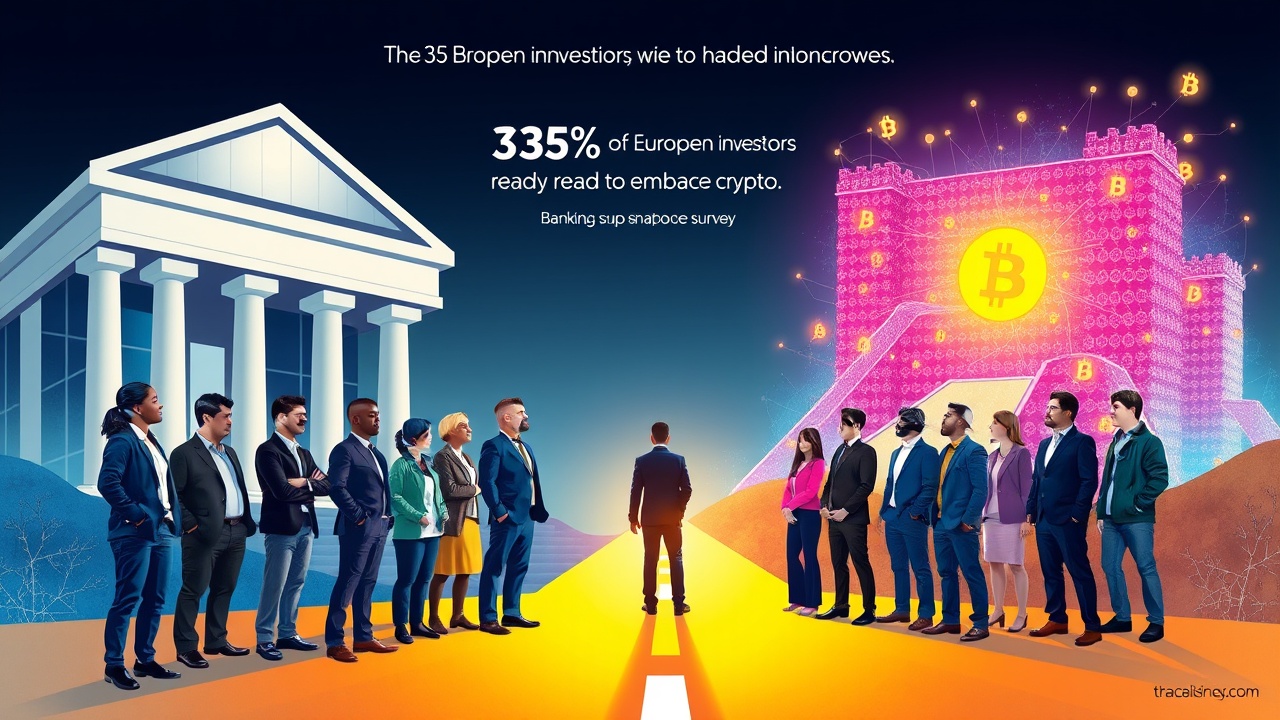
A recent study conducted by Börse Stuttgart Digital reveals that a significant shift is underway among European investors regarding their banking preferences, particularly concerning cryptocurrency services. The survey, which gathered insights from approximately 6,000 individuals across Germany, Italy, Spain, and France, indicates that 35% of participants would consider changing their bank if they found one offering improved cryptocurrency investment options. This trend underscores the growing recognition of digital assets as integral components of banking relationships, moving beyond their prior status as niche options for select investors.
Growing Demand for Cryptocurrency Services
As interest in digital currencies rises, many investors are expressing a desire for their banks to begin offering crypto services. Nearly 20% of those surveyed anticipate that their primary banks will integrate cryptocurrency offerings within the next three years. Currently, 25% of respondents have already ventured into the realm of digital assets, and an additional 36% have plans to invest within the next five years.
Challenges and Regulatory Landscape
Despite this increasing demand, significant challenges remain, particularly regarding regulation and knowledge about the cryptocurrency landscape. A notable 76% of respondents believe that existing regulations surrounding crypto assets are inadequate, and over 60% feel they lack sufficient information about the sector. However, optimism is on the rise—following the introduction of the Markets in Crypto-Assets Regulation (MiCAR), which is set to take effect fully for crypto service providers by December 30, 2024. This framework aims to standardize regulations across the European Union, with nearly 50% of the investors surveyed expressing that this new regulatory landscape enhances the safety and accessibility of digital assets.
Matthias Voelkel, an expert at Börse Stuttgart Digital, highlighted the significance of trust and clear regulations as crucial elements for advancing crypto adoption in Europe, emphasizing that MiCAR provides the transparency that investors are seeking.
The influence of these regulations is already evident in the institutional landscape; Börse Stuttgart Digital recently became the first German crypto service provider to receive an EU-wide MiCA license, positioning itself to supply regulated infrastructure to various financial entities including banks and asset managers.
Cryptocurrency Adoption Across Europe
Among the surveyed nations, Spain leads in cryptocurrency adoption with almost 28% of investors currently holding digital assets, followed by Germany at 25%, Italy at 24%, and France at 23%. Furthermore, data from Chainalysis highlights that transaction volumes are increasing across Europe, with Russia dominating by receiving $376 billion in crypto value from July 2024 to June 2025, followed by the UK at $273 billion and Germany at $219 billion.
Institutional Attitudes and Infrastructure Needs
Institutional attitudes reflect this momentum as well. A survey from Ripple conducted in 2026 revealed that 72% of financial leaders believe offering digital asset services is essential to maintain a competitive edge. Additionally, 74% indicated that stablecoins could enhance cash flow efficiency and free up working capital, illustrating expanding use cases for cryptocurrencies beyond mere transactions into areas such as treasury management.
Attention within financial institutions is also shifting towards the necessary infrastructure for digital currency operations. An impressive 89% of banks and asset managers exploring tokenization identified secure custody and storage solutions as top priorities, with a high percentage (97%) underscoring the necessity for security standards like ISO and SOC II certifications.
As Ripple noted, “Most finance leaders aren’t debating digital assets anymore. They’re figuring out how to build with them and who to build with,” indicating a clear transition towards embracing cryptocurrency integration within traditional financial systems.