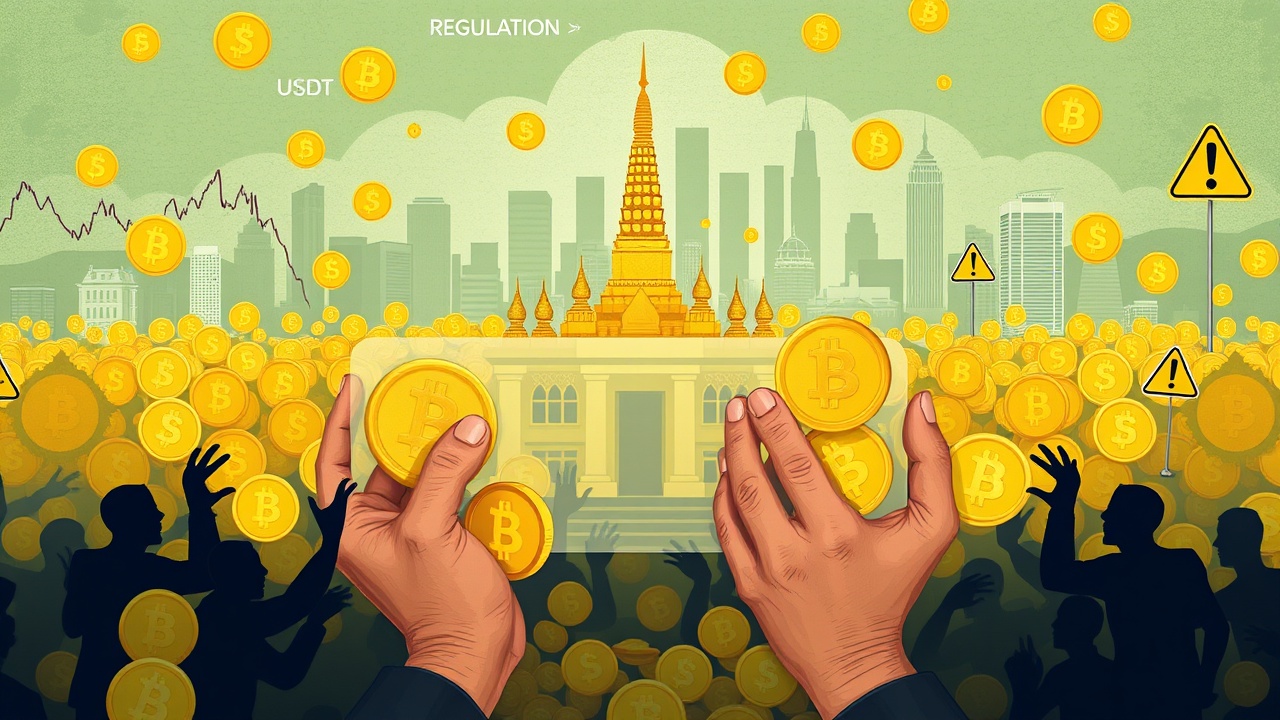
Thailand’s Central Bank Introduces Stricter Regulations
In an effort to combat illicit capital movements, Thailand’s central bank is set to introduce more stringent regulations concerning sizable cash deposits and the trading of high-value stablecoins like USDT. The Bank of Thailand will mandate individuals depositing sums of 5 million baht, or approximately $150,000, to provide documentation justifying the origin of their funds. This initiative is expected to commence in the last quarter of 2026.
Background and Previous Measures
The measure follows an earlier directive enacted in April which required customers to furnish verified business purposes for cash withdrawals of the same amount. This rule has reportedly led to a 35% reduction in high-value cash withdrawals, according to the central bank.
Enhanced Scrutiny and Regulatory Framework
Under the forthcoming regulations, banks will enhance their scrutiny of large cash inflows, thereby creating a consistent approach to monitoring the money entering and exiting accounts. Governor Vitai Ratanakorn emphasized that the regulatory framework will involve multiple strategies, rather than relying on one-off measures, describing these efforts as long-term solutions to the issue.
Investigation of USDT Transactions
Alongside tightening cash deposit measures, the Bank of Thailand is collaborating with the country’s Securities and Exchange Commission (SEC) to investigate substantial USDT transactions. Recent findings indicated that the patterns of these transactions could potentially mask the true ownership of the funds or sidestep domestic remittance systems. The inquiry aims to trace the individuals who control these assets and determine if transactions adhered to local regulations.
It’s important to note that this inspection does not equate to a prohibition on USDT; the SEC had earlier classified both USDT and USDC as permissible cryptocurrencies for usage on licensed exchanges since March 2025.
Thailand’s Evolving Regulatory Landscape
This inclusion allows approved digital asset marketplaces to utilize these stablecoins as trading pairs, facilitating regulated exchanges while ensuring some degree of market control over digital assets. Thailand’s regulatory landscape for digital currencies has been characterized by a cautious but evolving approach. The government has permitted sanctioned cryptocurrency trading while maintaining restrictions on direct crypto payments across various domestic sectors.
In parallel, the SEC is in the process of formulating regulations for new financial products such as crypto exchange-traded funds and tokenized bonds in 2026.
TouristDigiPay Project
The central bank, along with the SEC, has also overseen a project named TouristDigiPay, which allows eligible international travelers to convert digital currencies into baht. This initiative ensures that foreign visitors can engage in the local payment ecosystem through registered providers while complying with identity verification requirements.
Broader Initiatives for Financial Integrity
Beyond regulations on digital assets, Thailand’s broader initiative seeks to enhance transparency across multiple sectors including physical bullion transactions and online gambling accounts. Suspicious activities such as rapid gold acquisitions followed by immediate cash withdrawals are under scrutiny, which has corresponded with a significant drop in monthly gold withdrawals from 4,000 kilograms down to about 700 kilograms.
As authorities pursue a comprehensive strategy to bolster financial integrity, both customers and exchanges are waiting for further clarifications, particularly regarding the upcoming cash-deposit regulations and the timeline for completing the USDT transaction review. No penalties or implicated platforms have been disclosed in the most recent updates, with the SEC poised to enforce any necessary actions based on the findings of this investigation.