The Evolution of U.S. Financial Markets
The conversation around the evolution of U.S. financial markets has taken an intriguing turn, courtesy of SEC Chairman Paul Atkins. In a recent forum, Atkins revealed that the Securities and Exchange Commission is embracing changes that could lead to a surge in on-chain capital markets, aligning with the vision promoted by former President Donald Trump, which aims for the U.S. to become the leading hub for cryptocurrency.
Tokenization of Financial Assets
Although the SEC has yet to put forth a plan to fully tokenize the staggering $124.3 trillion U.S. capital market, Atkins’ comments signal a shift towards developing a regulatory framework that would endorse the tokenization of financial assets. This statement has stirred fresh speculation about which blockchain platforms might be integral to this potential shift.
On-chain markets signify a move to handle the issuance, trading, and settlement of various financial assets—ranging from stocks to investment funds—via blockchain technologies instead of traditional financial systems. The advantages of this transition are clear: faster transaction speeds, lower costs, increased transparency, uninterrupted market operation, fractional ownership, and a reduction in counterparty risks.
Key Priorities for Transition
Atkins laid out key priorities crucial to this transition, advocating for the modernization of outdated securities regulations, clearer regulatory directives concerning digital assets, and an emphasis on fostering innovation through consistency in regulation rather than a reactive enforcement strategy. These initiatives underlie the likelihood of blockchain playing a pivotal role in the future landscape of U.S. financial transactions.
The Role of XRP Ledger
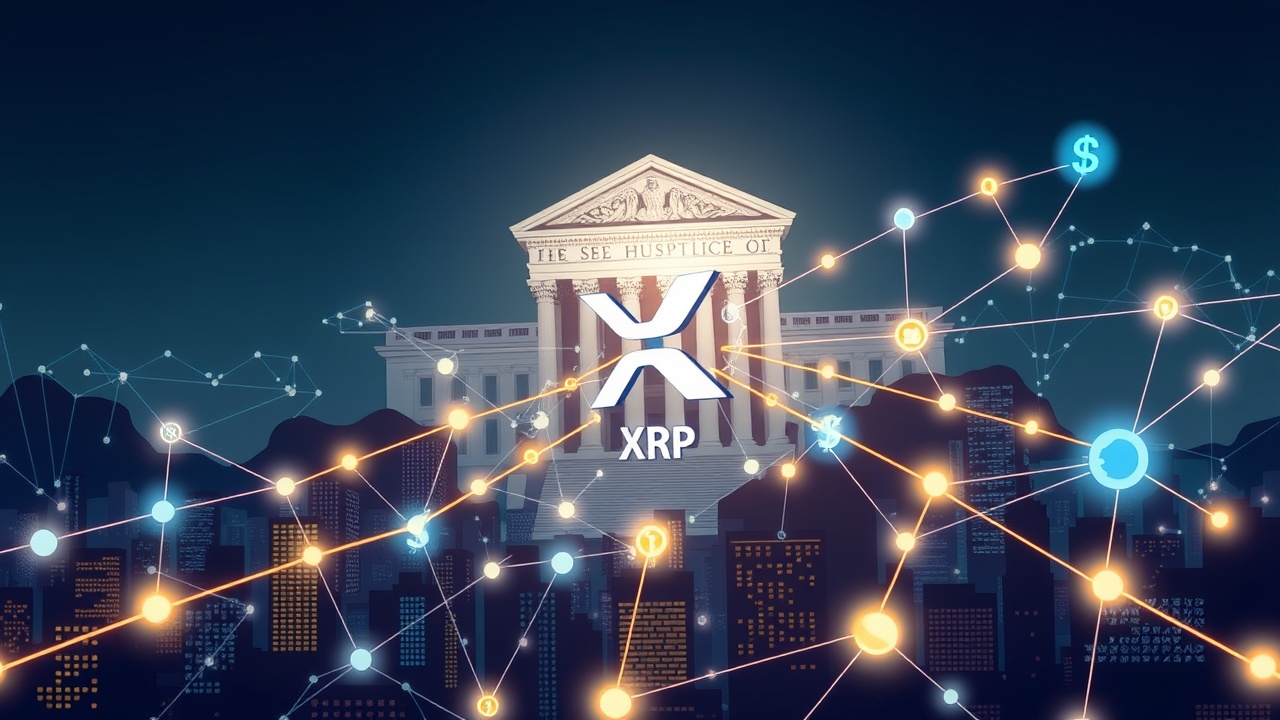
As the interest for tokenization rises, the XRP Ledger (XRPL) is being recognized as a promising contender capable of facilitating institutional finance. JPMorgan Chase has categorized tokenization as one of the foremost long-term prospects within the financial sector, projecting that trillions worth of real-world assets could soon transition onto blockchain platforms.
Distinct from other blockchains that adapted their systems for asset tokenization, XRPL was engineered with intrinsic capabilities for managing and issuing digital assets from its inception. Its capacity to execute transactions almost instantaneously at minimal costs positions it as a strategic asset for high-volume financial activities, where efficiency and scalability are paramount. Beyond its payment functionalities, the network has broadened its services to include tokenized real-world assets, regulatory stablecoins like RLUSD, decentralized identity solutions, and enhanced compliance features, establishing XRP as a likely key asset among tokenized blockchain networks.
Future of On-Chain Capital Markets
While the SEC has yet to officially endorse any blockchain for the future of on-chain capital markets, the regulatory groundwork is being laid for a blockchain-infused market landscape. Consequently, blockchain platforms that prioritize scalability, compliance, and native support for tokenization are expected to gain traction among financial institutions. Should U.S. capital markets continue their journey towards tokenization, the XRP Ledger is strategically positioned to compete in this evolving sector of financial infrastructure.