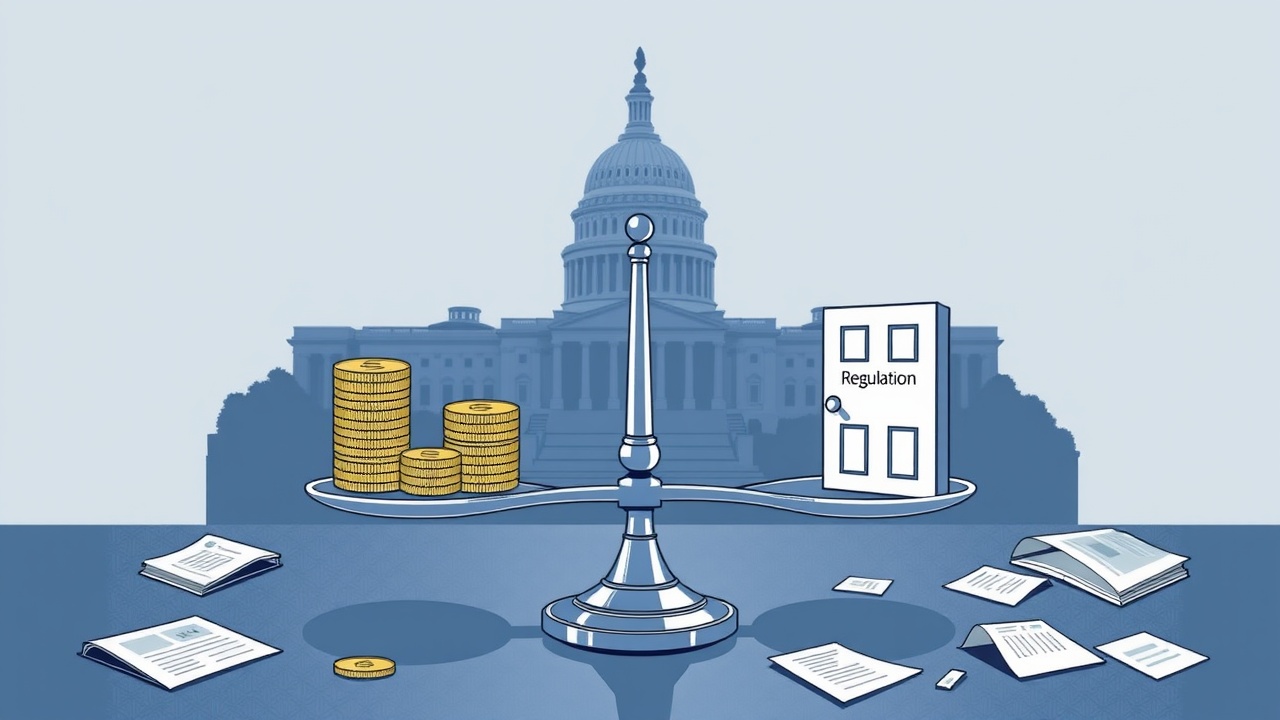
Banking Institutions Call for Refinements to the CLARITY Act
Banking institutions in the United States are calling on the Senate to refine the yield regulations outlined in the CLARITY Act concerning stablecoins. They express concerns that ambiguous language might allow payment stablecoins to attract users in a manner that could undermine traditional bank deposits. In a letter sent on Monday, a coalition comprising the American Bankers Association (ABA), the Independent Community Bankers of America (ICBA), along with 76 state banking associations, urged Senate leaders, including Majority Leader John Thune and Minority Leader Charles Schumer, to make amendments to Section 404 of the Digital Asset Market Clarity Act prior to a Senate vote.
Concerns Over Payment Stablecoins
The banking groups argue that the current draft lacks the clarity needed to prevent payment stablecoins from offering yield-like incentives similar to traditional interest on deposits. While the existing text prohibits both direct and indirect interest on such stablecoins, it does permit rewards that are based on transaction activities, raising questions about their impact on consumer behavior. The institutions pointed out that incentivizing customers to hold stablecoins could lead to prolonged balances instead of their intended use as a payment method.
Moreover, these banking organizations emphasize that deposits in community banks are essential for various lending services, including mortgages and small businesses. The letter warns that permitting stablecoin issuers to provide yield-like returns could undermine these deposits, thereby affecting critical financing services that local banks offer. They are asking senators to enhance the restrictions on interest-like rewards and remove any ambiguous language regarding incentives that might be connected to stablecoin holdings or the duration of customer engagement. Such changes, they argue, would align with the broader objective of ensuring that payment stablecoins are primarily used for transaction purposes rather than for profit generation.
Legislative Discussions and Stakeholder Advocacy
This request marks yet another hurdle in the ongoing discussions as legislators aim to refine the market structure bill ahead of the upcoming August recess. Previous discussions have identified stablecoin rewards as a significant point of contention between banking entities and the cryptocurrency sector.
Concurrently, other stakeholders are advocating for adjustments to various sections of the legislation. The Federal Law Enforcement Officers Association (FLEOA) has shown support for the House version of the CLARITY Act while urging the Senate to enhance regulations regarding decentralized finance, oversight authority, anti-money laundering measures, and the enforcement of sanctions. FLEOA has also pressed for tighter restrictions to prevent companies from evading regulations by marketing centralized services as decentralized ones, and they request a shift from a “specific intent” standard to one based on existing knowledge.
Ethics and Future Considerations
Another topic under discussion is whether ethics restrictions should be set on federal officials, including presidents and members of Congress, regarding their financial interests in digital assets during their time in office.
As these discussions unfold, Patrick Witt, the White House cryptocurrency adviser who has been pivotal in the negotiations among various stakeholders including banks and crypto firms, is set to begin military legal training later this month. Harry Jung, the deputy director, is anticipated to take over Witt’s responsibilities during his absence. The CLARITY Act is currently scheduled for consideration in the Senate, and should it pass, it will require further approval from the House before it can reach President Donald Trump for his signature.