RippleX Enhances Security for XRP Ledger
RippleX, the engineering division of Ripple, is embarking on a new journey to reinforce the security of the XRP Ledger (XRPL) as it transforms from a payments platform into a comprehensive decentralized finance (DeFi) ecosystem. Ayo Akinyele, the Head of Engineering at RippleX, has outlined how as complex financial tools like lending and borrowing features are integrated directly into the network, there’s an urgent need for enhanced security protocols to match this evolution.
Significant Upgrades and Security Measures
The introduction of significant upgrades, namely the Lending Protocol (XLS-66) and the Single Asset Vault (XLS-65), marks a pivotal shift for XRPL. These updates enable users and developers to engage in lending and borrowing, yet they also expand the potential attack surface—necessitating rigorous security measures. Akinyele stresses the importance of continuous testing and validation, arguing that security must not depend on a single audit but rather on a comprehensive defense strategy that includes multiple testing layers.
AI and Community Involvement in Security
This multi-faceted security framework is particularly crucial in the wake of advancements in artificial intelligence, which have redefined the cybersecurity landscape. AI tools are now pivotal in uncovering vulnerabilities swiftly, thereby elevating the stakes for security measures.
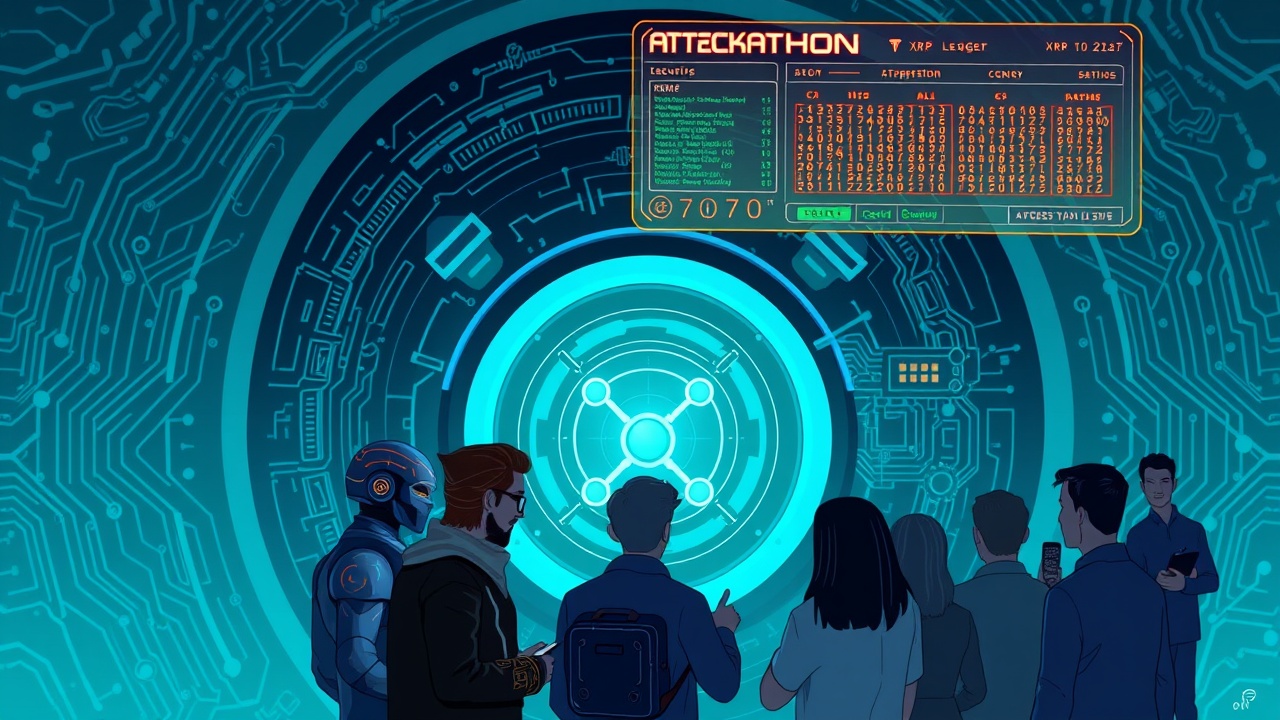
To address these challenges, RippleX has embedded security considerations deeper into its development cycle. Both the Lending Protocol and the Single Asset Vault were the first to navigate this upgraded security process, which consisted of formal verification, independent audits, and even AI-assisted evaluations. Community involvement has been instrumental too, with a public Attackathon in partnership with Immunefi set for late 2025, offering a reward pool of $200,000 to incentivize security researchers to probe XRPL’s codebase.
Research and Validation Outcomes
This collaboration resulted in over 130 researchers scrutinizing approximately 35,500 lines of C and C++ code, yielding numerous security reports that pinpointed potential vulnerabilities, some of which were addressed proactively before deployment.
This thorough approach also included challenges that traditional security reviews might overlook, with AI-driven exercises uncovering issues related to erroneous system assumptions and node stability.
In a parallel effort, community-driven testing by XRPL Commons complemented these initiatives, rigorously validating transaction types and adversarial scenarios, and achieving success in all tested scenarios. The extensive validation and validator testing have culminated in a robust assurance for the network’s security posture.
Future Security Standards
RippleX’s commitment to a security-first strategy is not just limited to these recent amendments. This framework is shaping a new standard for all future updates on the XRP Ledger, ensuring that critical features will undergo thorough, overlapping layers of scrutiny rather than isolated reviews—underlining the integral role security plays as XRPL continues to develop into an advanced financial infrastructure capable of meeting institutional demands. The ongoing focus on security is designed to bolster confidence, resilience, and fortification as the platform evolves.