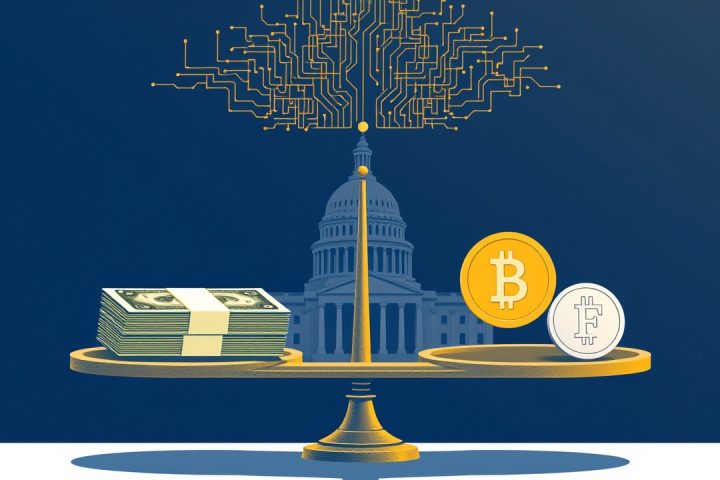
Recent Developments in Digital Asset Regulation
In response to recent developments regarding digital asset regulation, the U.S. Commodity Futures Trading Commission (CFTC) has refined its guidance concerning tokenized assets and the use of blockchain technology for recordkeeping purposes. This update, announced in a notice released Thursday, follows a failed Senate vote aimed at advancing the Digital Asset Market Clarity (CLARITY) Act, which sought to delineate the roles of both the CFTC and the Securities and Exchange Commission (SEC) in managing digital assets.
CFTC’s Revised Guidance
CFTC Chair Michael Selig emphasized that the regulatory adjustments were intended to enhance clarity within the cryptocurrency sector. The agency’s revised guidance builds upon an initial document from March and explicitly permits authorized firms to utilize customer funds in tokenized forms of assets. The stipulation is that these tokenized assets must confer legal and economic rights that are equivalent to those provided by their traditional counterparts. Additionally, the CFTC indicated it would not take issue with companies employing blockchain technology for recordkeeping under the updated framework.
Legislative Context and Future Implications
Following the unsuccessful cloture vote on the CLARITY Act, which many believe will delay comprehensive congressional regulations on crypto markets until at least 2027, it appears that regulators are shifting toward implementing their policies through rulemaking. The CFTC has already prepared a crypto market regulation proposal for consideration by the White House.
Also weighing in on the legislative context, SEC Chair Paul Atkins stated prior to the CLARITY vote that the SEC was prepared to introduce regulatory measures for crypto assets, reflecting a similar sentiment of readiness in the absence of new laws. The SEC had already laid out proposals targeting certain investment contracts linked to crypto assets back in August.
Conclusion
These developments highlight a crucial moment in the evolution of cryptocurrency oversight in the U.S., with regulatory bodies taking proactive measures amid legislative stagnation.